
There is a profound silence that emanates from Autumn Mountains in Evening Verdure. It is not an empty silence, but one filled with the "Qi" (vital energy) of the universe. Guan Tong was known for being a man of few words, and his art reflects this stoic nature. In this painting, the autumn mountains are a sanctuary, a place where the soul can rest away from the "red dust" of the mundane world.
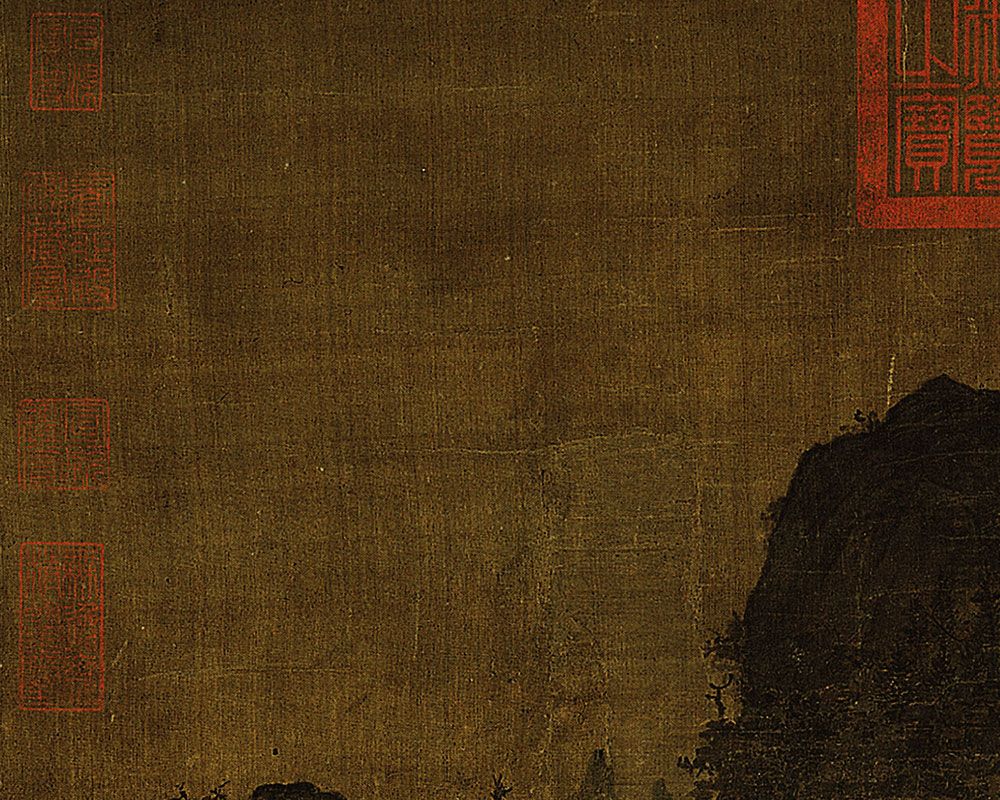
The composition invites a meditative state. As your eyes follow the stream at the bottom, passing over the jagged rocks and into the mist-shrouded valley, you are essentially performing a "mental hike." By the time your gaze reaches the sun-drenched "evening verdure" of the highest peak, you have experienced a spiritual ascent. This is the essence of "living through a painting."
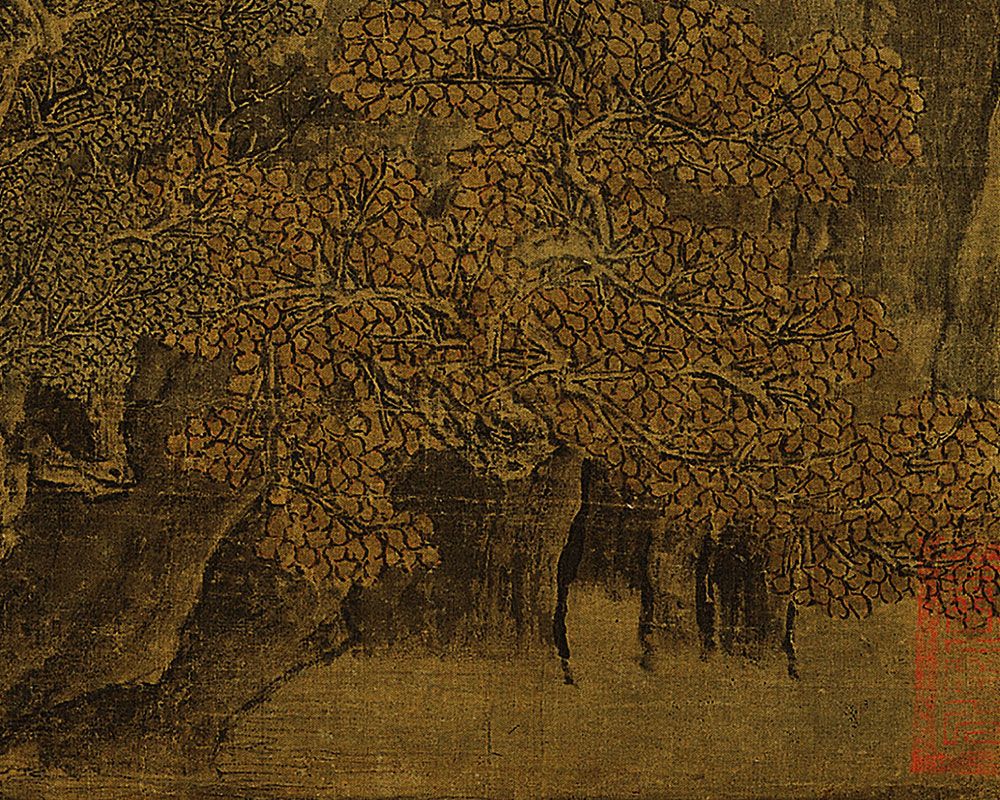
Art critics of the Song Dynasty noted that Guan Tong’s work was "hard and sharp," yet it possessed a "deep, quiet spirit." This paradox is the heart of Zen (Chan) aesthetics. The harshness of the mountain cliffs represents the reality of existence, while the soft, evening light represents the possibility of enlightenment and peace.
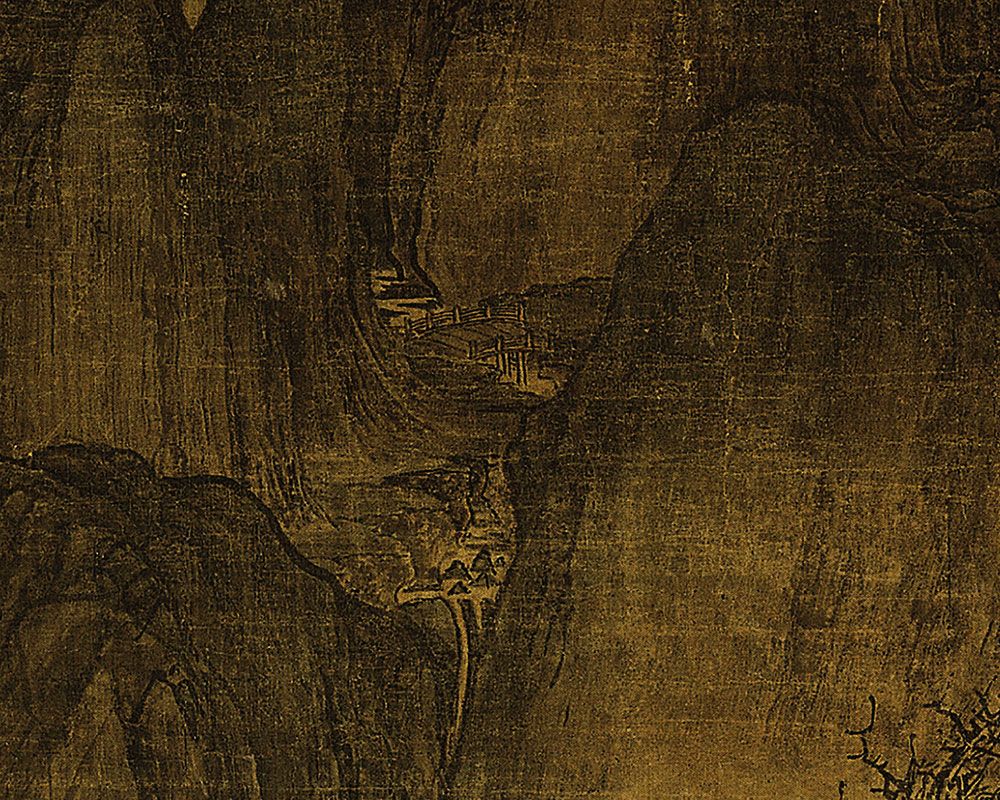
The human figures and pack mules are barely visible, blending into the earthy tones of the landscape. This suggests a philosophy of non-interference—that humans are a part of nature, not its masters. In an age of digital noise, the "Zen of Solitude" found in Guan Tong’s peaks offers a much-needed visual anchor for the modern spirit.
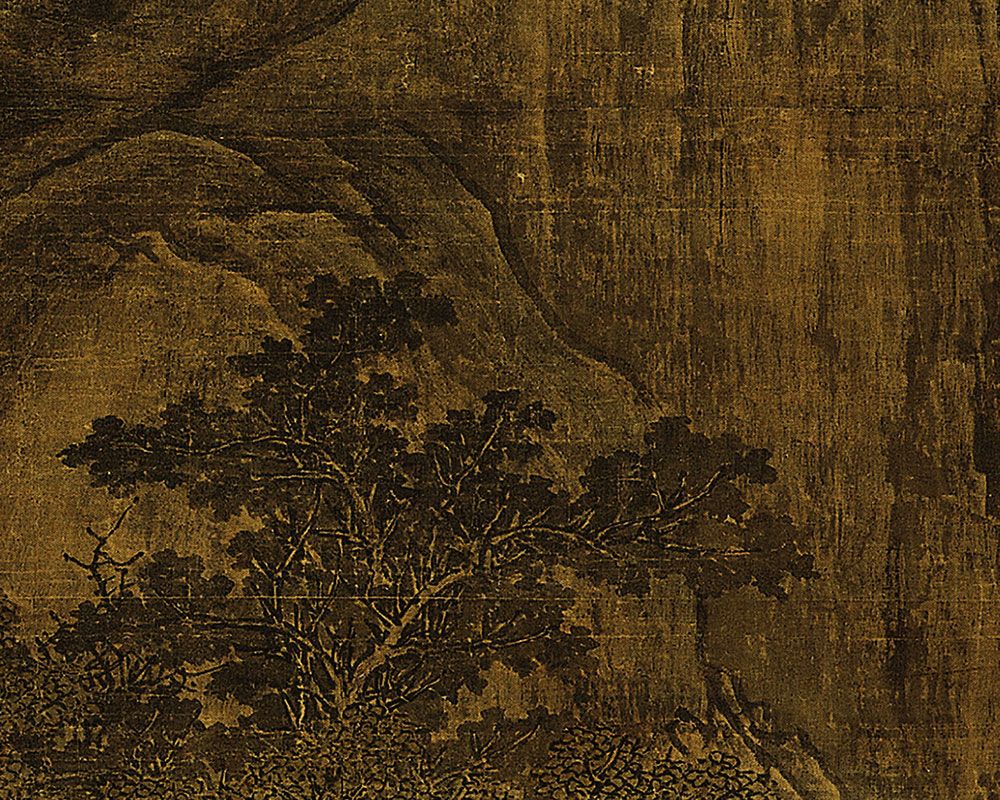
Bringing a 1:1 replica of this work into a home or office is an act of creating a "sacred space." SinoInArt’s use of traditional Xuan paper and museum-grade Giclée printing ensures that the spiritual depth and the subtle "Evening Verdure" are captured perfectly, allowing the viewer to find their own moment of Zen every day.