
There is a specific atmosphere that radiates from Travelers among Mountains and Passes—an aesthetic known as "Gu Han" (Desolate Magnificence). Unlike the lush, misty hills of Southern China, Guan Tong’s Northern landscapes are stark, powerful, and stoic. They represent a world purified by cold and wind, a landscape of absolute truth and spiritual silence.
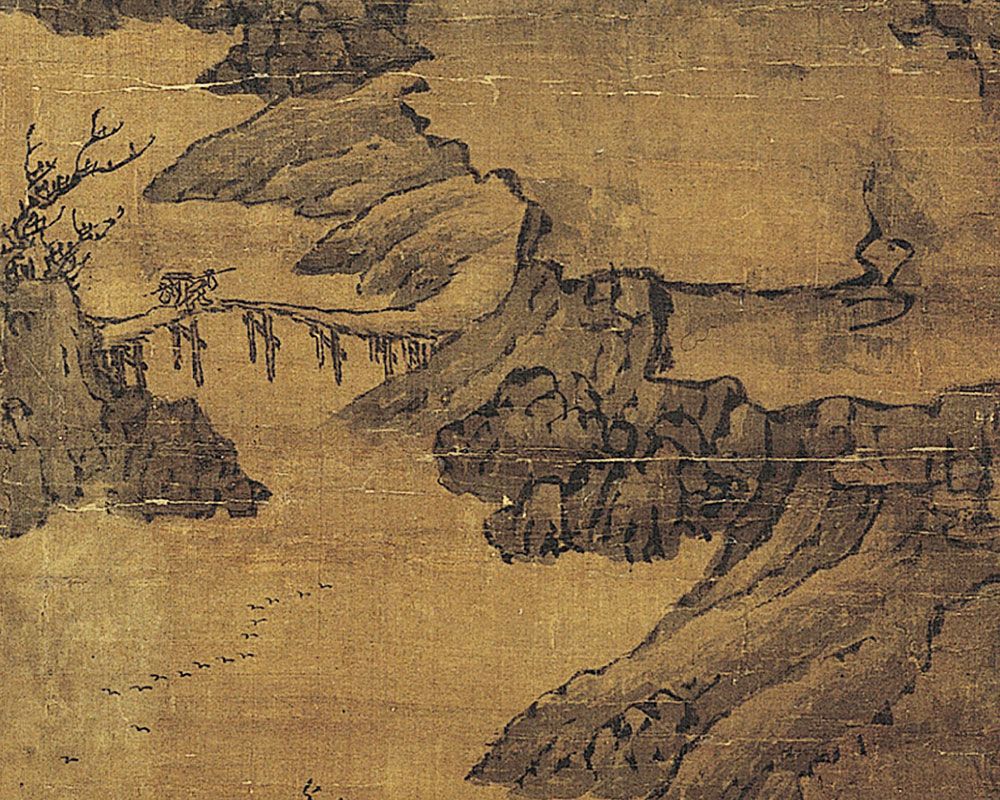
This "Desolate Magnificence" was a direct reflection of the Five Dynasties era—a period of intense political fragmentation and war. In this chaos, artists like Guan Tong sought something unchanging. The mountain became an eternal teacher of endurance. To look at this scroll is to experience a visual meditation on the stability of the spirit.
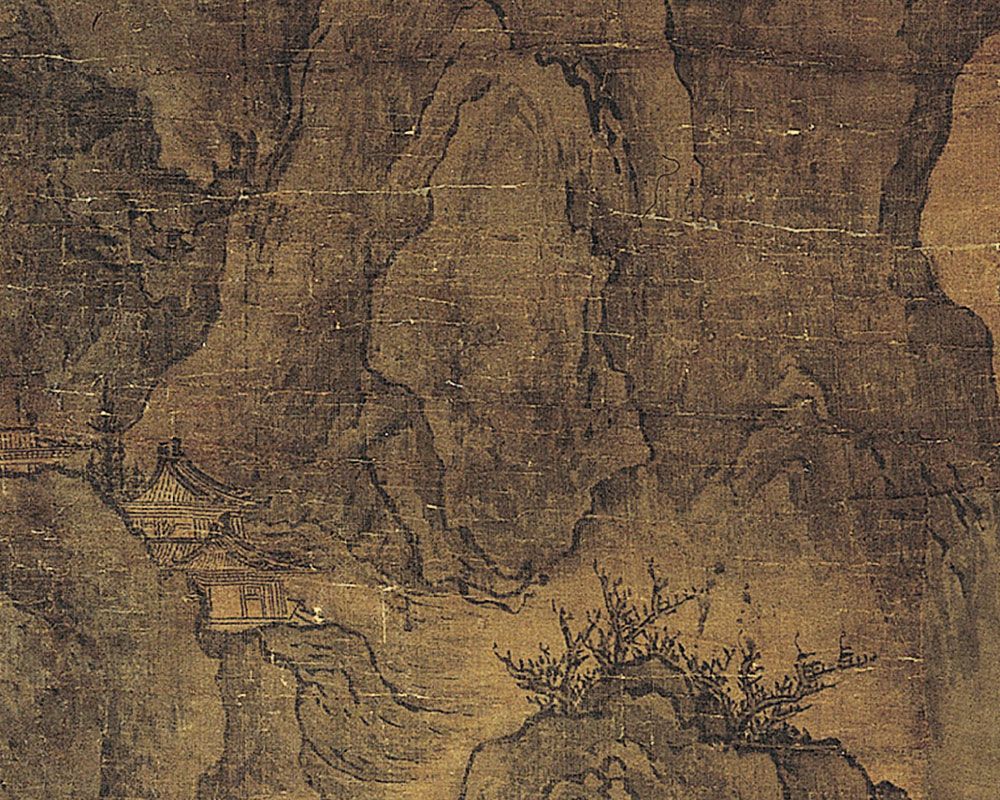
The composition utilizes "negative space" to create a sense of vast distance. The mist that floats in the valleys is not empty; it is filled with "Qi" or vital energy. This mist provides a "breath" for the composition, allowing the eye a place to rest before it resumes the climb toward the summit. It is the Zen of the void, where silence speaks louder than color.
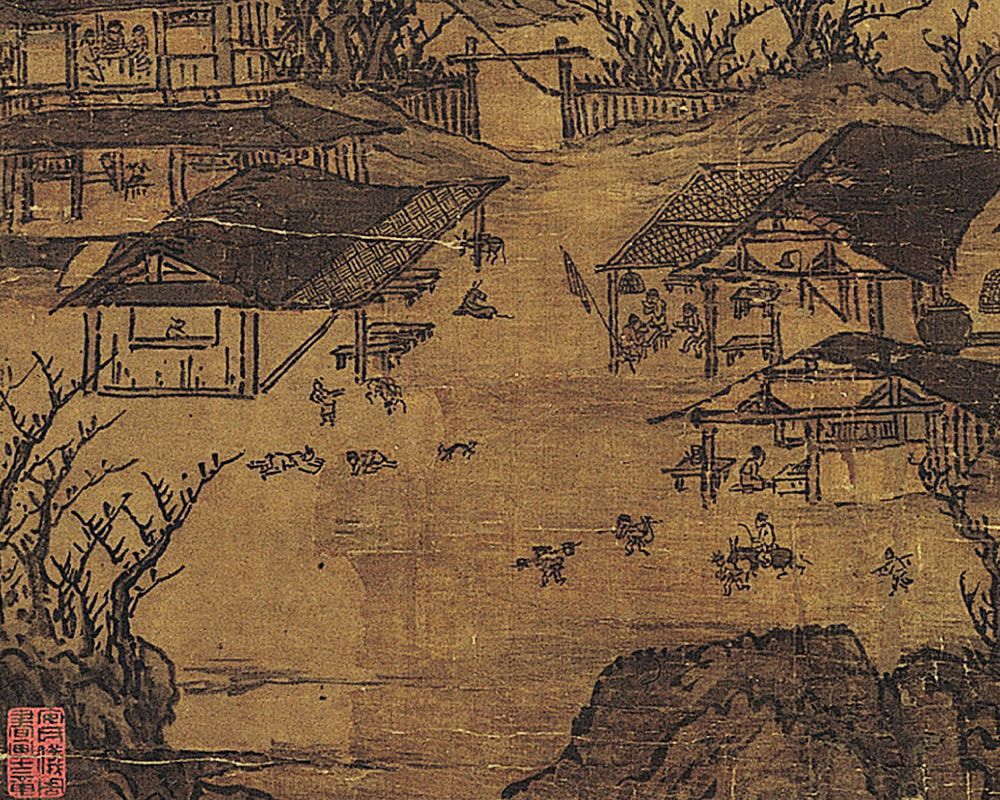
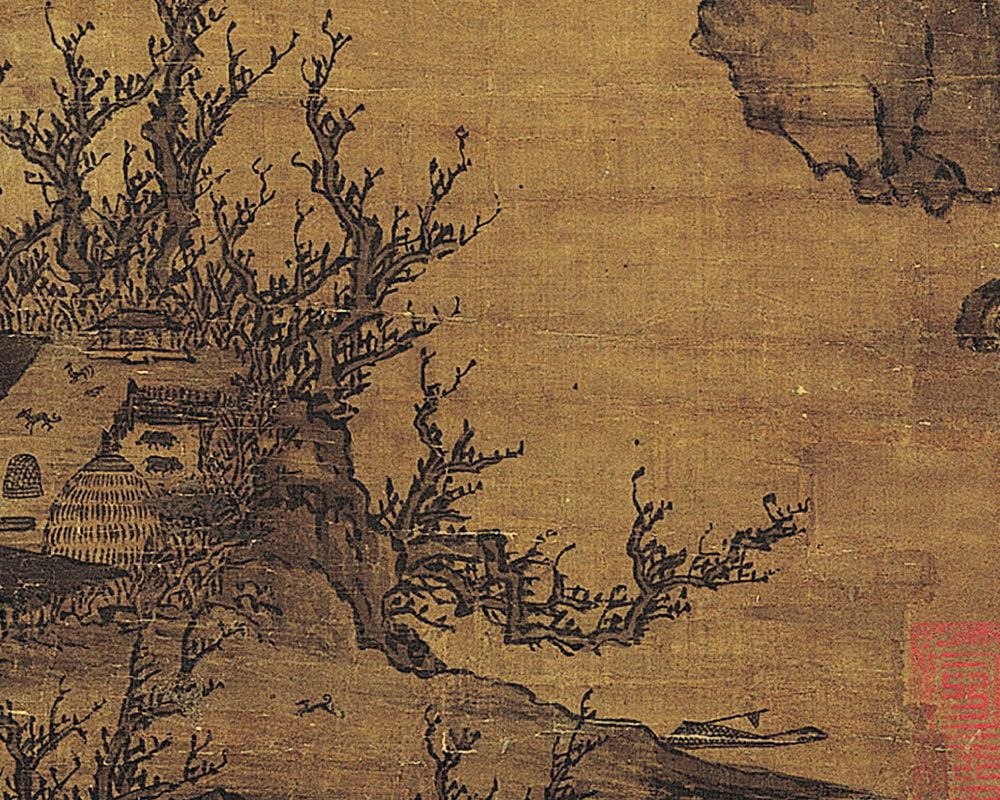
The trees in the painting, known as "Pines on Stone," are symbols of integrity. Their branches are sharp and tensed, having been hardened by the elements. They mirror the character of the scholar who remains virtuous even in difficult times. Guan Tong’s landscape is, in essence, a portrait of the ideal human soul—rugged, resilient, and focused.
Bringing a SinoInArt 1:1 replica of this work into your collection is an act of creating a sanctuary. The high-definition reproduction on specialized Xuan paper ensures that the cold, crisp air and spiritual silence of Guan Tong’s world are captured perfectly, providing a daily moment of Zen for the modern spirit.