
In the history of global art, few figures possess the raw, avant-garde energy of Xu Wei (1521–1593). A polymath of the Ming Dynasty—poet, dramatist, and calligrapher—Xu Wei is most revered as the founding father of the "Great Xieyi" (Great Freehand) floral painting style. His life was a whirlwind of brilliance and tragedy, marked by political failure, imprisonment, and madness. Yet, from this turbulent spirit came the most revolutionary brushwork in Chinese history. His crowning achievement, Twelve Ink Flowers with Poems and Paintings, currently held in the Nanjing Museum, is not just a painting; it is a visual symphony of defiance and soul.
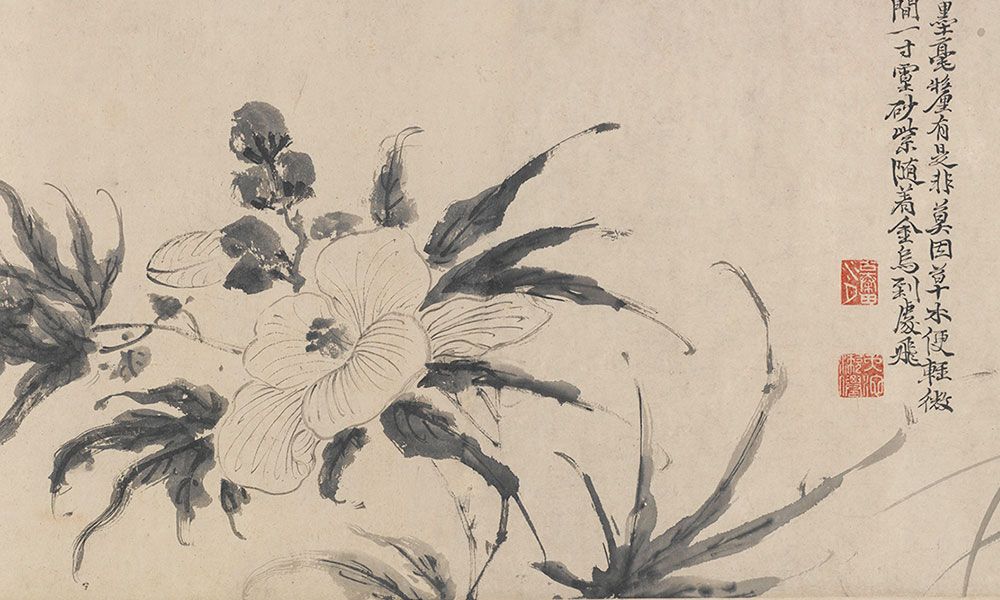
This magnificent handscroll is a panoramic journey through the seasons, featuring twelve distinct flora: Peony, Pomegranate, Lotus, Maple, Daylily, Chrysanthemum, Orchid, Narcissus, Plum Blossom, Jasmine, Magnolia, and Banana Leaf. Xu Wei does not merely depict these plants; he captures their "bones" and "breath." Each segment is accompanied by an original seven-character quatrain written in his wild, rhythmic cursive script. This integration represents the ultimate "Four Perfections" of Chinese art—Poetry, Calligraphy, Painting, and Seals—merging into a single, seamless expression of the artist's inner world.
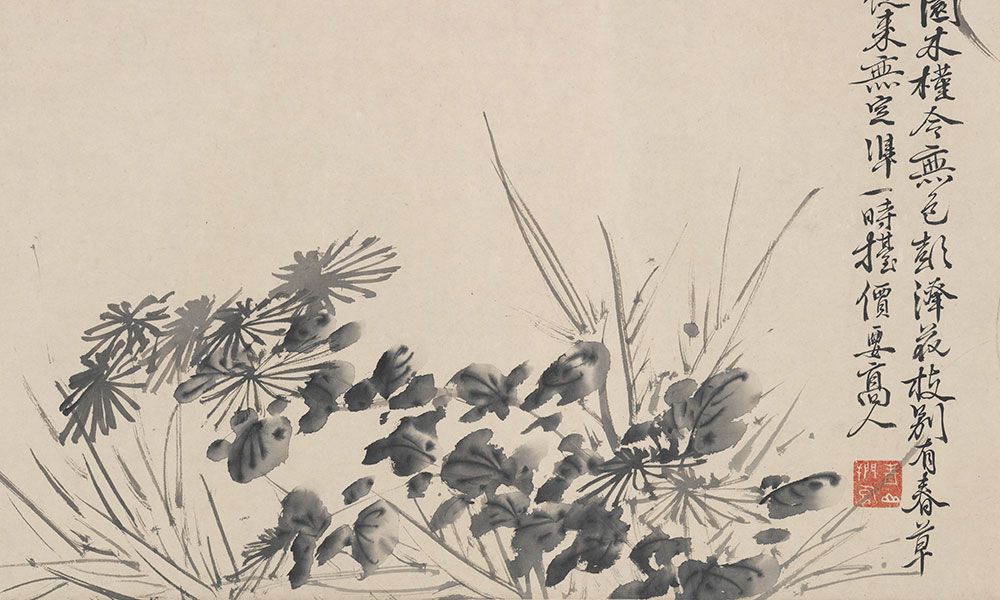
Xu Wei shattered the meticulous, colorful traditions of the Ming court by pioneering the "Splashed Ink" (Pomo) technique. In this style, forms are created not through delicate outlines, but through bold, wet masses of varying ink tones. For instance, his monochrome Peony, traditionally a symbol of wealth and color, is rendered entirely in black ink. Yet, through his mastery of "Ink Gradation," the flower possesses more vitality and elegance than a thousand colors. Every stem and leaf is an extension of his calligraphy, with lines that are fast, decisive, and filled with "Bone Strength," echoing the movements of a sword dance.
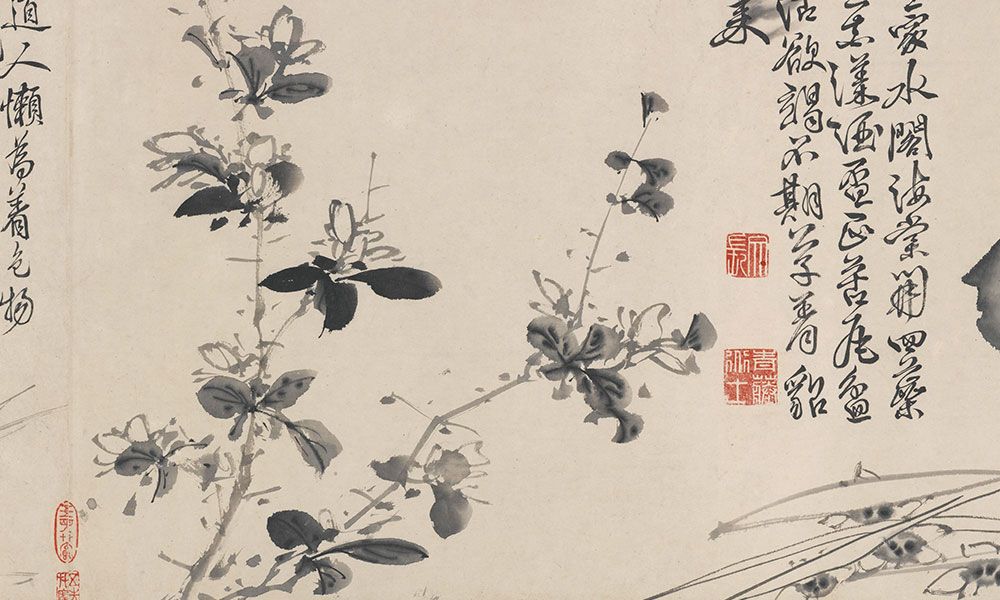
To understand this scroll is to understand Xu Wei’s philosophy of seeking "spirit-resonance" rather than a photographic likeness. His flowers are often lonely, wild, or precipitous, reflecting his frustration with a world that failed to recognize his genius. For the connoisseur, the beauty of the Twelve Ink Flowers lies in its honesty. It is a landmark in art history where the painter’s internal emotional state became the primary subject, predating Western Expressionism by nearly 300 years.
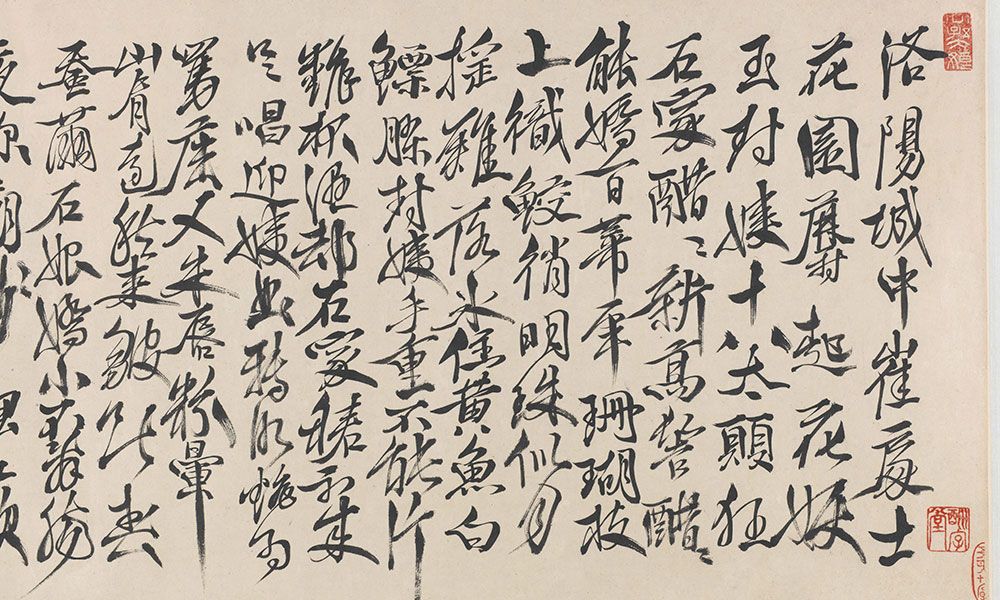
The influence of this work is so profound that the greatest masters of later generations claimed to be Xu Wei's disciples. The legendary Qi Baishi once lamented, "I wish I had been born 300 years earlier, so I could grind ink and prepare tea for Xu Wei." Zheng Banqiao, the famous Qing master, even had a seal made that read: "Running dog outside the gate of Green Ivy [Xu Wei]." From Bada Shanren to the Yangzhou Eccentrics, the history of modern Chinese ink wash begins with the revolutionary spirit of this very scroll.
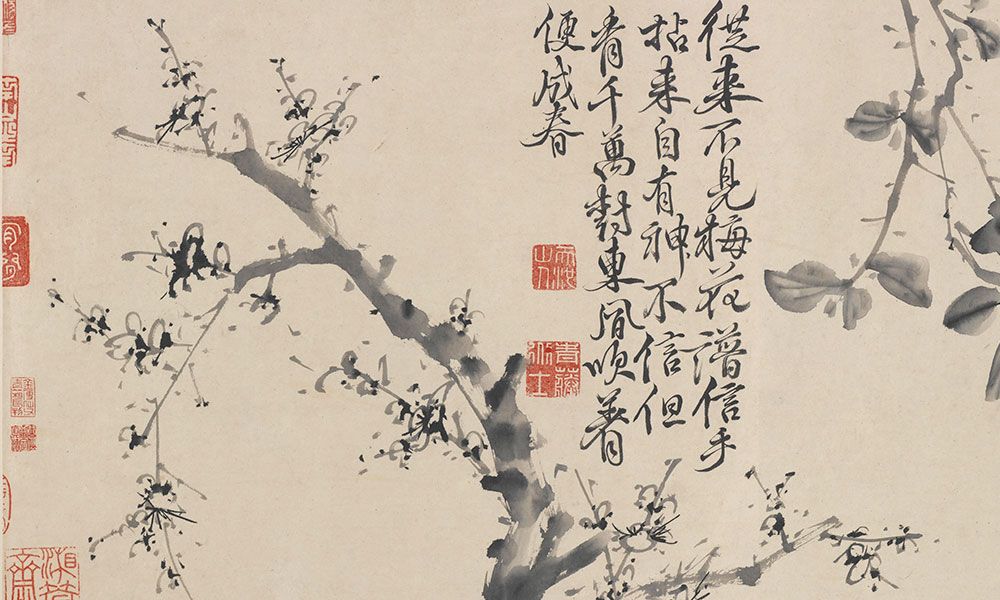
SinoInArt is proud to present a faithful 1:1 restoration of this "Divine Class" masterpiece. Utilizing ultra-high-definition Giclée technology, we capture every nuance of the "Five Colors of Ink"—from the heavy charred blacks to the ethereal mist-grays and sharp dry-brush textures. Reproduced on specialized long-scroll Xuan paper, the replica preserves the organic absorbency and tactile feel of the original Ming paper. Each scroll is hand-mounted with authentic Suzhou Yun Brocade (Cloud Brocade), a UNESCO-recognized royal fabric that provides a magnificent frame, elevating this scholar’s masterpiece into a royal heirloom for the modern collector.