
In the canon of Chinese art history, the Five Dynasties period (907–960 AD) represents a monumental leap in the human ability to capture the raw, unyielding power of nature. At the center of this revolution was Guan Tong, a master whose brushwork was said to be "simple in stroke but majestic in spirit." His crowning achievement, Plank Path in the Shu Mountains (蜀山棧道圖), currently held in the National Palace Museum in Taipei, is not just a painting—it is an architectural monument of the soul and a definitive pillar of the Northern Landscape tradition.
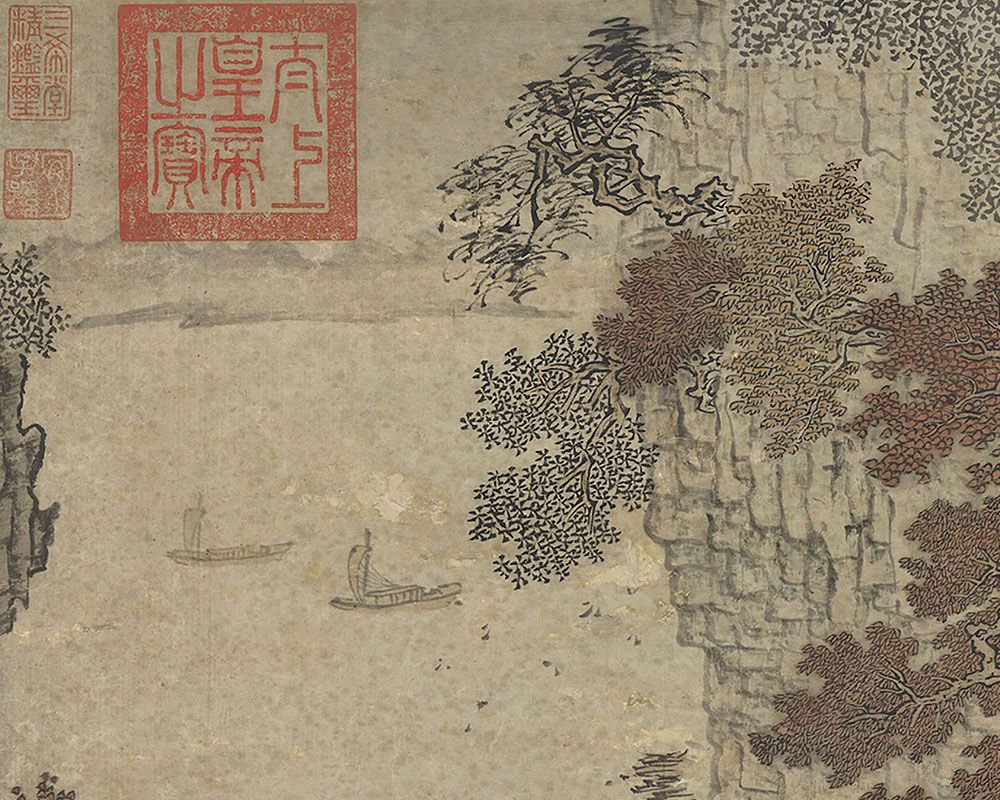
The "Road to Shu" has long been a subject of awe and terror in Chinese culture. The legendary Tang poet Li Bai once famously remarked, "The road to Shu is harder than climbing to the green heavens." Guan Tong translates this poetic peril into a visual symphony of stone and timber. The painting depicts the treacherous wooden "Plank Paths"—narrow galleries of timber bolted onto vertical cliffs—that served as the only passage through the jagged mountains of Sichuan. We see tiny travelers and their pack mules navigating these high-altitude ledges, a poignant testament to human resilience set against the indifference of geological time.
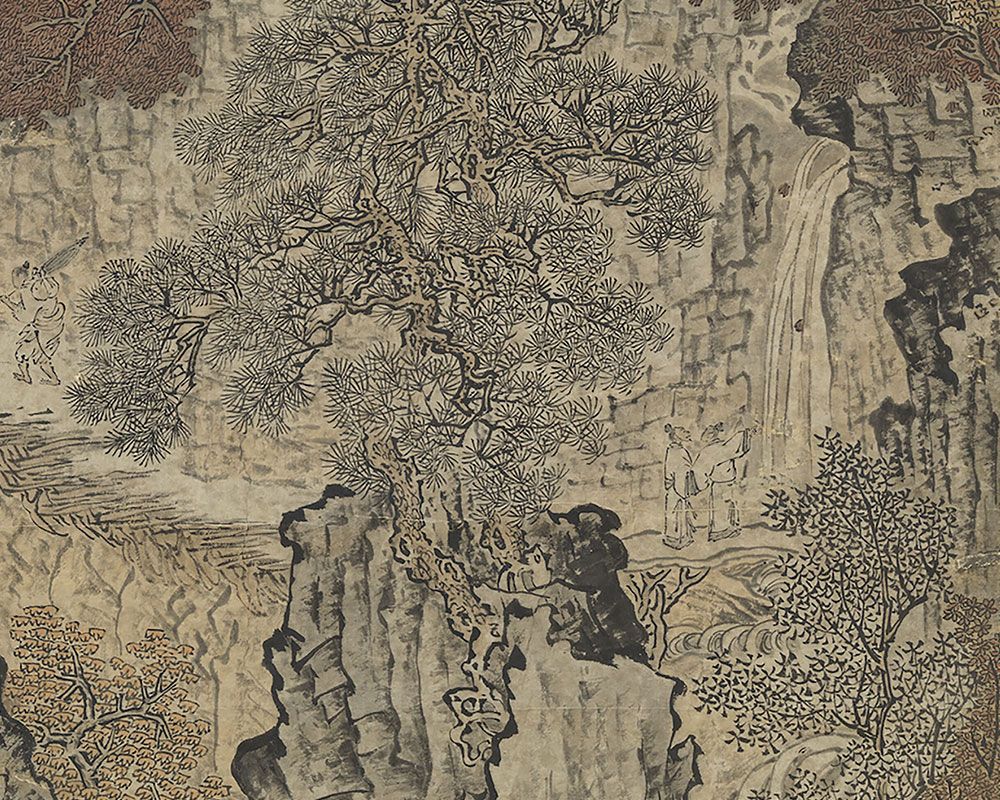
Guan Tong utilizes the classic "High Distance" (Gaoyuan) perspective to create an overwhelming sense of scale. The viewer’s gaze begins at the base of the scroll, where turbulent mountain streams crash against weathered boulders. From there, the eye is led upward, climbing past hidden mountain dwellings and mist-shrouded valleys, until it reaches the massive, monumental central peak. This towering titan dominates the upper half of the silk, its sheer mass and verticality creating a psychological sense of the "sublime"—where nature is experienced as a divine and unstoppable authority.
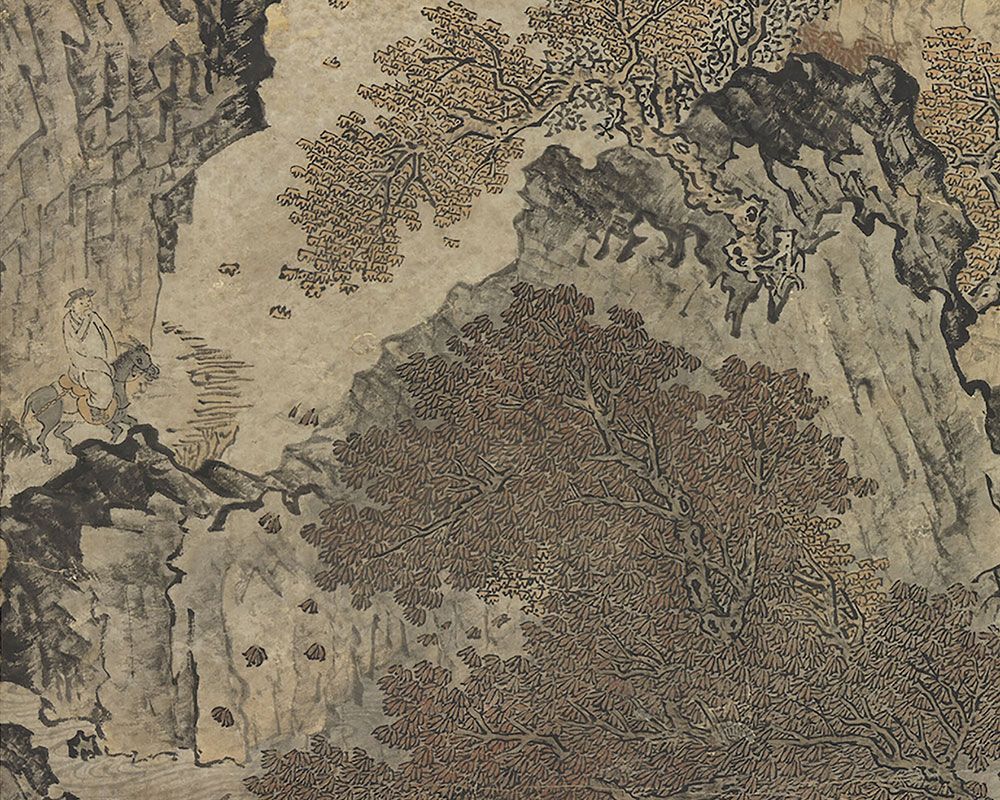
Technically, the work is a tour de force of Guan Tong’s signature "Nail-head" texture strokes (Dingtou Cun). These short, forceful, and sharp brush marks are driven into the paper with the precision of a craftsman, perfectly capturing the jagged, wind-scoured surfaces of the limestone and granite cliffs. Unlike the softer, mistier styles of the South, Guan Tong’s mountains have "bones." Every line vibrates with "Bone Strength" (Guli), portraying the earth as a solid, permanent skeletal structure upon which life—both plant and human—humbly clings.
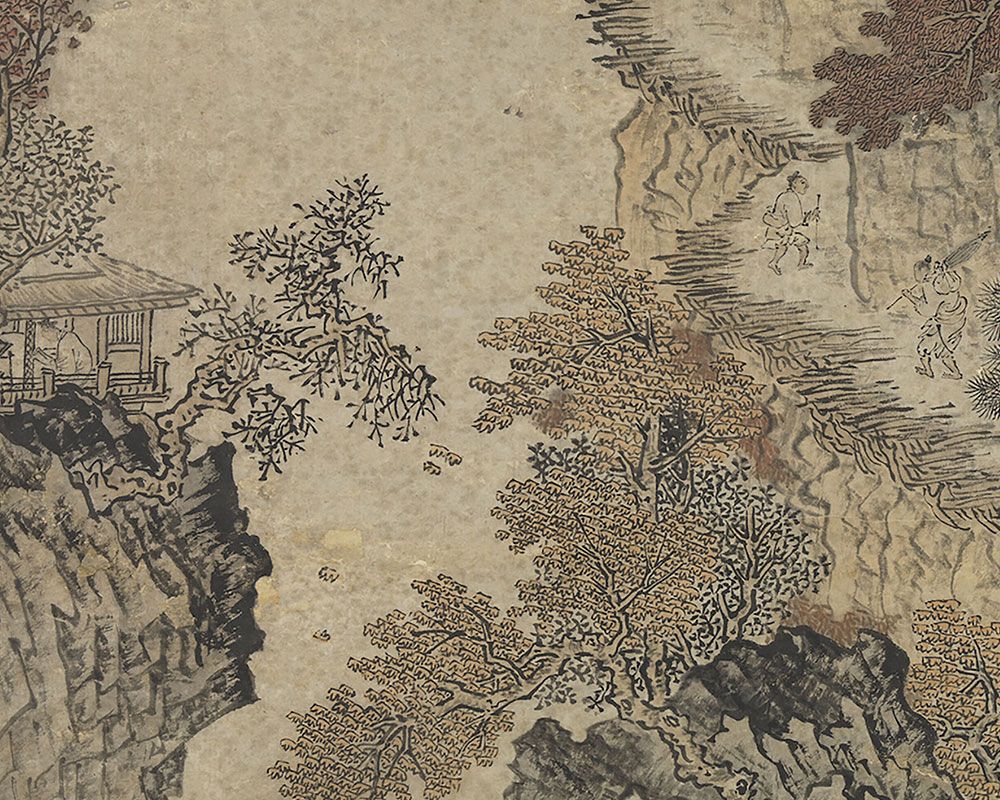
Beyond its technical execution, Plank Path in the Shu Mountains radiates an atmosphere of "Desolate Magnificence" (Gu Han). It represents the ultimate scholar’s refuge: a landscape of the mind where one can "wander while sitting" (Wo You). The intentional use of white space to represent drifting clouds and ethereal mist provides a "breath" to the composition, allowing the heavy ink and stone to float within a spiritual void. It is a work of profound stoicism, offering a sense of stability and eternal truth that has resonated with emperors and connoisseurs for over a millennium.
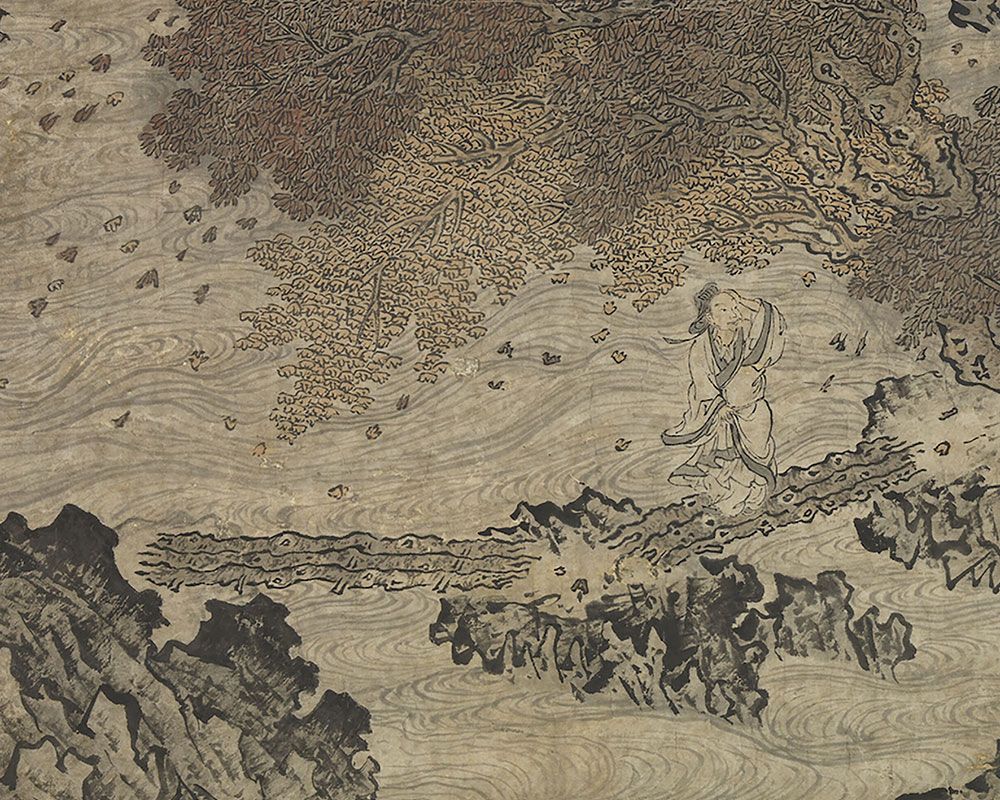
The SinoInArt Collection Edition is defined by its uncompromising commitment to authenticity. Utilizing ultra-high-definition scanning and archival-grade Giclée technology, we have captured every nuance of the original masterpiece, from the hairline cracks of the ancient silk to the sharpest edges of the legendary brushwork. Printed on premium long-scroll Xuan paper and hand-mounted with authentic Suzhou Yun Brocade (Cloud Brocade), this 1:1 museum-quality restoration ensures that the artwork remains timeless and endures for generations, offering collectors an unparalleled window into Chinese art history.