
In Chinese art theory, the highest praise for a landscape is that it possesses "Guli" (Bone Strength). No work exemplifies this quality better than Guan Tong’s Plank Path in the Shu Mountains. While other artists focused on the "flesh" of the landscape—the foliage and the mist—Guan Tong was the master of the "bone"—the underlying structural truth of the earth.
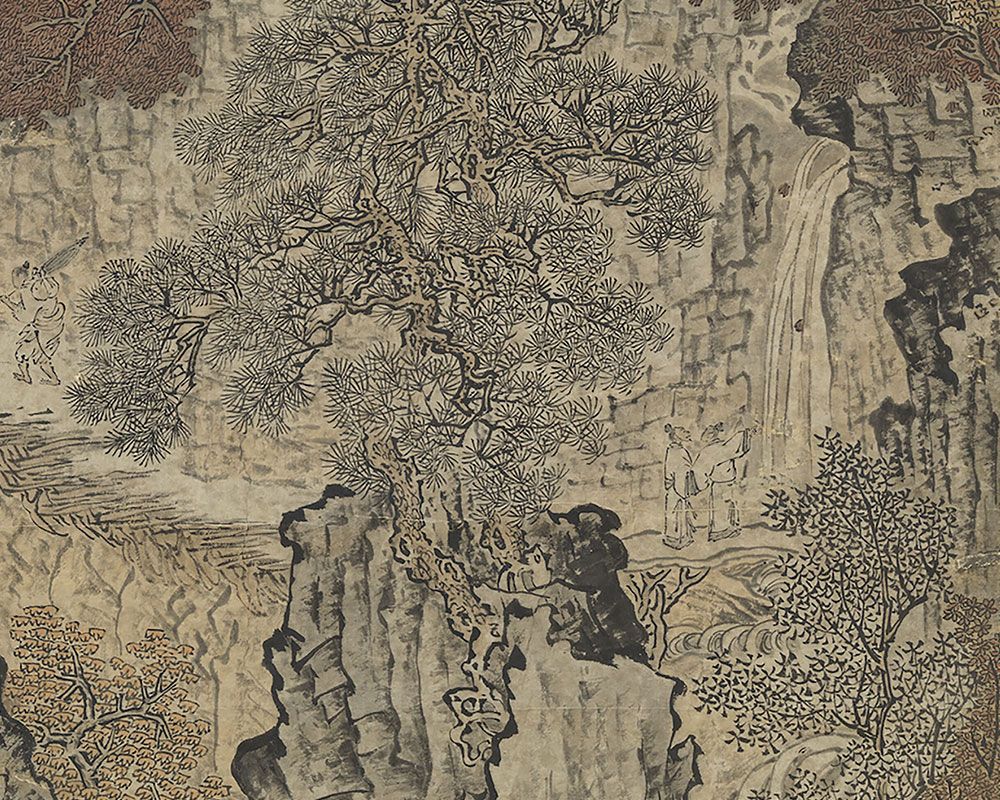
The "bones" of the mountain are visible in every jagged cliff and weathered ledge in this scroll. Guan Tong’s brushwork is firm and uncompromising; he does not hide the hardness of the stone. This "Bone Strength" gives the painting an architectural stability, making the monumental central peak feel like it could support the weight of the heavens.
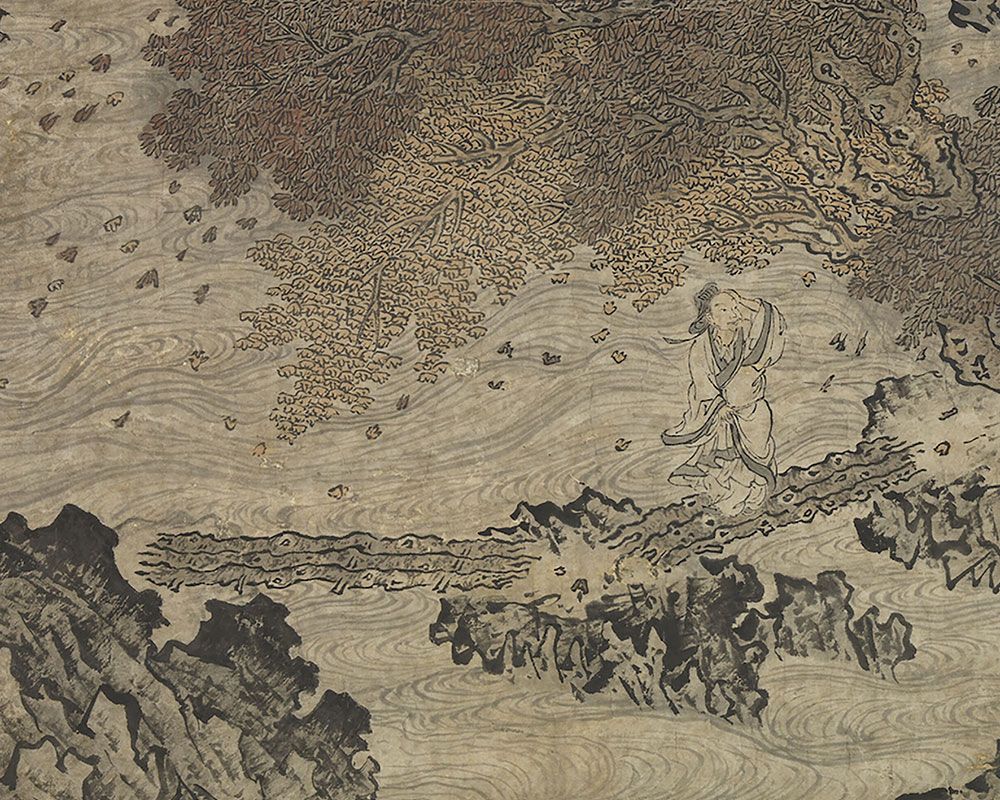
This focus on structure was a radical departure from the ornamental styles of the earlier Tang period. Guan Tong believed that if the "bone" of the mountain was correct, the "breath-resonance" (Qiyun) would follow naturally. By capturing the skeletal essence of the Taihang Mountains, he created a landscape that feels permanent, unshakeable, and true.
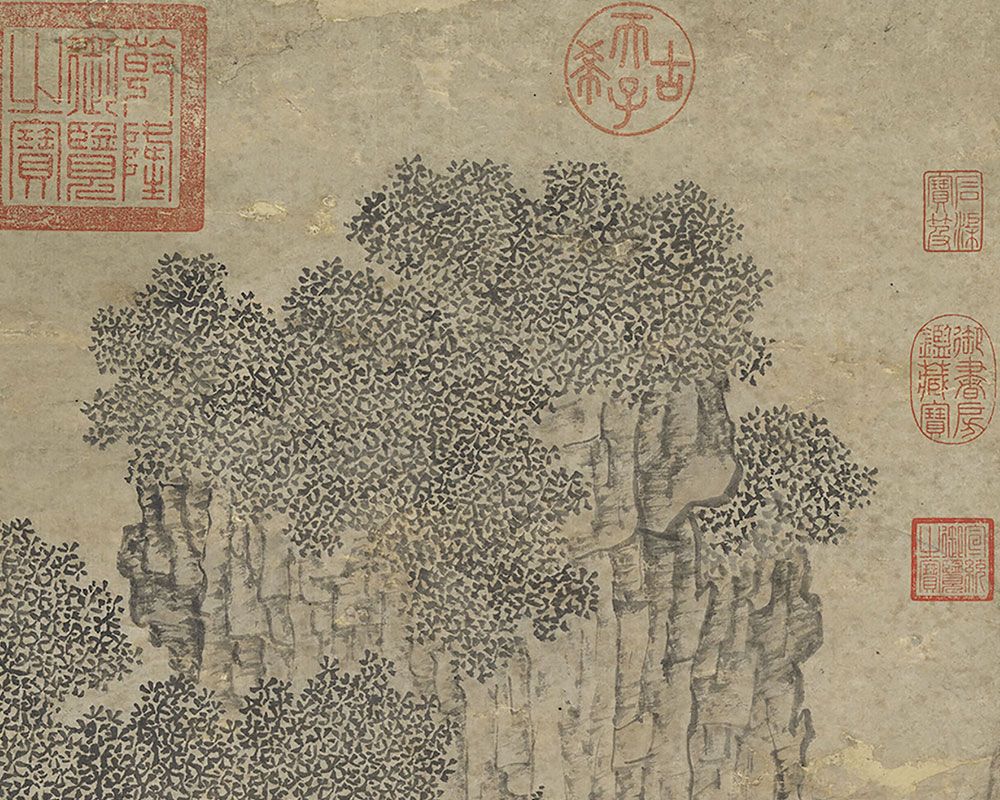
The trees in the painting also share this "Bone Strength." Their branches are not soft or flowing; they are tensed and sharp, like iron hooks. They represent life that has been hardened by the elements, thriving in the most difficult environments. It is an aesthetic of strength, resilience, and unyielding character.
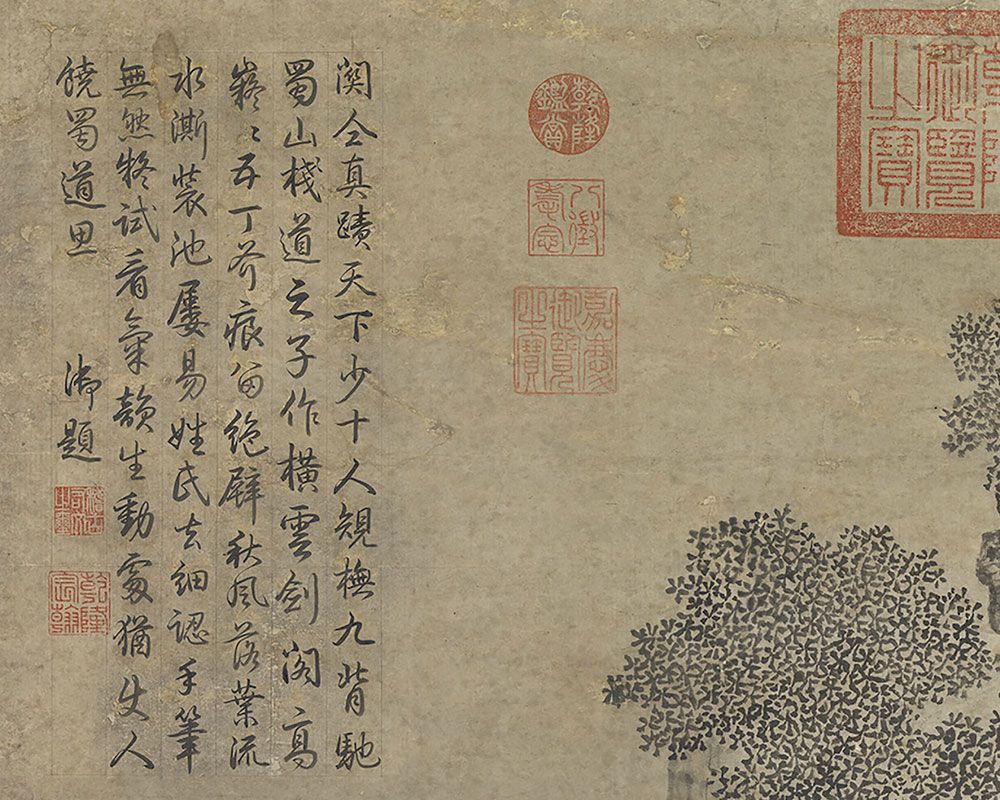
SinoInArt preserves this legendary "Bone Strength" through our 1:1 museum-quality restoration. By using premium Xuan paper that mimics the absorbency of ancient silk, we ensure that Guan Tong’s firm lines and skeletal textures are reproduced with absolute clarity, offering collectors a window into the peak of Northern School realism.