
The history of Chinese art is divided into two eras: before Xu Wei and after Xu Wei. His masterpiece, Twelve Flowers in Ink with Accompanying Poems, marks the definitive birth of the "Great Xieyi" (Great Freehand) style. Moving away from the rigid, meticulous lines of the Ming court, Xu Wei used the brush as a tool of raw emotion, splashing ink onto paper to capture the "spirit-resonance" of nature rather than its mere physical likeness.
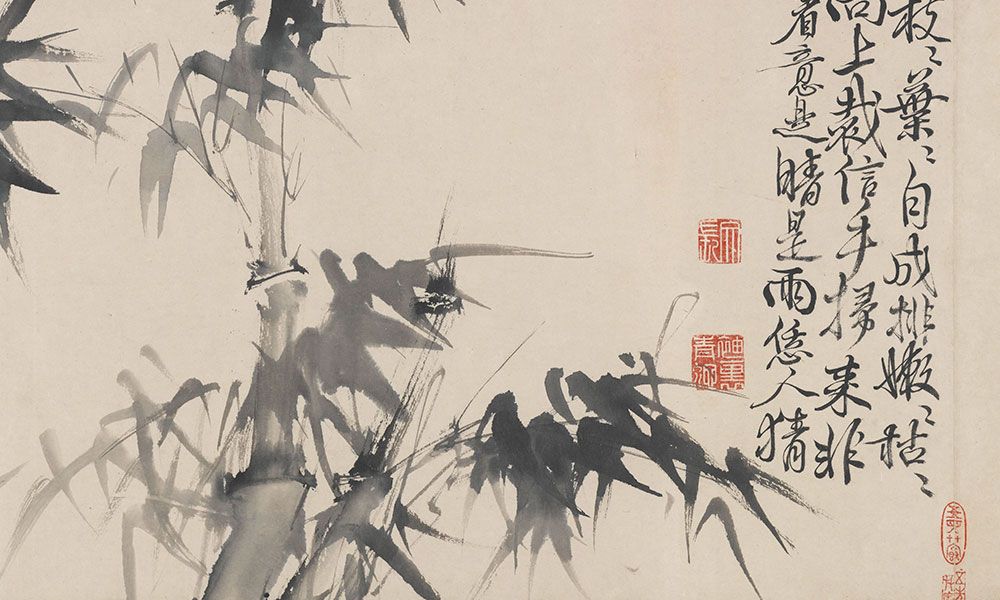
In this legendary handscroll, Xu Wei treats the ink as if it were a living thing. By manipulating the water-to-ink ratio, he created the "Five Colors of Ink," allowing a monochrome Peony to feel more vibrant and colorful than a real flower. This technical revolution allowed artists to express their internal state, turning the canvas into a mirror of the soul.
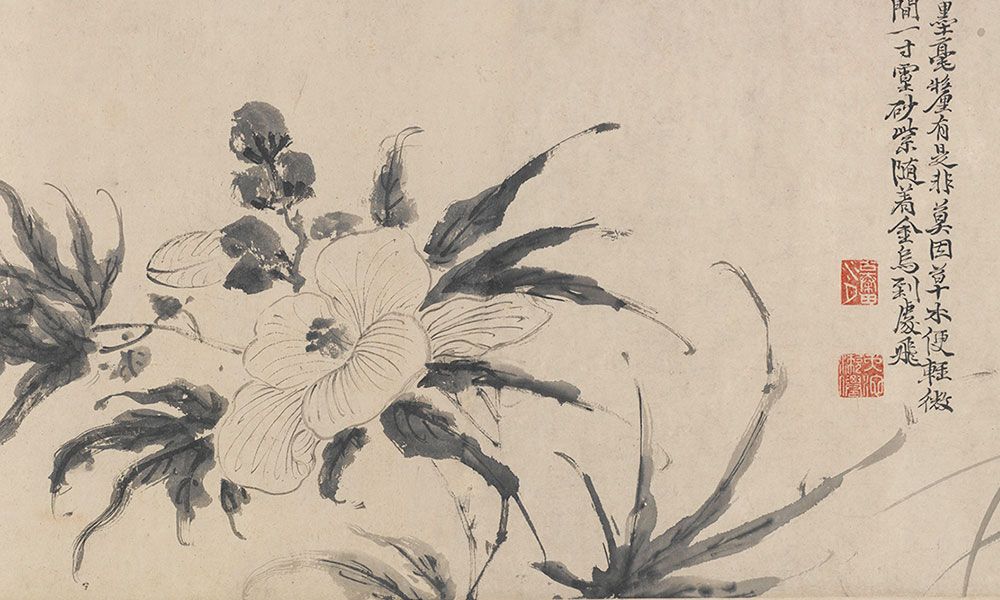
Xu Wei’s brushwork is famously described as "precipitous and wild." In the Twelve Ink Flowers, his stems and leaves are rendered with the same speed and confidence as wild cursive calligraphy. There is no room for hesitation; every stroke is final and filled with a "Bone Strength" that has influenced every major ink artist for the past 400 years.
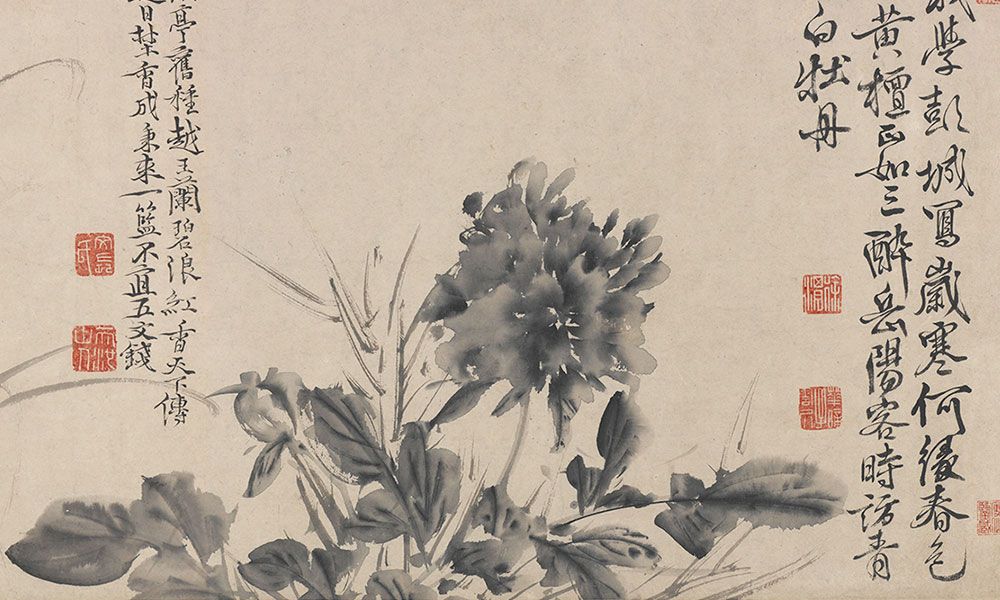
The integration of poetry and painting in this scroll is unparalleled. Each of the twelve flowers is accompanied by a poem that elevates the visual image into a philosophical discussion. Xu Wei wasn't just painting plants; he was documenting the seasons of the human spirit, from the pride of the Peony to the lonely resilience of the Plum Blossom.
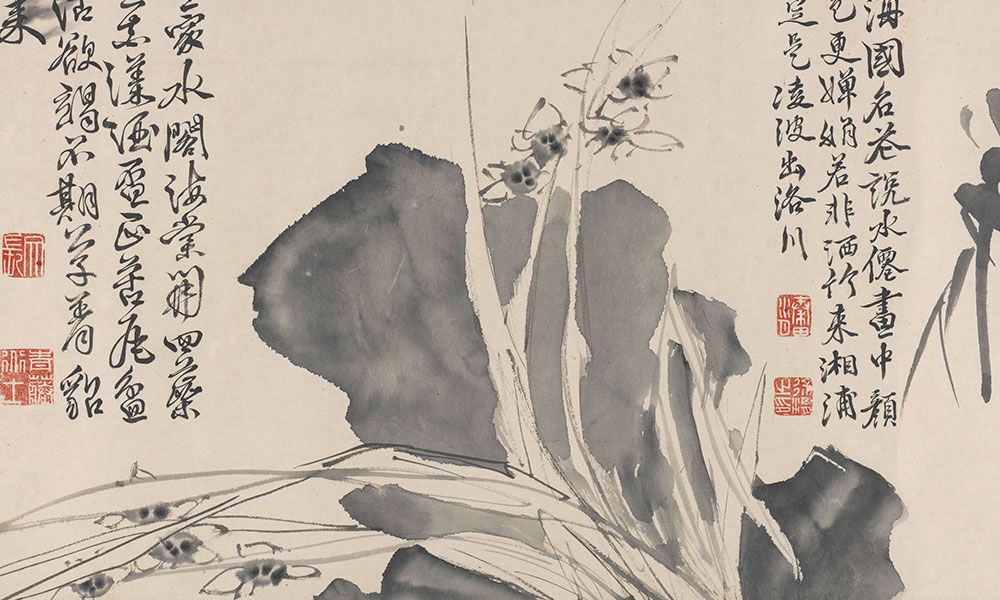
SinoInArt’s 1:1 museum-quality replica allows modern collectors to witness this revolution firsthand. Utilizing ultra-high-definition Giclée technology on premium long-scroll Xuan paper, we preserve the "ink-bloom" effects that made Xu Wei a legend. It is an essential piece for anyone who values the foundational moments of art history.