
In the sacred history of Chinese landscape painting, the Five Dynasties period (907–960 AD) stands as the definitive bridge between ancient traditions and the peak of classical realism. At the forefront of this revolution was Guan Tong, a master who transformed the "bones" of the earth into silk. His masterpiece, Waiting for a Ferry by a Mountain Stream (山溪待渡圖), currently preserved in the National Palace Museum in Taipei, is not merely a landscape; it is an architectural monument of the spirit. It established the "Northern School" aesthetic—a style defined by rugged cliffs, desolate magnificence, and a profound, stoic dignity that would influence Chinese art for over a thousand years.
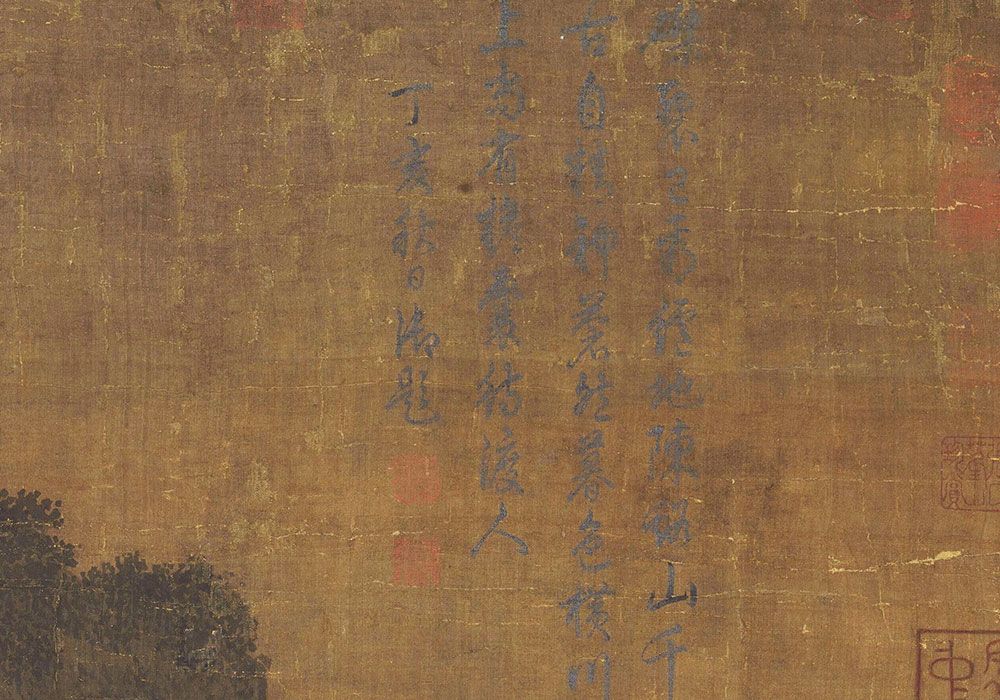
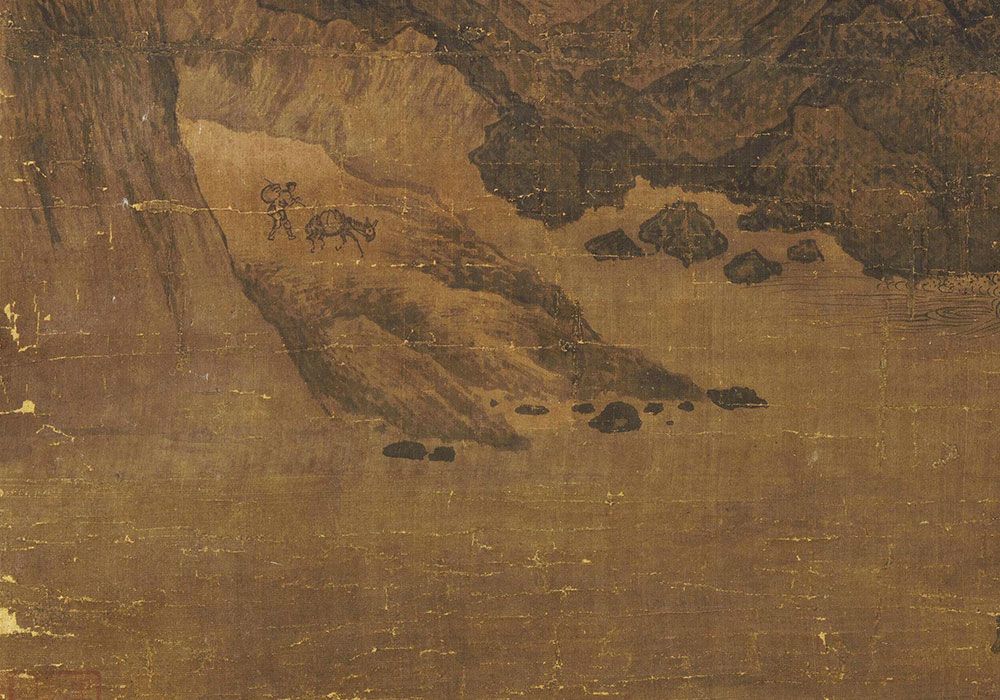
The composition of the painting is a breathtaking example of the "High Distance" (Gaoyuan) technique. The viewer’s eye is led from the turbulent mountain stream at the base, past jagged, wind-scoured boulders, up toward a central peak that rises like a titan into the heavens. Within the misty folds of the mountains, Guan Tong hidden subtle narratives of human life: a secluded temple nestled in a ravine and, most poignantly, a group of travelers and their pack mules waiting at the water’s edge for a ferry. This contrast—the fleeting, anxious waiting of man against the eternal, unmoving majesty of the mountains—embodies the Taoist philosophy of the harmony between the minute and the infinite.
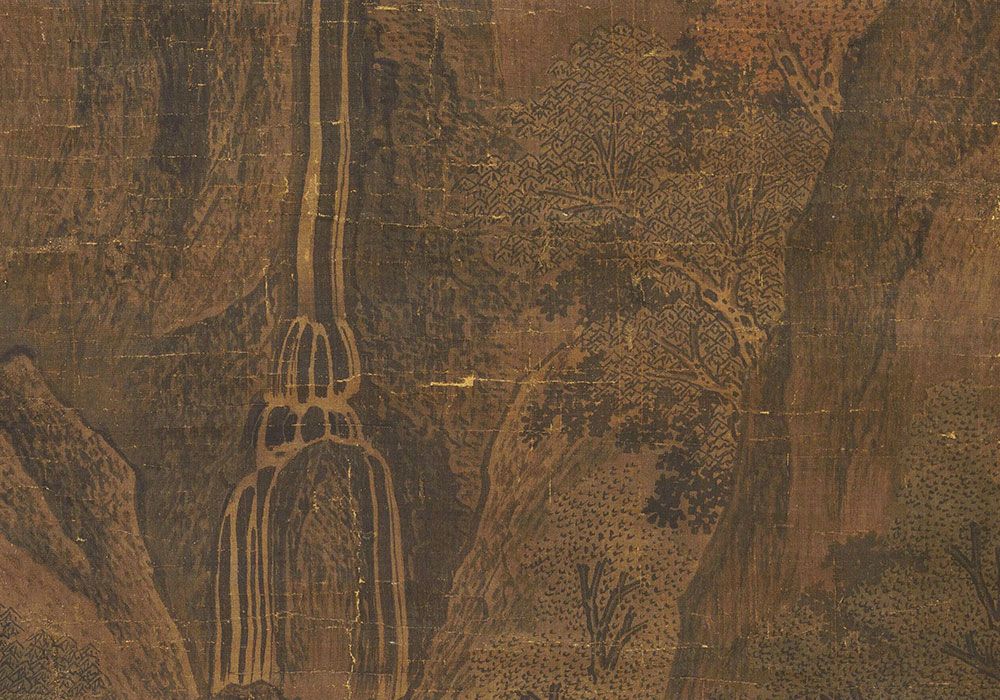
Technically, the work is a tour de force of Guan Tong’s signature brushwork, famously described as "simple in stroke but majestic in spirit." He pioneered the use of the "Nail-head" (Dingtou) and "Scraping Iron" (Guatie) texture strokes. These short, forceful, and crystalline marks capture the weathered surfaces of Northern China’s granite peaks with a physical weight that feels almost three-dimensional. Unlike the decorative lines of earlier eras, Guan Tong’s brush "drives" into the silk, creating a texture that is hard, cold, and unyielding. The subtle ink washes evoke the crisp, dry air of a late autumn evening, where every pebble and pine tree vibrates with "spirit-resonance."
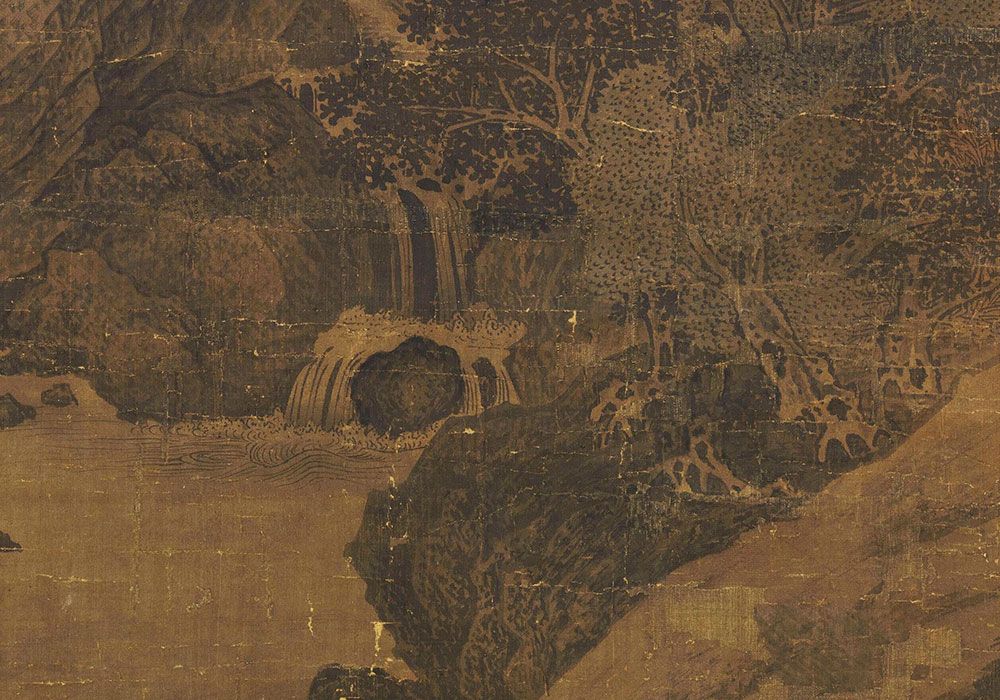
Beyond the visual brilliance, Waiting for a Ferry by a Mountain Stream radiates an atmosphere of "Desolate Magnificence" (Gu Han). It represents the scholar-recluse’s ideal sanctuary—a world far removed from the chaos of war and court politics. To look upon this scroll is to experience a visual meditation; it offers a sense of stability and moral clarity. For centuries, art critics from the Song and Ming dynasties have hailed this work as "Divine Class" (Shenpin), noting that while other artists could paint the "likeness" of a mountain, only Guan Tong could capture its "bones" and its "soul."
As an original treasure of the imperial collection, the 1,000-year-old silk of the original is too fragile for most to ever witness in person. SinoInArt is proud to bridge this gap by offering a 1:1 Museum-Quality Replica of this foundational masterpiece. This is an invitation to bring the power of the Northern peaks into your private gallery or study, allowing the ancient spirit of Guan Tong to anchor your modern space with its timeless, monumental silence.
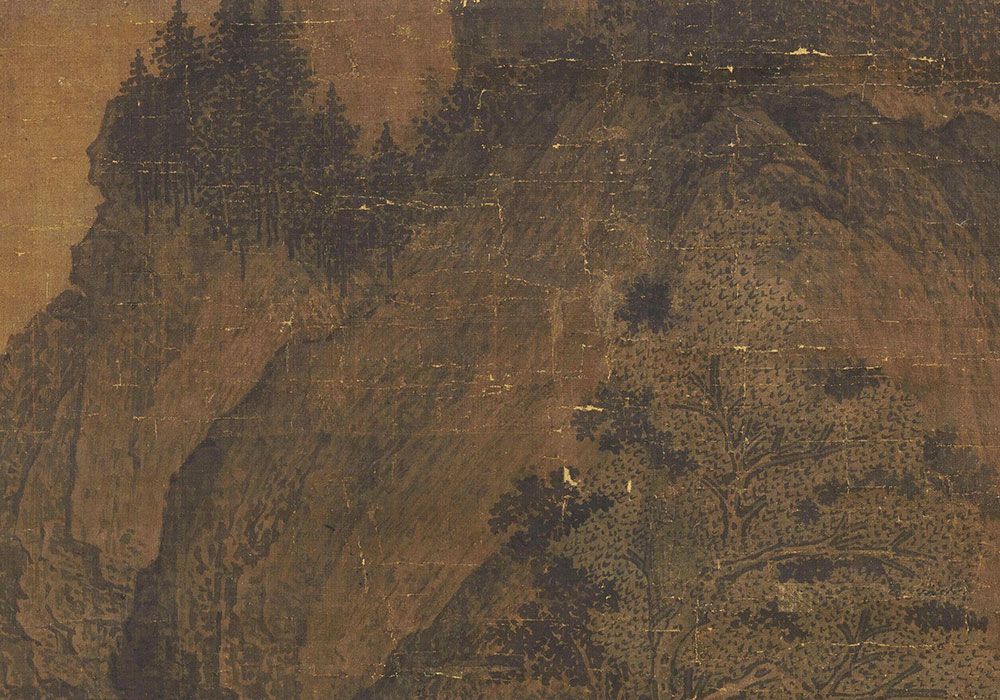
The SinoInArt Collection Edition is defined by its uncompromising commitment to authenticity, featuring a faithful 1:1 restoration that perfectly preserves the massive dimensions and intricate proportions of Guan Tong’s original masterpiece. Each piece is meticulously produced using ultra-high-definition Giclée technology on premium long-scroll Xuan paper, capturing every nuanced "Nail-head" stroke and subtle ink gradation. To ensure a lifetime of elegance and cultural integrity, every scroll is hand-mounted with authentic Suzhou Yun Brocade (Cloud Brocade)—a UNESCO-recognized royal fabric—offering collectors an unparalleled window into the grandeur of the Five Dynasties.