
The "Northern School" of Chinese landscape painting reached a historic pinnacle during the Five Dynasties, and no work exemplifies this more than Guan Tong’s Autumn Mountains in Evening Verdure. This masterpiece is a testament to the "monumental" style, where nature is not merely a backdrop but a towering, divine presence. The central peak dominates the composition, forcing the viewer to look upward in a gesture of reverence toward the rugged cliffs and ancient stones.
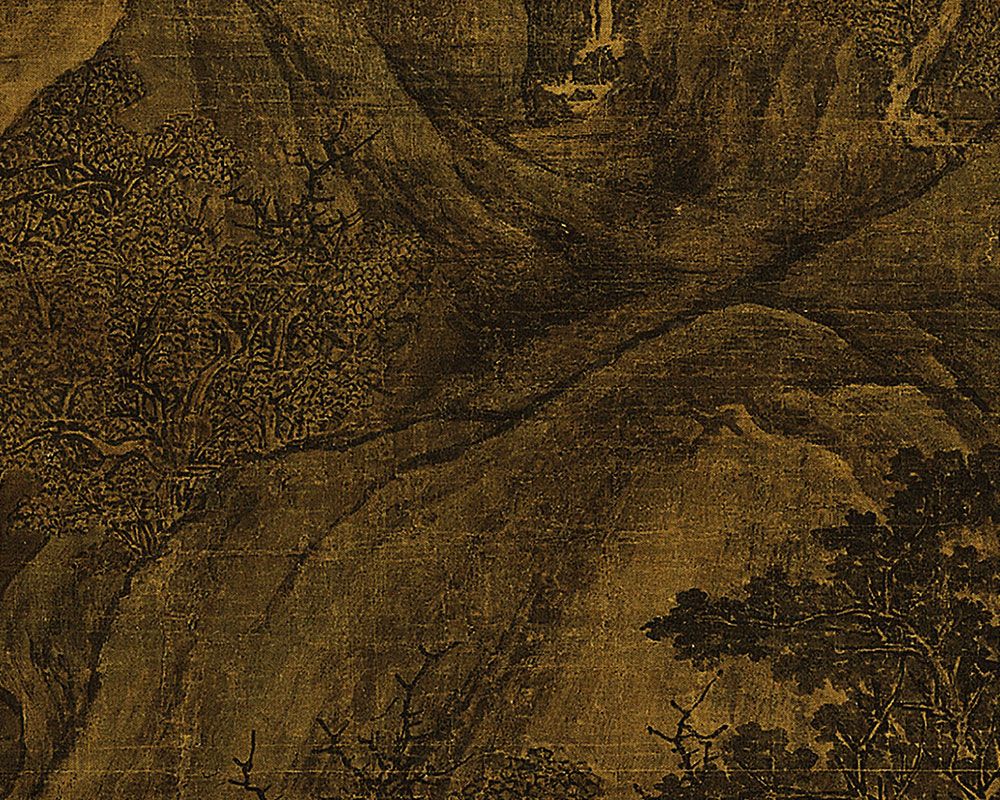
Guan Tong, a student of Jing Hao, departed from the ornamental styles of the earlier Tang Dynasty to embrace a raw, powerful realism. His mountains are "stony," characterized by sharp, weathered edges that suggest the harsh, enduring beauty of North China. In this work, the sheer verticality of the peaks creates a sense of "High Distance," a space where the earthly and the celestial seem to meet.
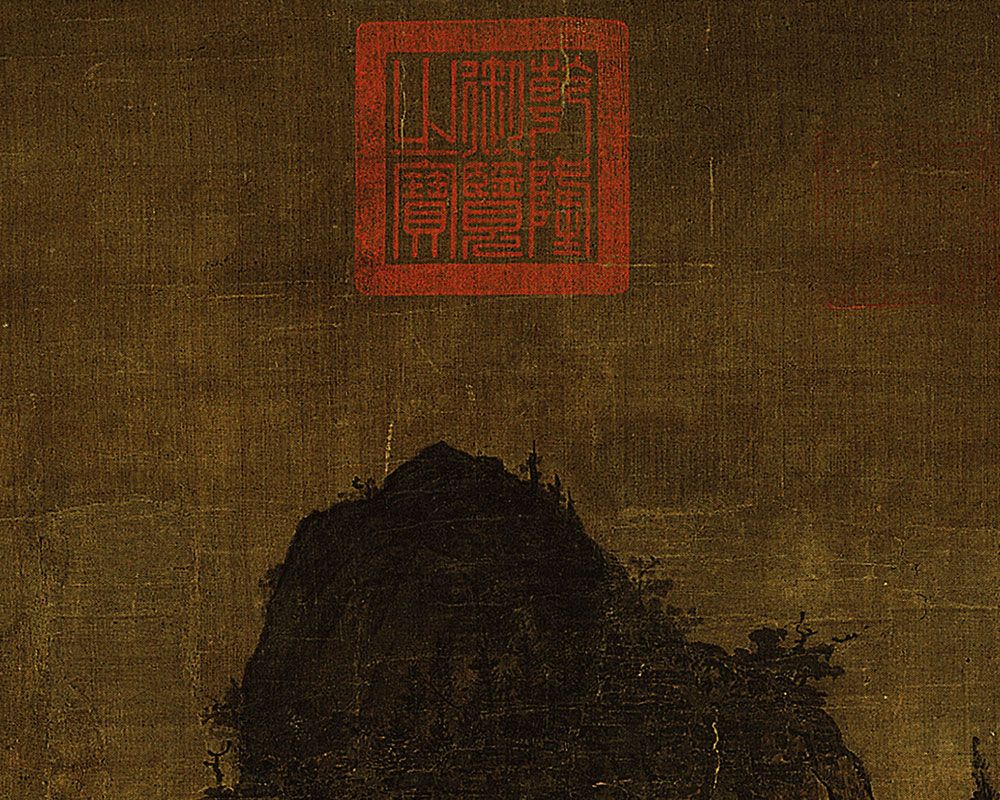
Technically, the painting is famous for its "Guan-style" brushwork. Using short, forceful strokes, the artist defines the texture of the granite faces, giving the mountain a physical "bone" structure. These strokes are not just lines; they are the rhythm of the earth itself, captured through a brush that was said to be "simple yet majestic."
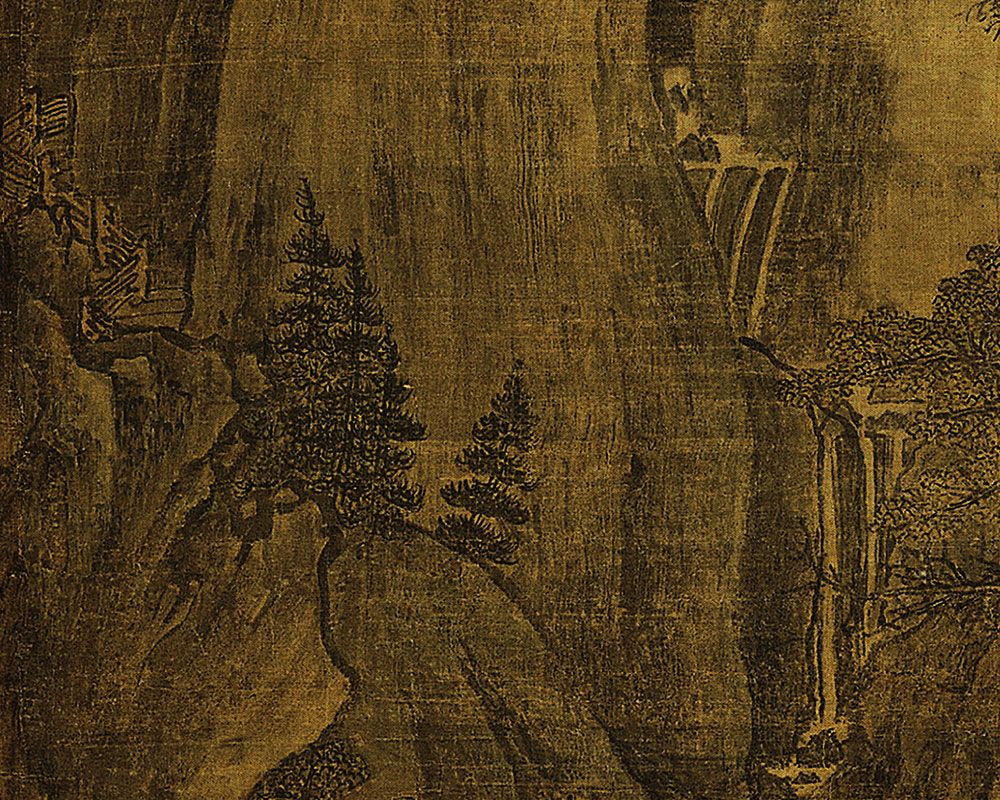
The "Evening Verdure" refers to the subtle wash of color applied over the ink. It represents that fleeting moment at dusk when the autumn chill settles, and the forest maintains a deep, cool green glow. It is a hauntingly beautiful atmospheric effect that adds a layer of mystery to the otherwise stark and jagged terrain.
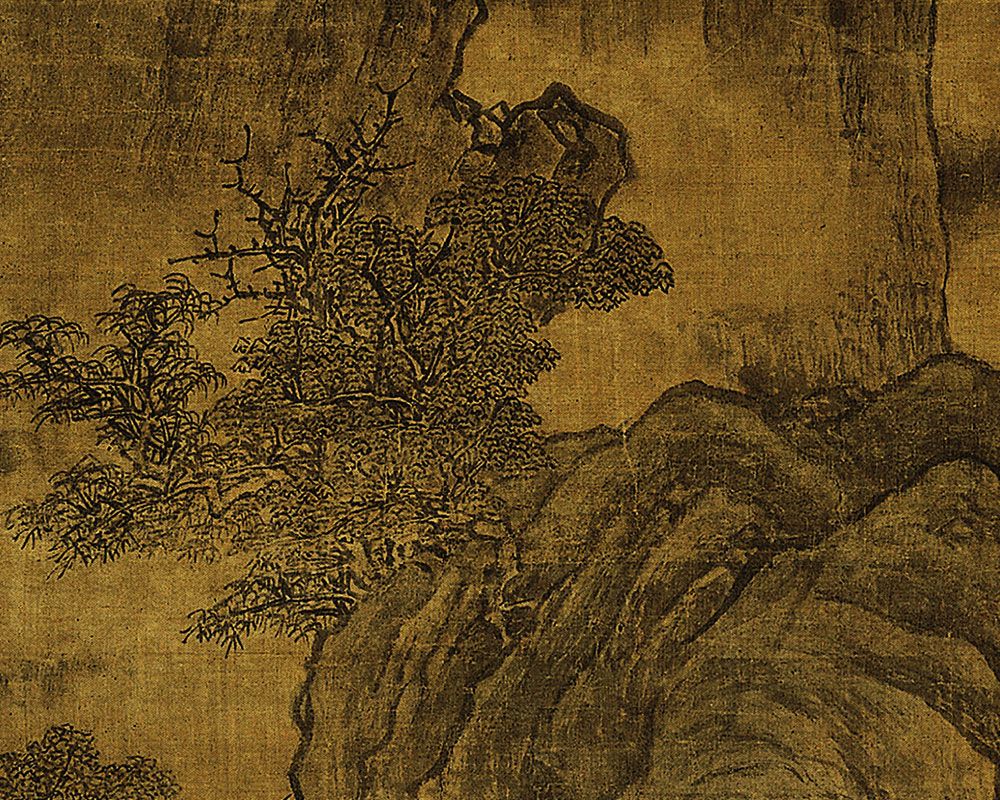
For modern collectors, experiencing this work is a journey back to the roots of Chinese aesthetic philosophy. It represents a time when man’s place in the universe was seen as humble and harmonious. A museum-quality replica allows this ancient energy to transform a modern space, bringing the stoic silence of the Northern peaks into the home.