
In the grand timeline of Chinese art, the Five Dynasties period serves as the explosive birth of monumental landscape painting. Leading this revolution was Guan Tong, a master who moved away from the colorful, courtly styles of the Tang to embrace the raw, skeletal power of the earth. His masterpiece, Plank Path in the Shu Mountains, is the definitive cornerstone of the "Northern School," where mountains are not mere scenery but divine monuments of endurance.
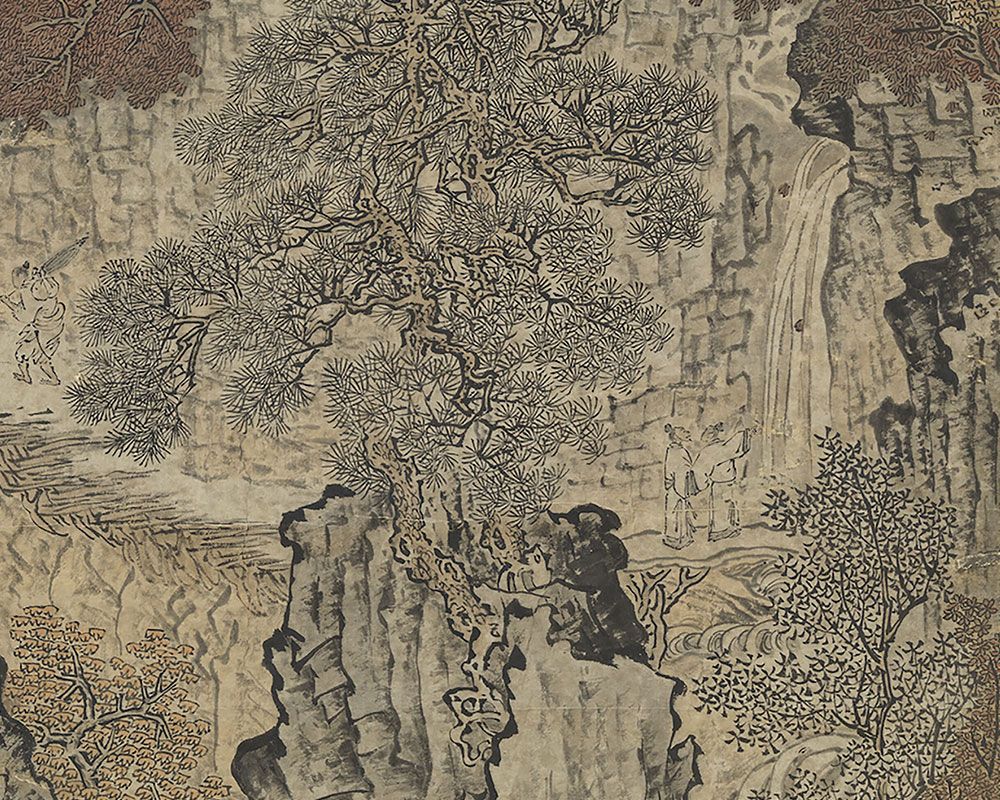
Guan Tong’s unique contribution was his ability to simplify the brush while magnifying the spirit. He sought to capture the "bones" of the mountain—the hard, wind-scoured reality of the Northern Chinese terrain. In this painting, the central peak dominates the sky, conveying a sense of permanence that makes human life appear fleeting and humble.
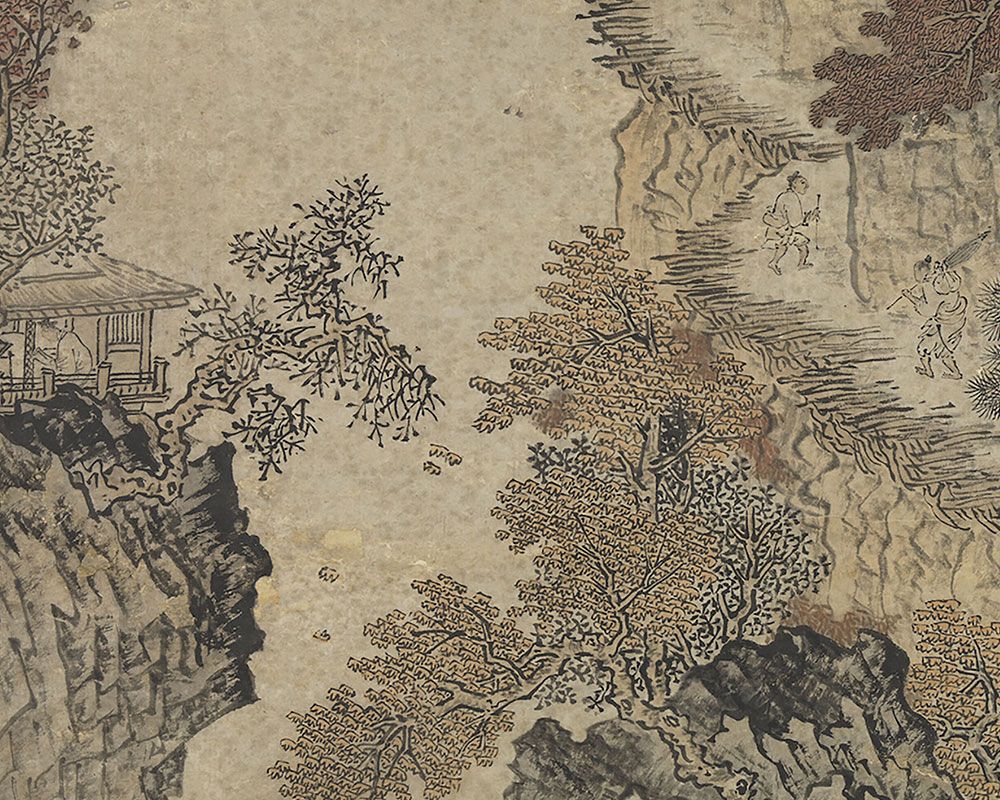
The "Plank Path" itself is a stroke of narrative genius. By depicting the treacherous wooden galleries bolted to the cliffs of Sichuan, Guan Tong introduces a sense of peril and resilience. The travelers and mules on the path represent humanity’s enduring struggle to find a way through the overwhelming vastness of the natural world.
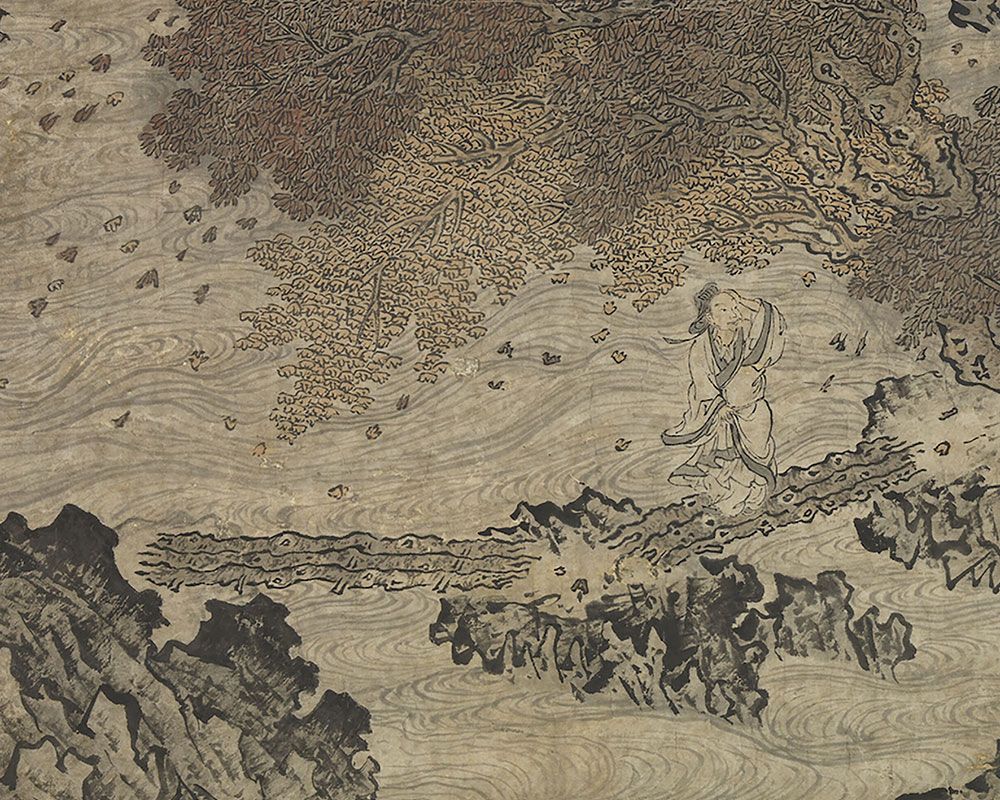
Technically, the work is a showcase of the "Nail-head" texture stroke. These sharp, forceful marks create a crystalline texture on the stone surfaces, giving the granite peaks a weight that feels almost three-dimensional. It is this technical hardness that gives the Northern School its characteristic stoic dignity.
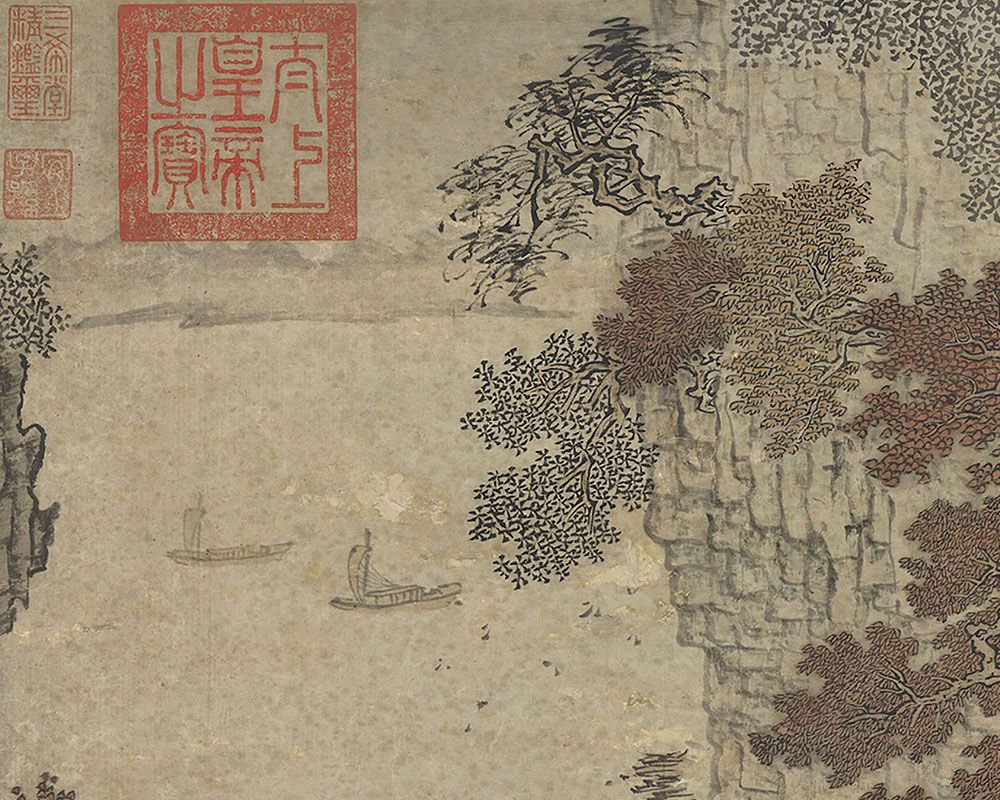
Today, owning a museum-quality 1:1 replica of this work is an act of preserving history. SinoInArt’s reproduction, meticulously mounted on Suzhou Yun Brocade, allows the modern collector to experience the monumental silence of Guan Tong’s world in its original scale and spirit.