
In the turbulent era of the Five Dynasties (907–960 AD), a period of profound artistic transition, one name stood above the rest in the realm of landscape painting: Guan Tong. A disciple of the legendary Jing Hao, Guan Tong moved beyond his teacher’s foundations to create a style that was "simple in brushwork but majestic in spirit." His masterpiece, Autumn Mountains in Evening Verdure (秋山晚翠圖), now a crown jewel of the National Palace Museum in Taipei, remains one of the most significant pillars of Chinese art history.
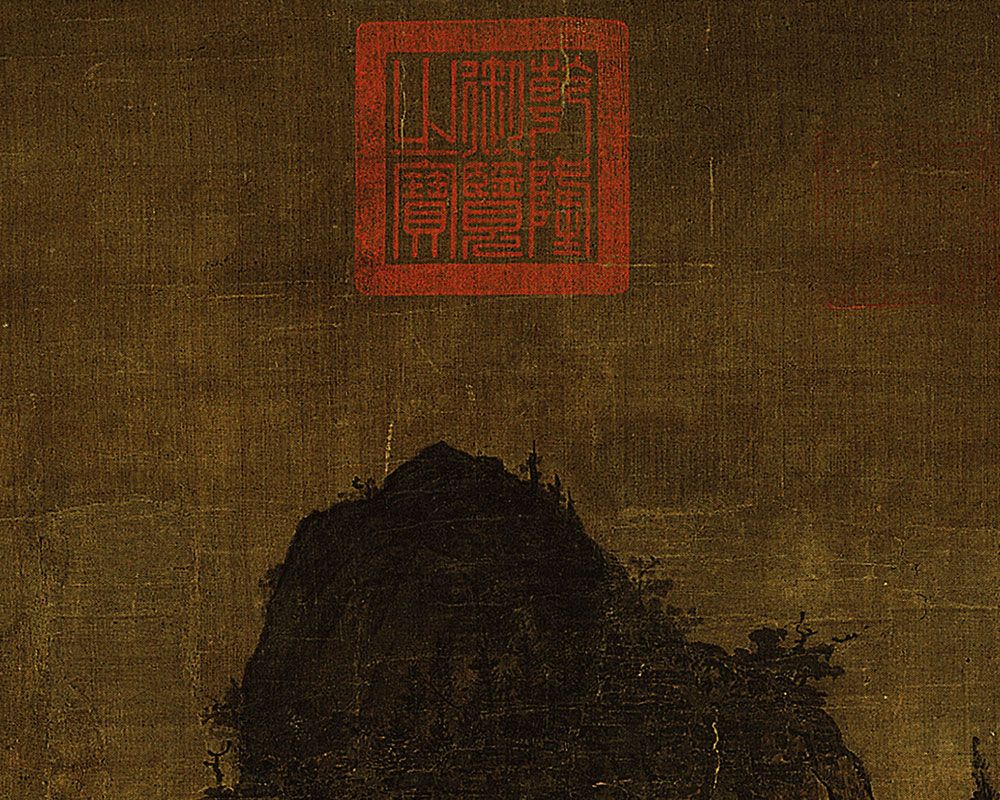
The painting is a breathtaking example of the "High Distance" (Gaoyuan) compositional technique. As the viewer’s eye travels from the rushing streams and weathered boulders at the base, it is led upward along winding paths and through misty valleys to a towering, jagged central peak. This monumental mountain dominates the silk, its sheer scale conveying a sense of the eternal and the divine. Within the folds of the cliffs, tiny details emerge—hidden dwellings, a mountain bridge, and travelers with their pack mules—reminding us of the harmonious, albeit humble, place of humanity within the vastness of nature.
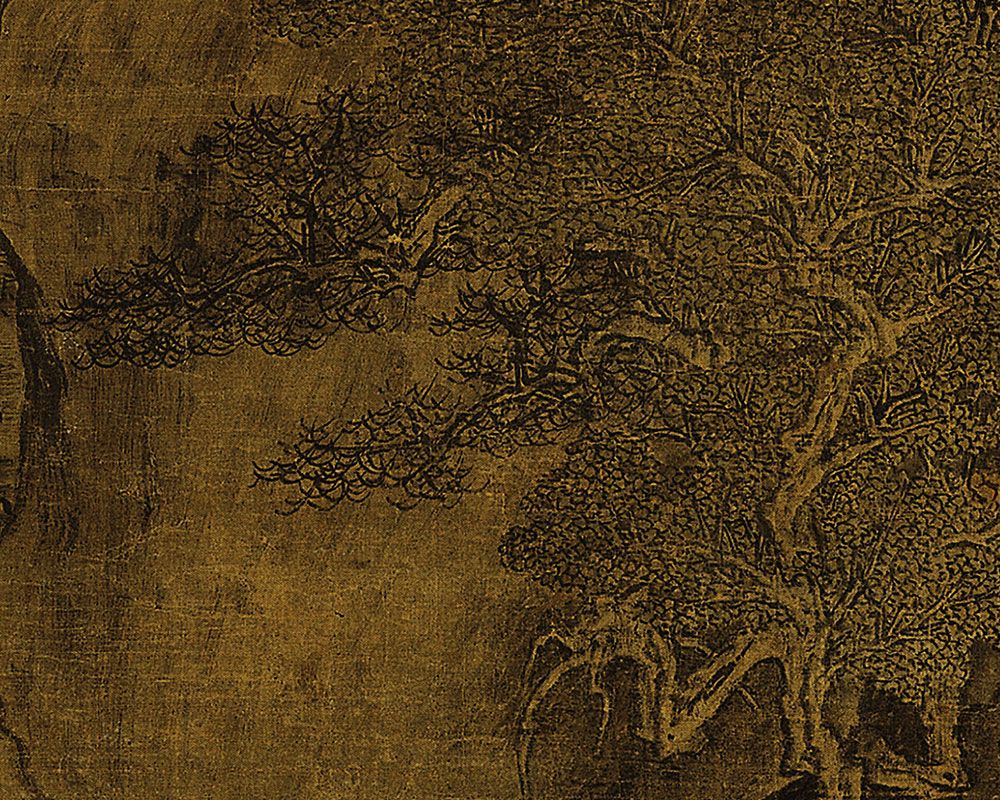
Technically, the work is a tour de force of Northern landscape aesthetics. Guan Tong employed what would later be recognized as "nail-head" texture strokes to define the rugged, granite-like surfaces of the northern mountains. The brushwork is firm and crystalline, capturing the "bones" of the earth. The title "Evening Verdure" refers to the subtle, ethereal wash of pale green and blue applied over the ink, recreating that fleeting moment at dusk when the autumn mountains seem to glow with a deep, cool vitality before the sun sets.
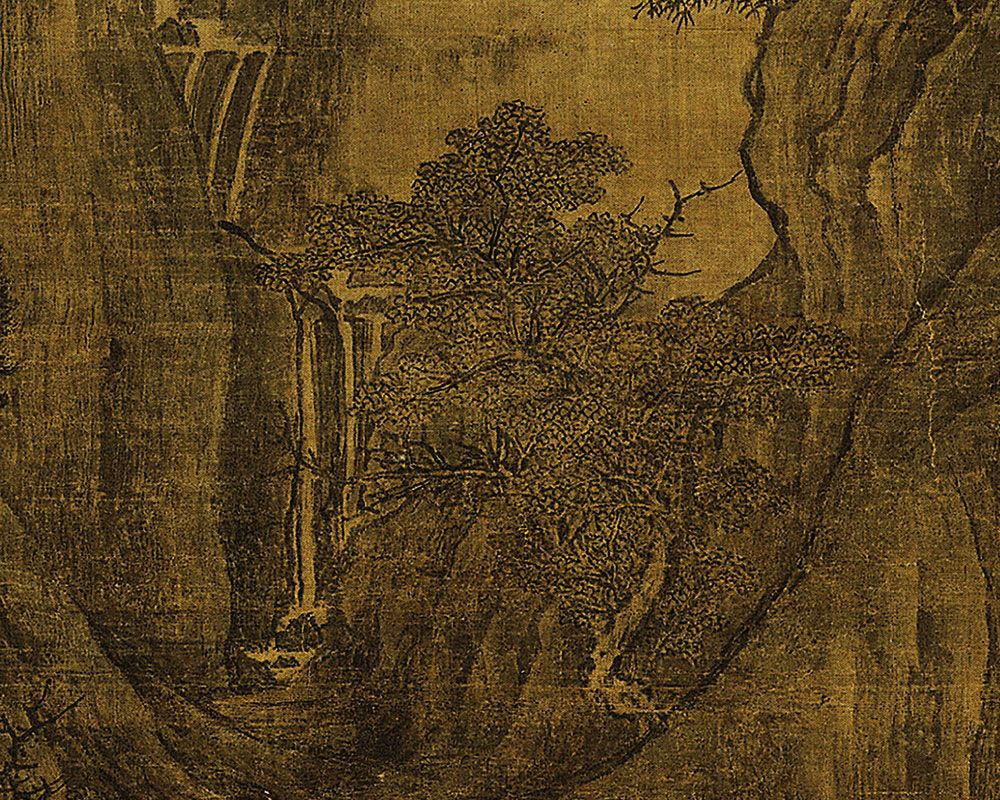
Beyond its visual beauty, the painting radiates a profound philosophical atmosphere—one of "desolate magnificence." Unlike the soft, misty hills of Southern China, Guan Tong’s landscapes are stark, powerful, and stoic. It is a world that demands respect; it is a landscape of the mind where scholars sought refuge from the chaos of war, finding solace in the unchanging endurance of the peaks. This work laid the spiritual and technical groundwork for the Great Age of Song Dynasty landscape painting, directly influencing masters like Fan Kuan.
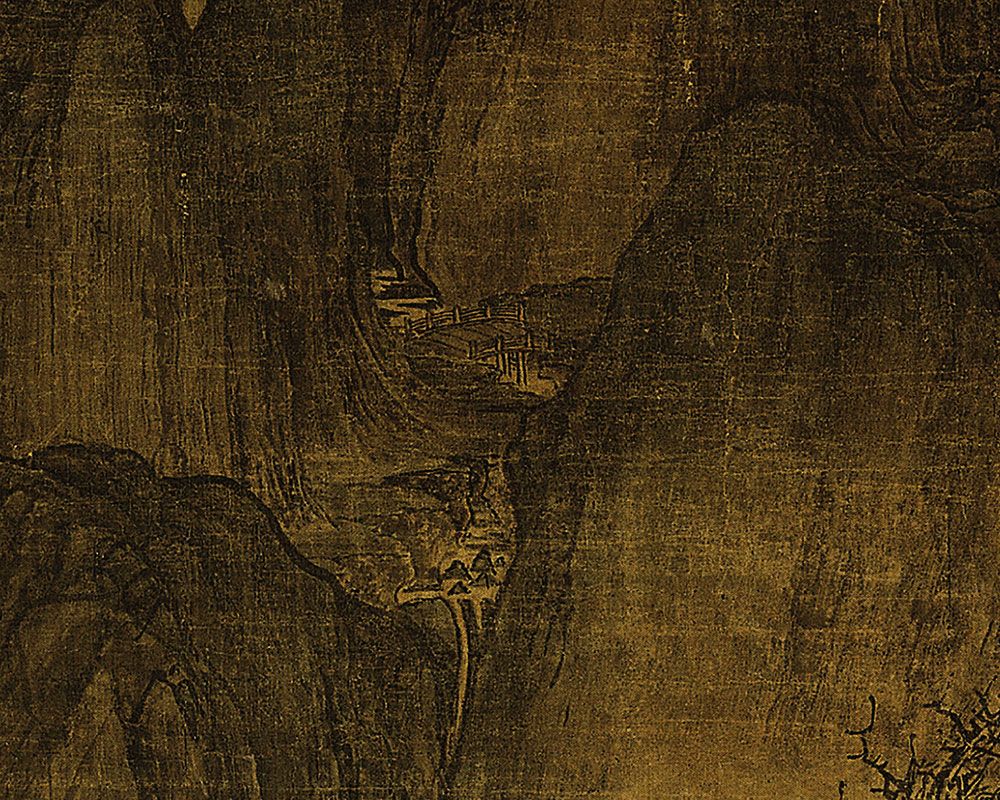
Today, Autumn Mountains in Evening Verdure is more than a historical relic; it is an invitation to witness the birth of the "Northern School" of landscape. It represents the moment when Chinese artists moved from merely depicting scenery to capturing the very soul of the natural world. To stand before it is to experience the "breath-resonance" (Qiyun) that has defined Chinese aesthetic excellence for over a thousand years.
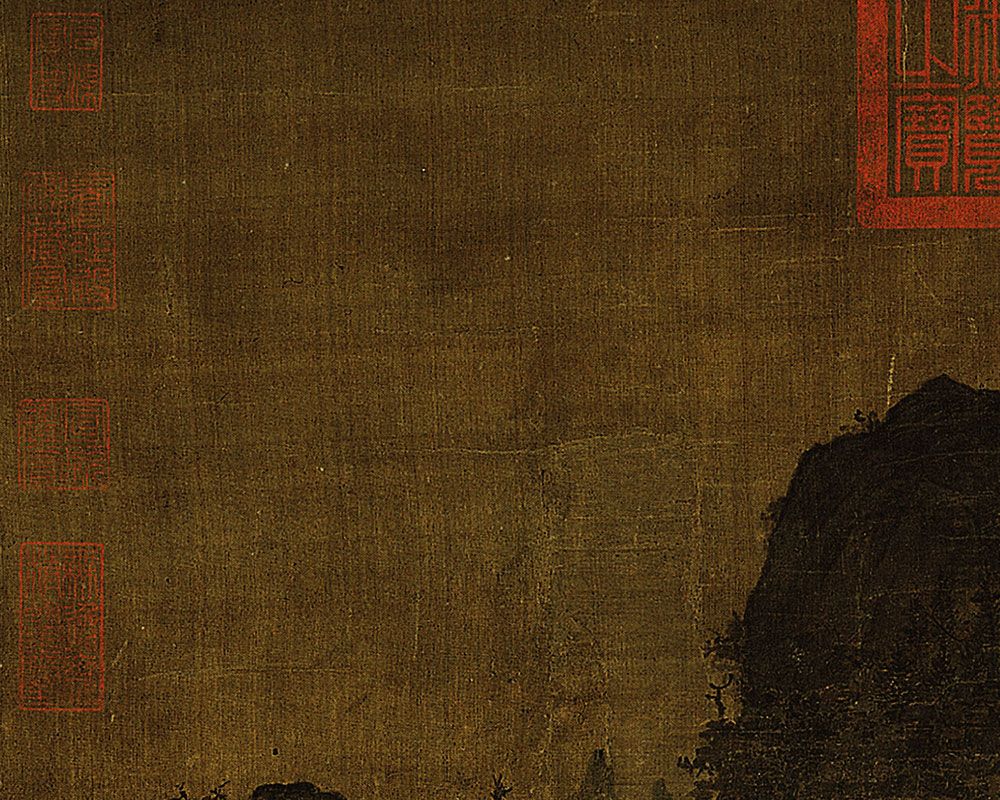
For the most discerning collectors and enthusiasts of Chinese aesthetics, SinoInArt is proud to present a museum-quality 1:1 reproduction of this legendary work.The SinoInArt Collection Edition is defined by its uncompromising commitment to authenticity. Each masterpiece is produced using high-definition Giclée printing on premium long-scroll Xuan paper and is meticulously mounted with authentic Suzhou Yun Brocade (Cloud Brocade). Adhering to the most rigorous traditional aesthetic standards, this exquisite craftsmanship ensures that the artwork remains timeless and endures for generations. This unwavering pursuit of artistic fidelity is further demonstrated in the stunning precision of the reproduction, where every minute historical detail—including the exquisite imperial seals of Emperor Xuanhe—is rendered with absolute clarity, offering collectors an unparalleled window into the grandeur of Chinese art history.