
In Chinese culture, art is rarely just for decoration; it is a visual prayer for prosperity. "Flowers and Birds of a Beautiful Spring" (Jin Chun Tu) is a masterpiece saturated with auspicious meanings. Every element, from the birds to the rocks, was carefully chosen to convey a message of success, wealth, and longevity to the Qing imperial family.
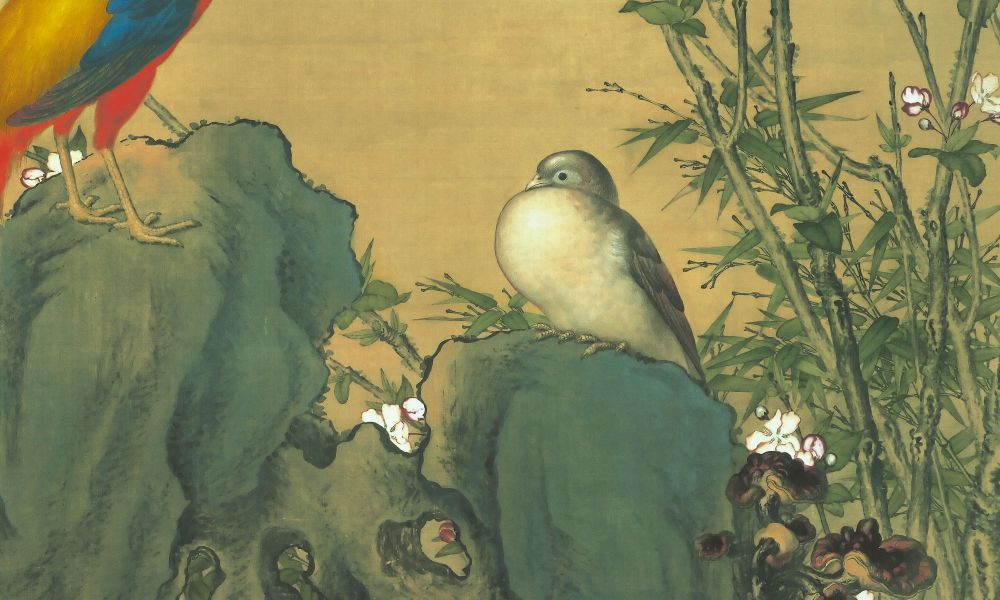
The golden pheasant, or Jinji, is the star of the painting. The "Jin" in its name is a homophone for "Splendor." In the Qing court, the pheasant represented the "Five Virtues" of a scholar-official: literacy, military prowess, courage, benevolence, and trust. To display this painting was to declare one’s noble character and high aspirations.
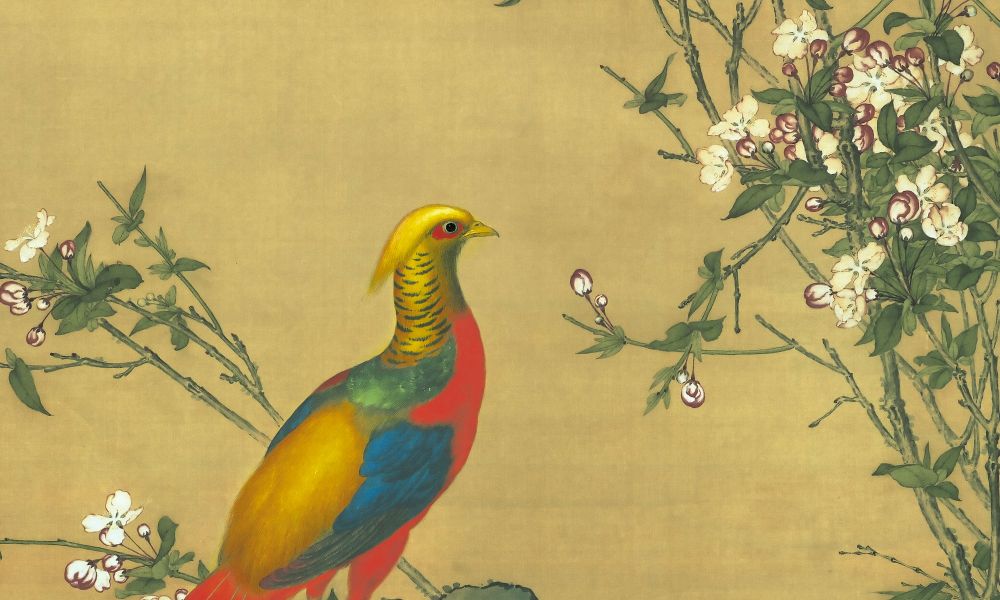
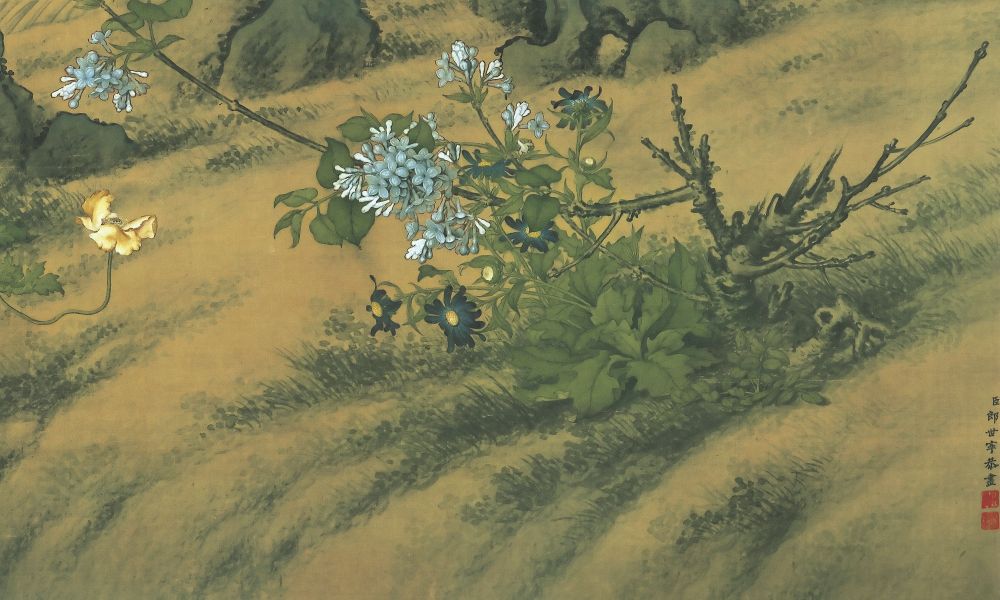
The peonies, known as the "King of Flowers," symbolize wealth and honor (Fugui). When paired with the golden pheasants, the painting forms the visual pun "Jin Shang Tian Hua," which literally means "adding flowers to a beautiful brocade." It is a wish for things that are already excellent to become even better—a doubling of fortune.
Even the background elements hold weight. The Taihu rock symbolizes endurance and the strength of the scholar’s garden, while the Lingzhi fungus at the base represents immortality and health. Together, these symbols create a harmonious vision of a "Bright Spring," a metaphor for a peaceful and prosperous era.
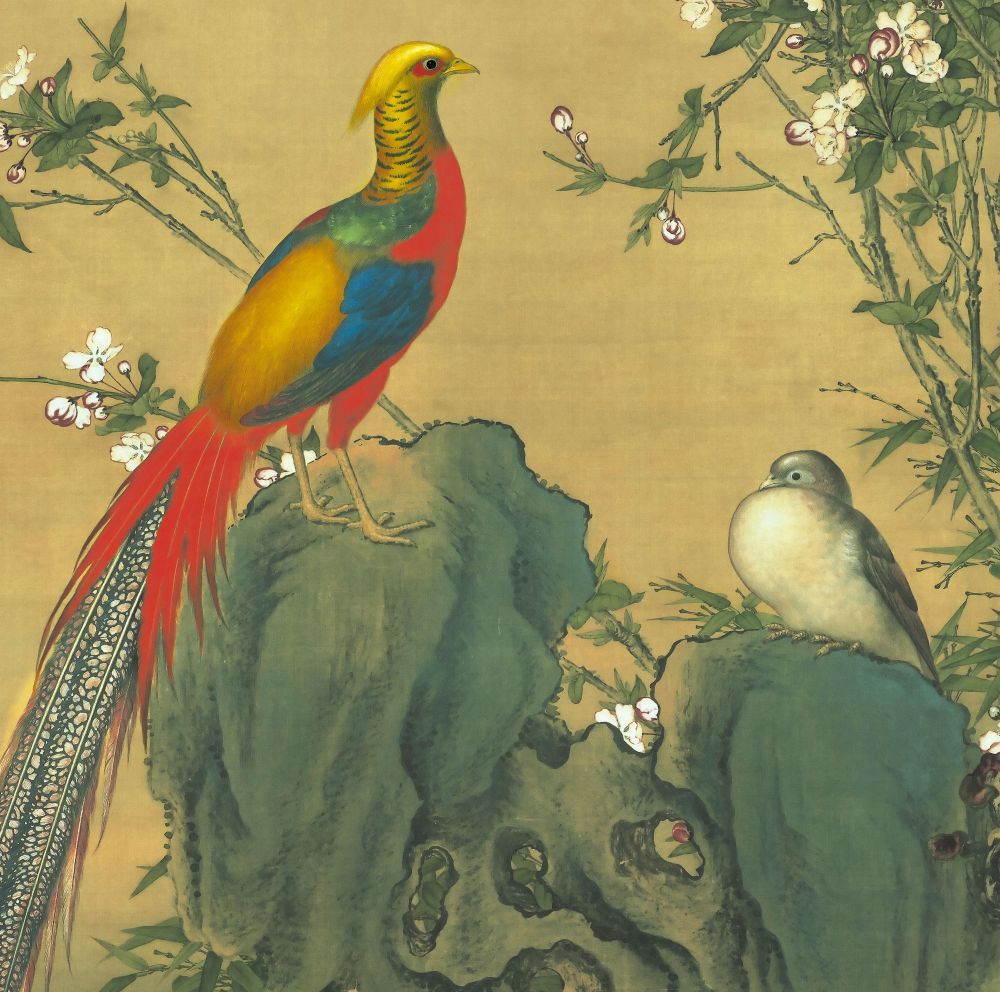
For the modern collector, a 1:1 replica from SinoInArt brings these ancient blessings into the contemporary space. Our replicas are hand-mounted with Suzhou Yun Brocade, a material historically reserved for royalty, making it a perfect gift for housewarmings, promotions, or weddings where a "bright future" is celebrated.