
Giuseppe Castiglione, known in China as Lang Shining, was more than just a painter; he was a cultural bridge. Arriving in Beijing in 1715, this Italian Jesuit missionary spent over five decades serving three Qing emperors. His work, "Flowers and Birds of a Beautiful Spring," is the ultimate testament to his unique "Sino-Western" style, which combined European realism with Chinese aesthetic sensibilities.
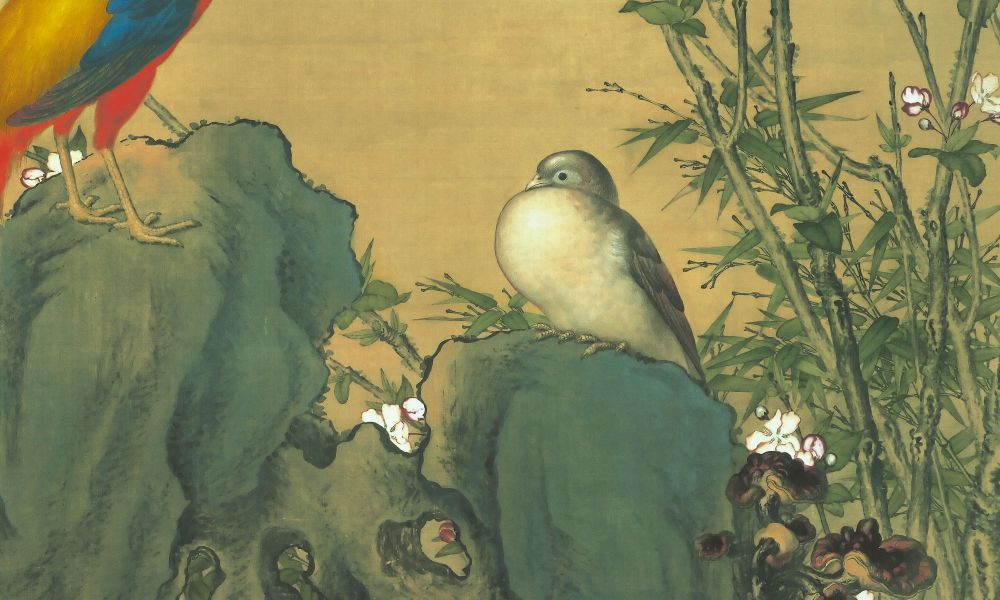
In this masterpiece, Castiglione broke away from the traditional "flat" style of Chinese ink painting. He introduced the concept of light and shadow—chiaroscuro—to the imperial court. By observing the way light hit the feathers of a pheasant or the petals of a peony, he created a sense of volume and three-dimensionality that had never been seen before in the Forbidden City.
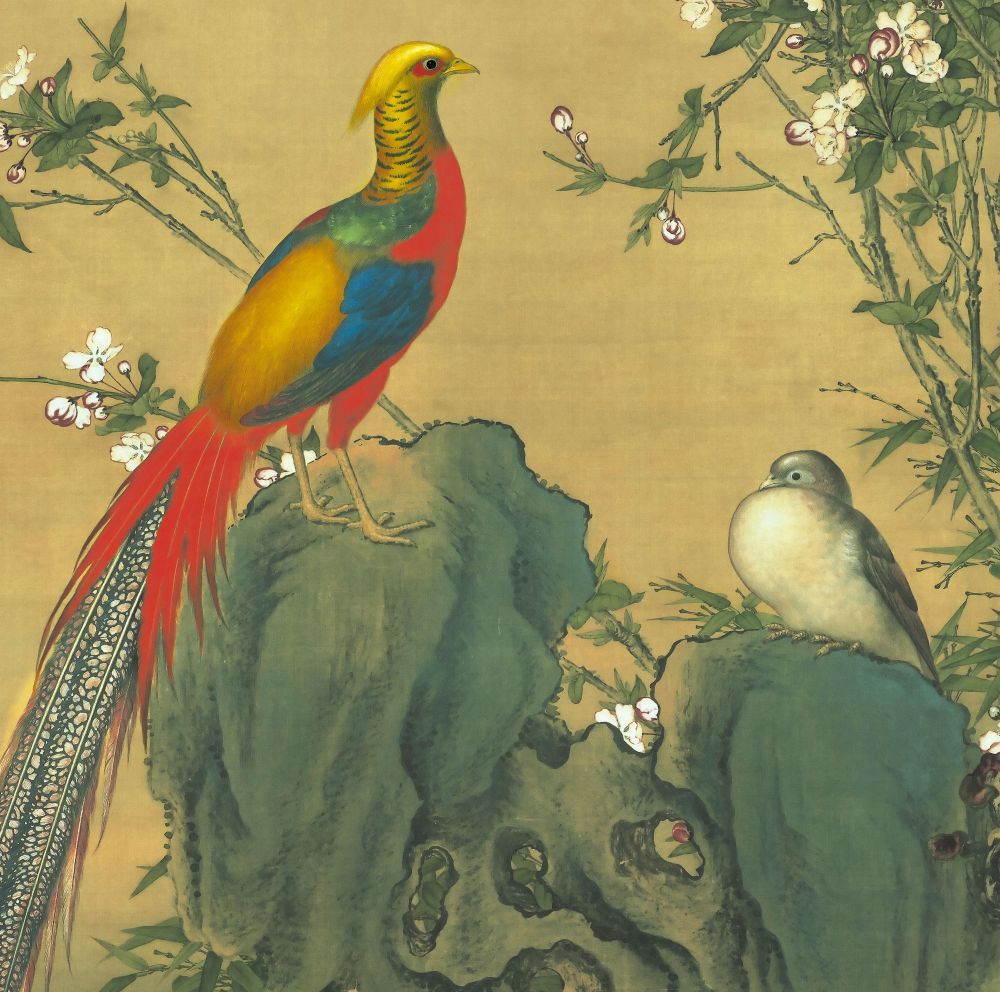
The Qianlong Emperor was so enamored with this style that he made Castiglione the principal court artist. "Flowers and Birds of a Beautiful Spring" was created during the height of the Qing Dynasty's power, reflecting a period of immense wealth and cultural flowering. It represents a time when the East was fascinasted by the scientific accuracy of the West.
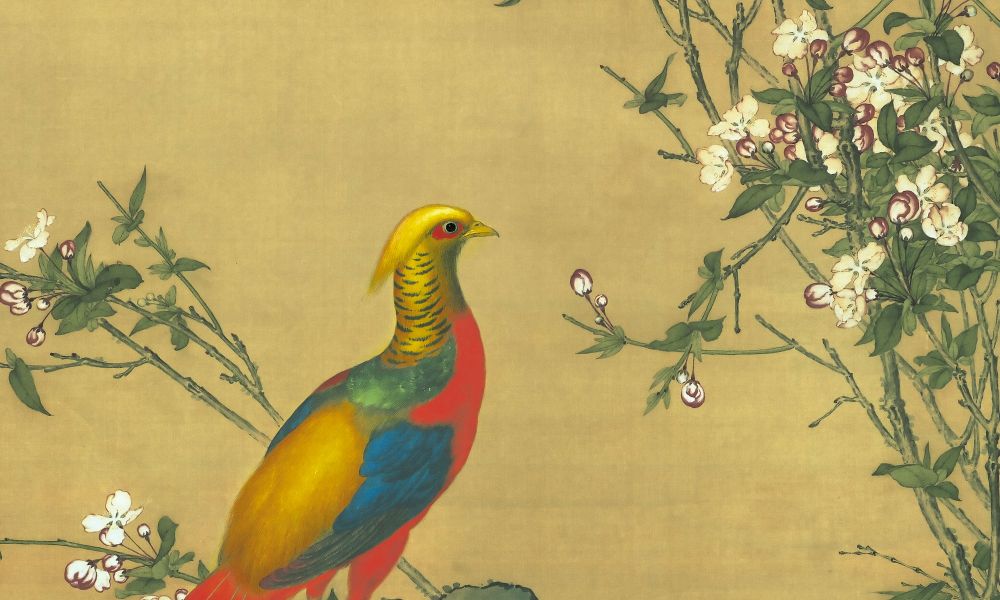
The composition features two vibrant golden pheasants perched on a rugged Taihu rock. The detail in the birds’ plumage is so fine that one can almost feel the texture of the feathers. Surrounding them are peonies and cherry blossoms, rendered with a delicacy that honors the Chinese "Gongbi" (meticulous) tradition while adding a lifelike vitality.
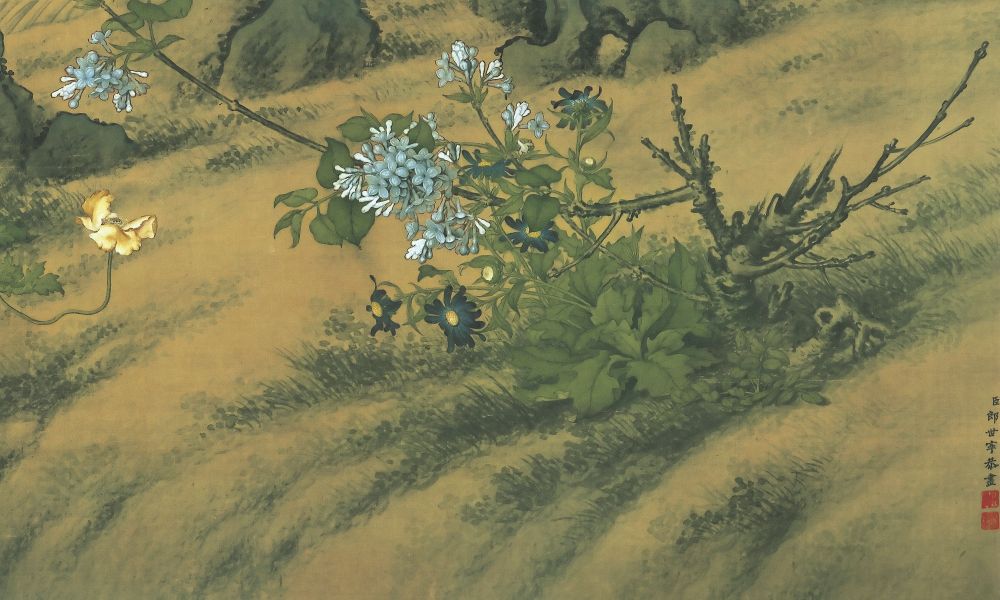
SinoInArt honors this legacy by offering a 1:1 museum-quality replica. Our restoration ensures that the brilliance of Castiglione’s colors and the precision of his brushwork are preserved. Mounted on authentic Suzhou Yun Brocade, this piece is not just art; it is a piece of historical diplomacy for your home.