The Future of Gongbi: Innovation and Tradition
|
The future of Gongbi painting rests on the delicate balance between honoring its rich traditions and embracing innovation. As this art form moves into the 21st century, artists are faced with the challenge of preserving its integrity while exploring new avenues of expression. This requires both deep respect for the old and a brave willingness to innovate.  One of the key areas of development is the exploration of new materials and techniques. Contemporary artists are experimenting with alternative pigments, different types of paper, and new methods of layering and texturing, seeking to expand the expressive potential of Gongbi. This is not a rejection of the old ways, but a development and a refinement of existing methods. 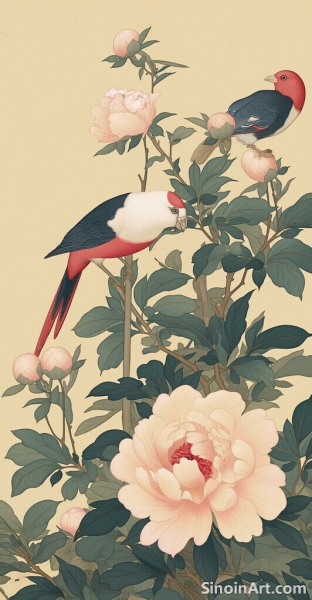 Technology is also playing an increasingly important role in the evolution of Gongbi. Digital tools and printing techniques are being used by some artists to create new forms of artwork that incorporate the aesthetics of Gongbi, while also reaching a wider audience. These tools allow artists to experiment with different visual styles and concepts.  The preservation of traditional skills and techniques is also of utmost importance. Passing down knowledge and expertise to younger generations of artists ensures that the essence of Gongbi is not lost. Education is vital to ensuring that the artform will live on. It needs to be taught, appreciated, and then developed by future artists. The future of Gongbi lies in the hands of those who practice it. With a respect for the past and an openness to the future, this ancient art form will continue to evolve, captivate, and inspire. The balance between tradition and innovation will ensure the style's relevance for many generations to come. The future is bright for this delicate and beautiful artform. |
Tag : Future of Gongbi, innovation in Chinese art, traditional art evolution, digital art and Gongbi, art preservation
Related information
- The Use of Gold Leaf in Gongbi: Adding a Touch of Opulence
- Gongbi Painting and the Depiction of Clouds and Mist
- The Future of Gongbi: Innovation and Preservation
- Gongbi Painting and the Use of Light and Shadow
- Gongbi Painting and the Influence of Chinese Poetry
Discusses the use of gold leaf in Gongbi painting, its application techniques, symbolism, and contribution to the opulence and visual impact of the art.
This article explores the depiction of clouds and mist in Gongbi painting, highlighting the techniques used to create a sense of depth, luminosity, and atmosphere, and how the subtle variations in color and tone evoke a sense of mystery and serenity.
This article discusses the future of Gongbi painting, highlighting the importance of both preserving traditional techniques and fostering innovation, and exploring the role of technology and globalization in ensuring the art form's continued relevance.
This article explores the subtle but skillful use of light and shadow in Gongbi painting, highlighting the use of color gradations, brushstrokes, and how these techniques contribute to creating a sense of depth, volume, atmosphere, and enhance the overall impact of the artwork.
This article explores the influence of Chinese poetry on Gongbi painting, highlighting the shared themes, imagery, and symbolic language, and how this connection enhances the literary and artistic impact of the artwork.