
In the vast treasury of Chinese art, few motifs are as spiritually resonant as the plum blossom. Among the earliest and most profound examples of this genre is "Plum Blossoms with Poetic Intent" (梅花诗意图), a rare handscroll by the Northern Song statesman and scholar Wang Yansou (1043–1093). Now preserved in the Freer Gallery of Art in Washington, D.C., this masterpiece represents the birth of "Ink Plum" (Momei) painting—a style where the brush transcends mere representation to capture the very "bones" of the scholar’s soul.
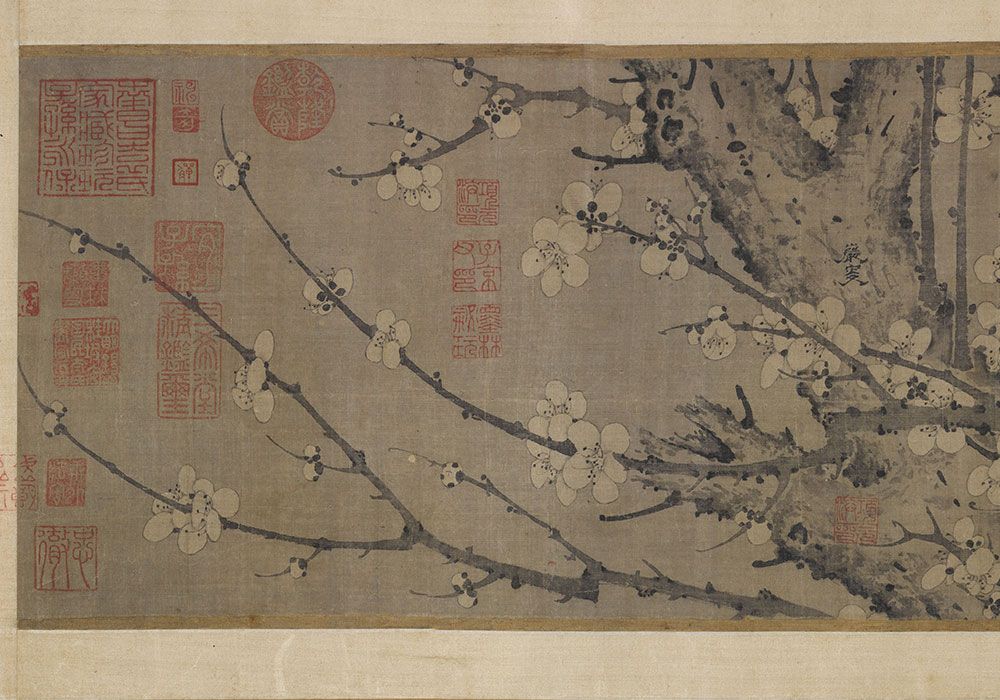
Wang Yansou was not a professional painter but a high-ranking court official known for his unyielding integrity and sharp intellect. A contemporary of the legendary Su Shi (Su Dongpo), Wang belonged to the elite circle of literati who believed that painting should be an extension of poetry and calligraphy. For Wang, the plum blossom was not just a winter flower; it was a self-portrait. Just as the plum blooms in the bitterest cold, Wang maintained his moral purity amidst the complex and often treacherous politics of the imperial court. This scroll is the visual manifestation of that "frozen fragrance" and unwavering character.
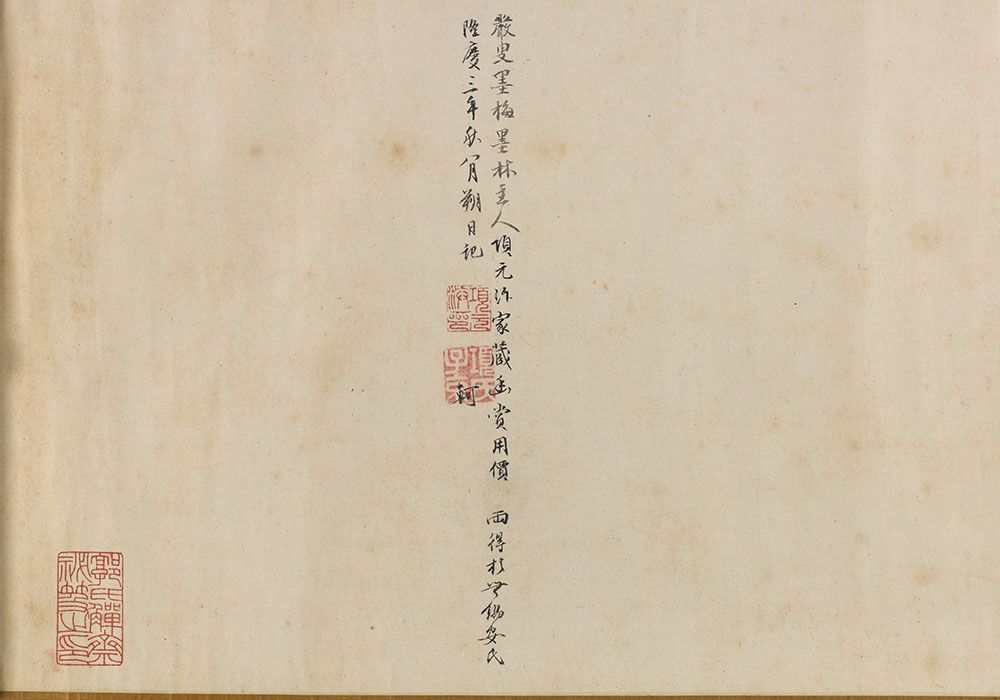
The handscroll unfolds like a silent melody. Eschewing the vibrant colors of the Tang court, Wang Yansou utilized only ink, relying on the "Five Colors of Black" to create depth and life. The composition is a masterclass in literati minimalism.
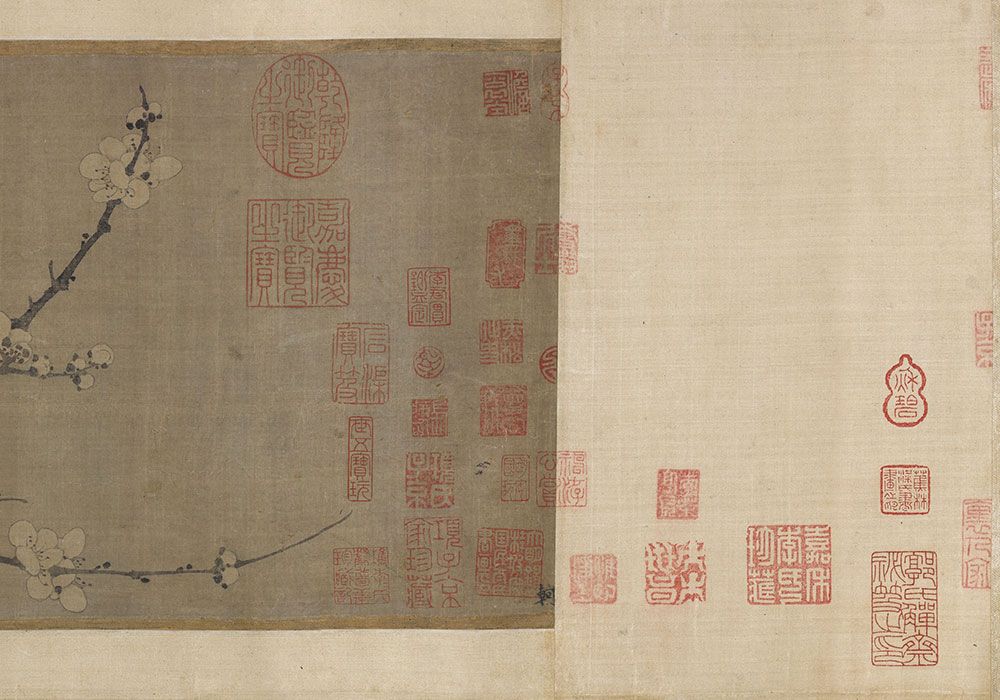
The branches are rendered with the "Flying White" (Feibai) calligraphic technique—where the brush moves so swiftly that the paper's texture shows through the ink, creating a sense of aged, weathered wood. The blossoms themselves are not painted with solid washes but are delicately outlined with fine, wiry ink lines (known as the "circle" method). This technique gives the flowers a translucent, ethereal quality, as if they are glowing against the pale silk of winter. The rhythm of the scroll—alternating between dense clusters and sparse, solitary branches—perfectly captures the poetic ideal of "Sparse shadows slanting across clear, shallow water."
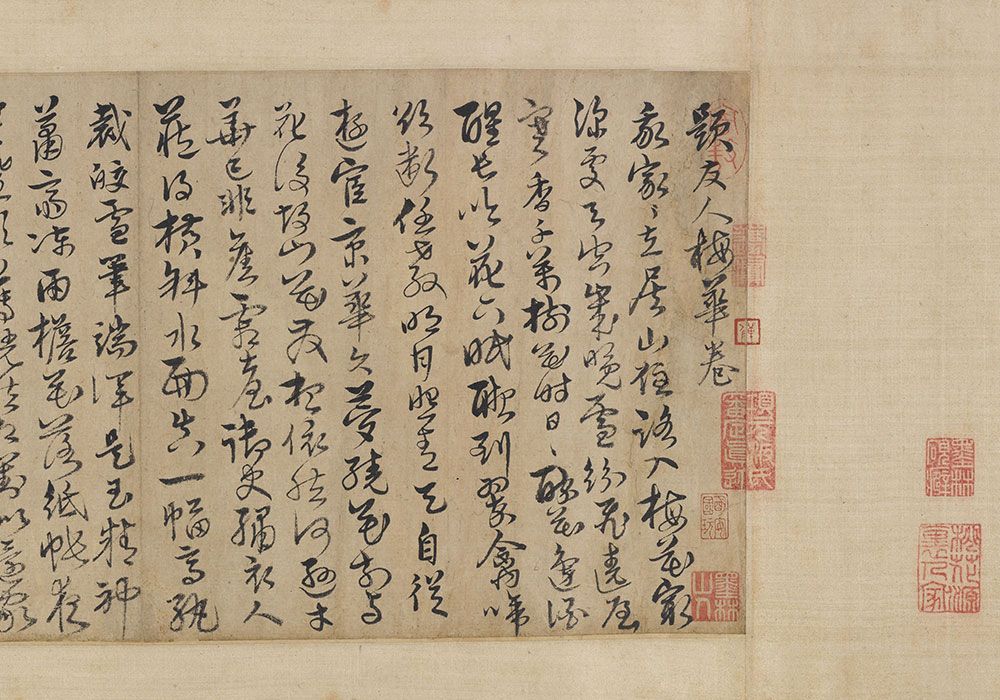
The title, "Plum Blossoms with Poetic Intent," is central to understanding the work. In Chinese aesthetics, "Poetic Intent" (Shiyi) implies that the painting is a "wordless poem." Wang Yansou did not seek to record the botanical details of a tree; he sought to evoke the feeling of a cold morning, the scent of blossoms carried on a winter breeze, and the resilience of life. To look at this scroll is to enter a meditative space. It is a work that demands slow appreciation, inviting the viewer to follow the flow of the ink and find a moment of inner peace.
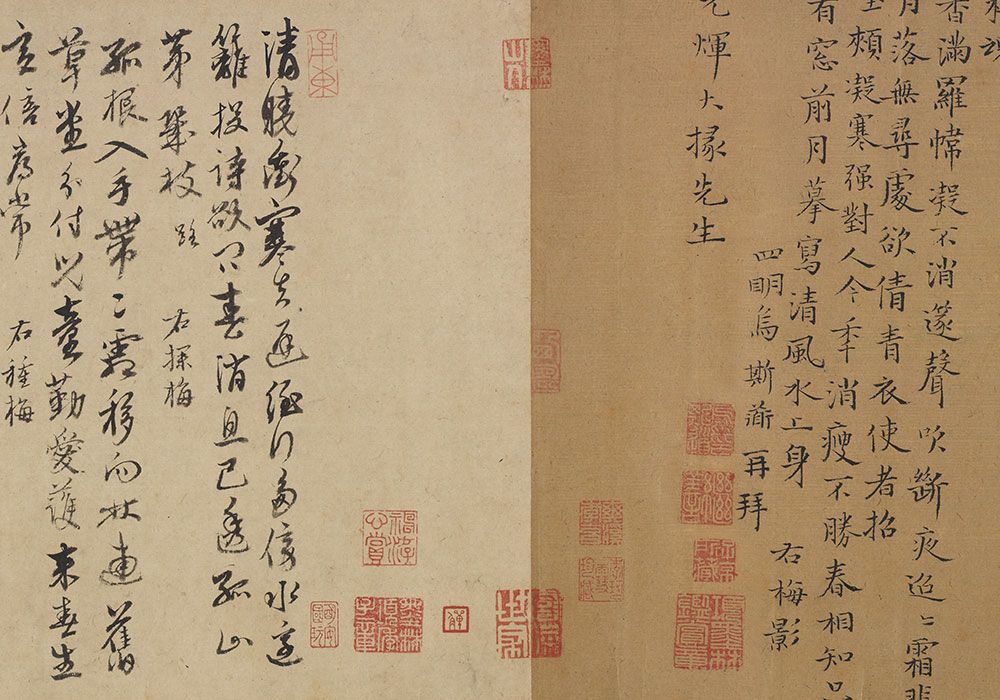
While many later artists like Yang Wujiu and Wang Mian became famous for their ink plums, Wang Yansou’s work stands as a foundational pillar. It established the standard for the "Gentleman’s Painting"—art that values spiritual depth over decorative beauty. For centuries, this scroll has been a source of inspiration for scholars and hermits, regarded as one of the most "pure" expressions of the Chinese spirit ever captured on paper.
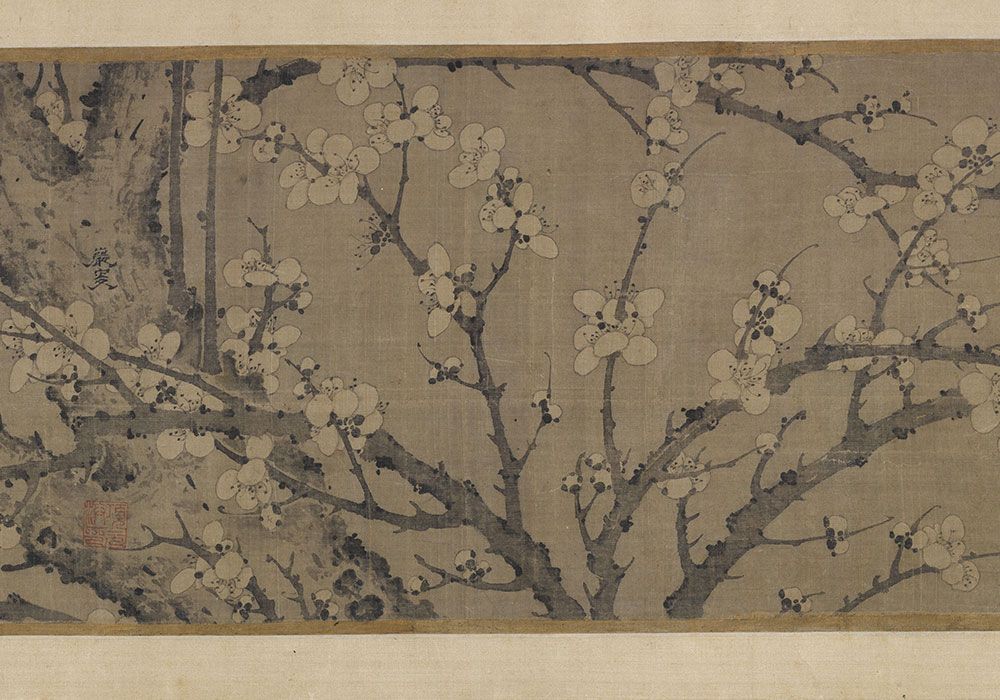
SinoInArt is proud to present a faithful 1:1 restoration of Wang Yansou’s Plum Blossoms with Poetic Intent. This is an invitation to bring the quiet dignity of the Northern Song into your private sanctuary.
- Unrivaled Fidelity: Utilizing ultra-high-definition Giclée technology, we have captured every nuance of Wang’s ink—from the bold, "charred" blacks of the main trunk to the lightest, mist-like grays of the delicate petals.
- Premium Materials: Printed on specialized long-scroll Xuan paper, the replica mimics the absorbency and organic feel of the original Song Dynasty medium, ensuring the "Breath-Resonance" (Qiyun) of the ink remains vibrant.
- Imperial Presentation: Each scroll is hand-mounted with authentic Suzhou Yun Brocade (Cloud Brocade). This UNESCO-recognized textile, historically reserved for the imperial family, provides a luxurious and culturally significant frame that complements the understated elegance of the ink plum.
- A Timeless Heirloom: This 1:1 restoration is more than a reproduction; it is a piece of living history. It is designed for the collector who values the "Bone Strength" of Chinese calligraphy and the serene beauty of Song Dynasty minimalism.