
In the history of global art, few figures possess a story as haunting and transformative as Bada Shanren (born Zhu Da, 1626–1705). A direct descendant of the Ming Dynasty’s founding emperor, his life was shattered in 1644 when the Ming collapsed under the Qing invasion. To survive the political purges of the new regime, the young prince fled into the mountains, shaved his head to become a monk, and later adopted a persona of "madness." He stopped speaking entirely, communicating only through his brush. His masterpiece, Cat and Rock (猫石图), is not merely a depiction of nature; it is a silent, roaring protest—a psychological self-portrait of a man who refused to be broken by history.
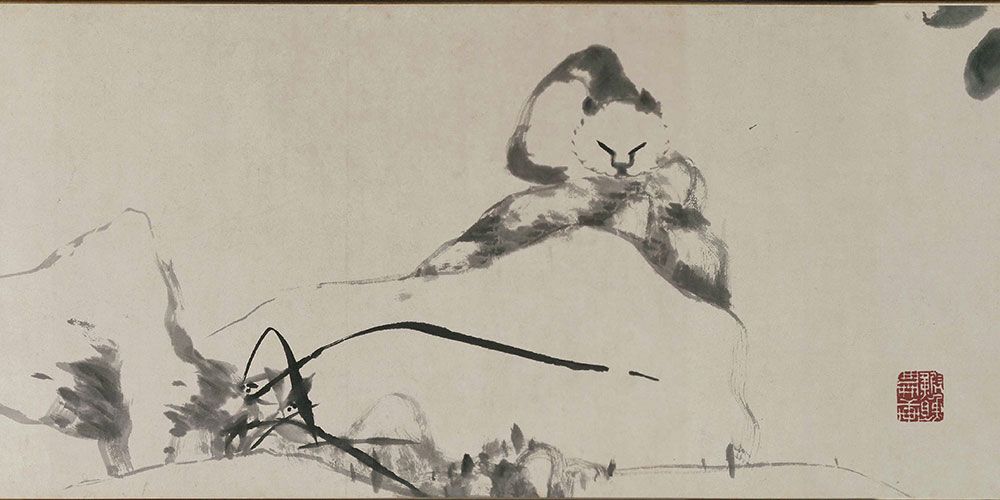
The composition of Cat and Rock is a masterclass in Zen minimalism. At first glance, the viewer sees only two elements: a hunched cat and a jagged, top-heavy rock. There is no background, no grass, and no sky. This radical use of "White Space" (Liu Bai) creates a vacuum of solitude, forcing the viewer to confront the raw energy of the subjects. The rock is depicted in a precarious, unstable state—wide at the top and narrow at the base—symbolizing the "shaky" and uncertain world the artist inhabited after the fall of his ancestral empire.
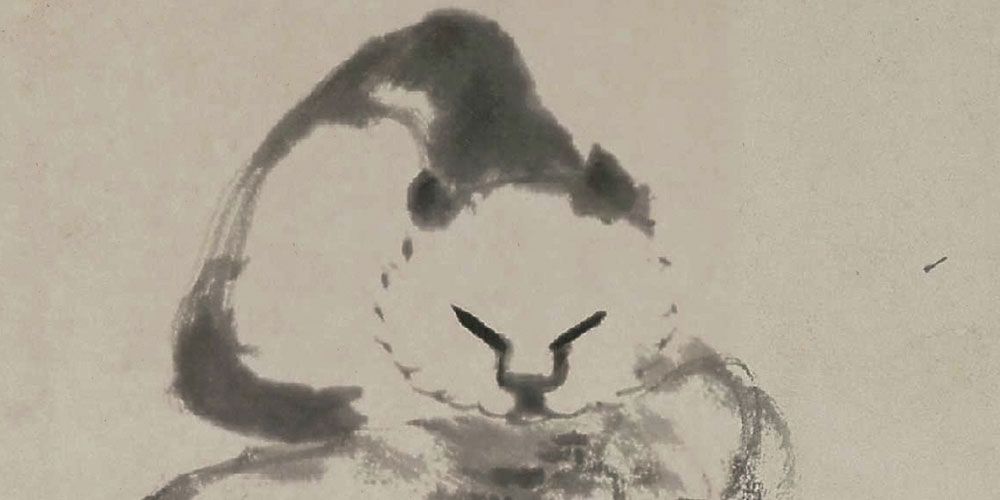
The heart of the painting lies in the cat’s gaze. Bada Shanren is legendary for his "white-eyed" (bai yan) animals—creatures that appear to be rolling their eyes upward in an expression of extreme disdain or stubborn indifference. The cat in this scroll is curled into a tight, defensive ball, its muscles tensed and its eyes wide with a cold, piercing alertness. This is not a domestic pet; it is a sentinel of the spirit. Through the cat’s defiant eyes, Bada Shanren looks back at the world that took everything from him, signaling that while his lands were conquered, his soul remained untouchable.
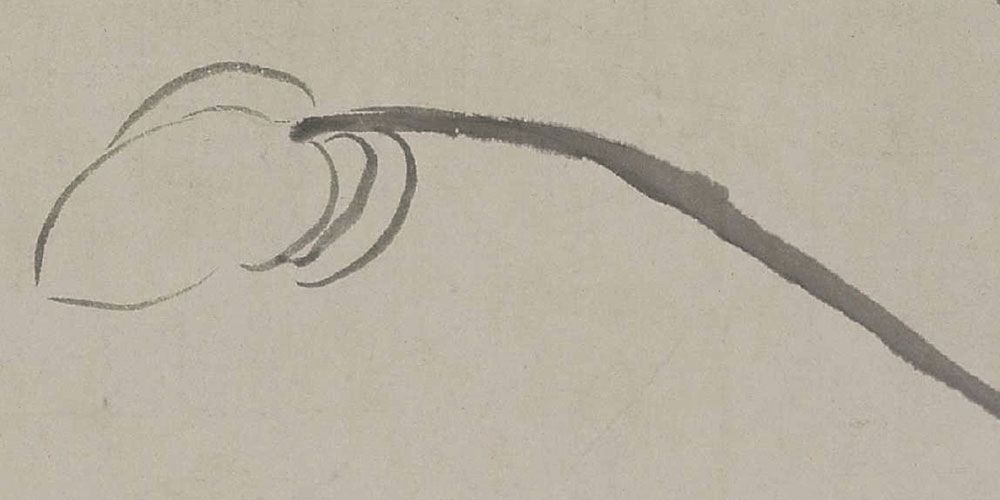
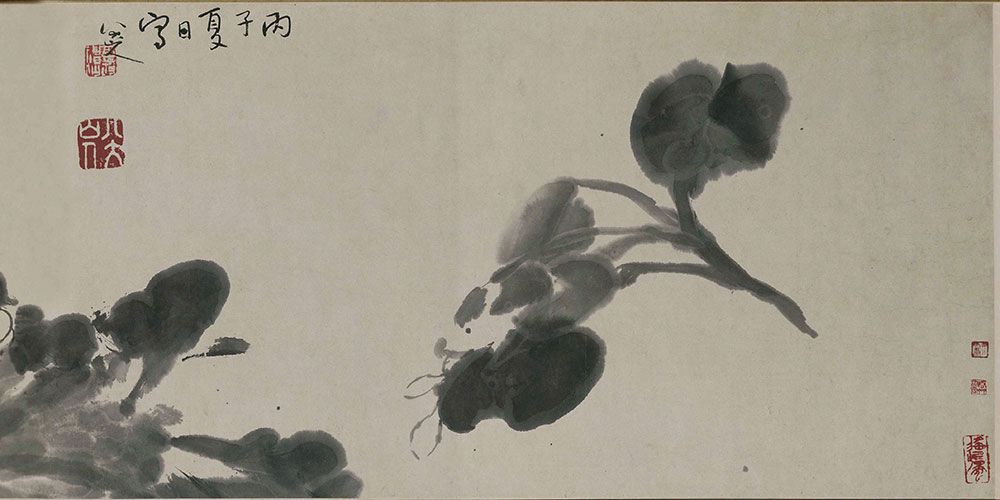
Technically, the work showcases the pinnacle of Xieyi (Freehand) ink wash painting. Bada Shanren utilized "Charred Ink" (Jiao Mo)—the deepest, most saturated black—to render the cat’s fur, making it appear dense and heavy against the silk. In contrast, the rock is outlined with "Dry Brush" (Feibai) strokes, where the ink is sparse, allowing the texture of the paper to show through. This interplay between the "Solid" (Shi) of the cat and the "Void" (Xu) of the rock creates a visual tension that is remarkably modern, predating Western minimalist movements by nearly three hundred years.
Today, Cat and Rock is revered as a "Divine Class" (Shenpin) treasure. For the modern collector, it represents the ultimate expression of literati "bone" or character. It is a painting for those who appreciate the beauty of silence and the power of resilience. Its minimalist aesthetic makes it a perfect centerpiece for contemporary interior spaces, offering a sense of sophisticated calm paired with a deep historical narrative.
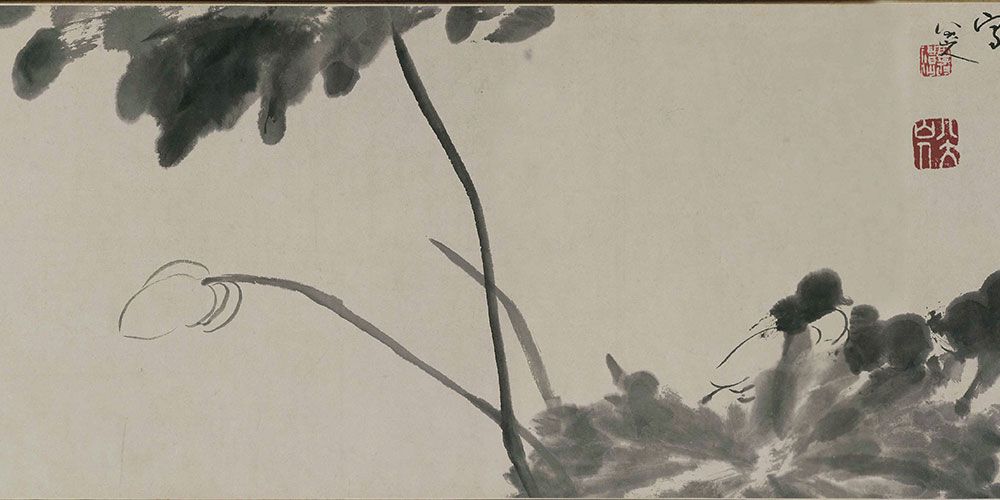
SinoInArt is honored to offer a 1:1 Museum-Quality Replica of Bada Shanren’s Cat and Rock.This reproduction is crafted with the utmost fidelity to the 17th-century original. Utilizing high-definition Giclée technology on premium Xuan paper, we have captured the varying densities of Bada’s ink—from the "bone-dry" lines of the stone to the "wet-velvet" blacks of the cat. Following the highest aesthetic traditions, each piece is meticulously mounted with Suzhou Yun Brocade (Cloud Brocade), ensuring that the work remains a timeless heirloom for generations.
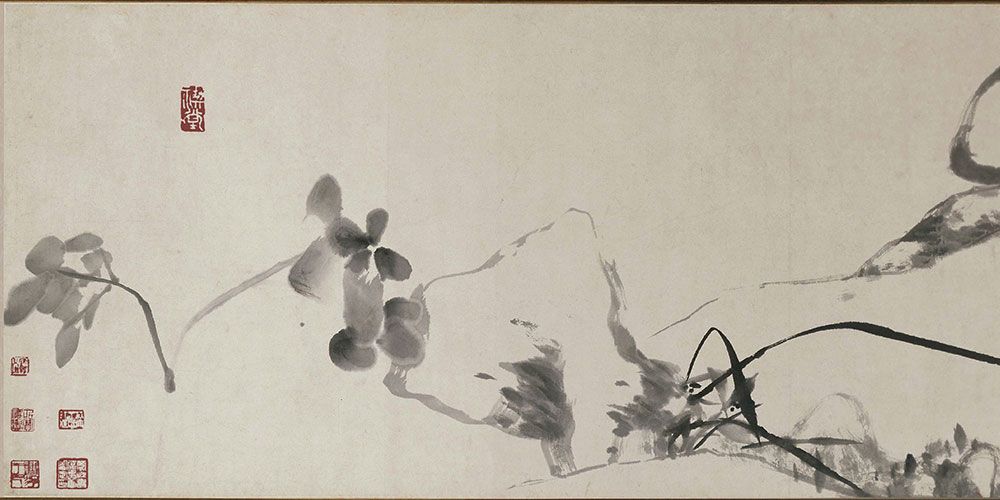
The SinoInArt Collection Edition is defined by its uncompromising commitment to authenticity, featuring a faithful 1:1 restoration that perfectly preserves the dimensions and proportions of the original masterpiece. Each piece is meticulously crafted on specialized paper and mounted using traditional aesthetic standards to ensure a lifetime of elegance and durability. This dedication to artistic fidelity is further reflected in the precision of the reproduction, where every historic detail—including the artist’s enigmatic seals—is rendered with absolute clarity, offering collectors an unparalleled window into Chinese art history.