The Archaeological Significance of Chinese Bronze Ware: Discoveries and Insights
|
Chinese bronze ware is not only a valuable source of artistic expression but also an important resource for archaeological research. The study of these artifacts provides critical insights into the history, society, and technology of ancient China. The careful study of these artifacts helps to broaden our understanding of the ancient world. 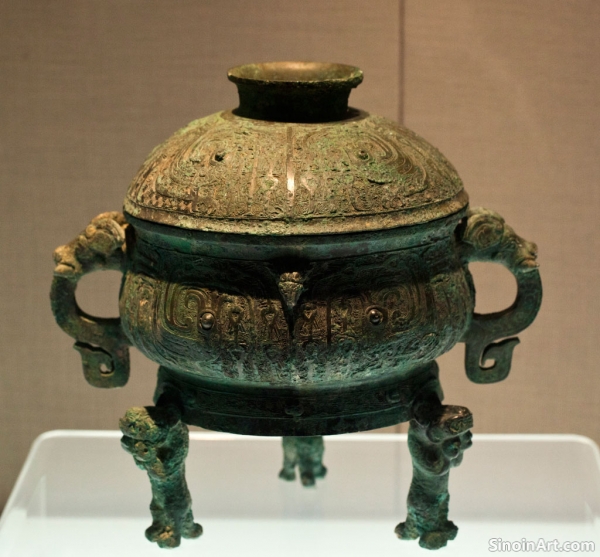 Archaeological excavations at sites such as Anyang, Erlitou, and Sanxingdui have yielded a wealth of information about the production, use, and meaning of Chinese bronze ware. These excavations provide invaluable data for understanding the different cultures of ancient China. The process of archeological discovery has helped us to better understand the ancient world.  The analysis of bronze ware provides valuable insights into the social structures, political organization, and religious beliefs of the ancient Chinese. The careful study of these items allows us to draw conclusions about the culture that produced them. The artifacts provide a direct link to the minds and values of people who lived long ago. 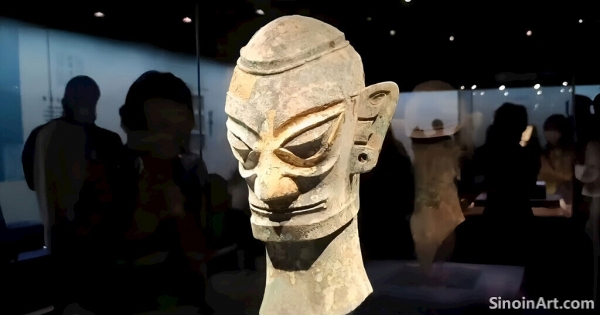 Archaeological research on bronze ware also contributes to our understanding of ancient metallurgy, trade networks, and cultural interactions. The study of these objects helps to paint a full and comprehensive picture of the past. The artifacts offer insight into trade, technology, and social interactions. The continued study of Chinese bronze ware helps to reconstruct the history of early China, providing a fuller and more nuanced understanding of the complex and fascinating civilizations of the ancient world. The ongoing study of these artifacts offers a continuing link to the past. The careful study of these works is a vital component in understanding ancient China. |
Tag : Chinese bronze archaeology, archaeological discoveries, Anyang, Erlitou, Sanxingdui
Related information
- Bronze and the Development of Early Chinese Astronomy: Tools of Observation and Understanding
- The Role of Bronze in Ancient Chinese Warfare: Strategies and Weapons
- The Preservation of Bronze Ware: The Impact of Environmental Factors and Storage Conditions
- Exploring Chinese Bronze Ware: A Guide for Beginners
- Bronze Ware and the Development of Ancient Chinese Music Theory: The Role of Tuned Instruments
This article explores the use of bronze in ancient Chinese astronomy, highlighting the creation of astronomical instruments such as armillary spheres and sundials, and demonstrating how these objects facilitated the observation and understanding of the universe.
This article explores the role of bronze in ancient Chinese warfare, highlighting the types of weapons, armor, and chariot fittings, and examining the strategies and tactics employed, revealing the military power of the era.
This article explores the impact of environmental factors and storage conditions on the preservation of Chinese bronze ware, highlighting the causes of corrosion, the role of humidity and pollutants, and the need for careful management of storage environments.
This article provides a guide for beginners to the study of Chinese bronze ware, outlining key periods, types of objects, common motifs, and providing a roadmap for a deeper exploration of this fascinating art form.
This article explores the influence of bronze ware on the development of ancient Chinese music theory, highlighting the role of tuned instruments, especially bianzhong bells, and their impact on scales, harmonies, and the understanding of musical structure.