
To the untrained eye, Xu Wei’s Twelve Flowers in Ink might look like a series of fast splatters. To the expert, it is a masterclass in the "Anatomy of Ink." This handscroll showcases the most sophisticated ink techniques ever developed in the Ming Dynasty, requiring a level of brush control that few artists in history have ever achieved.
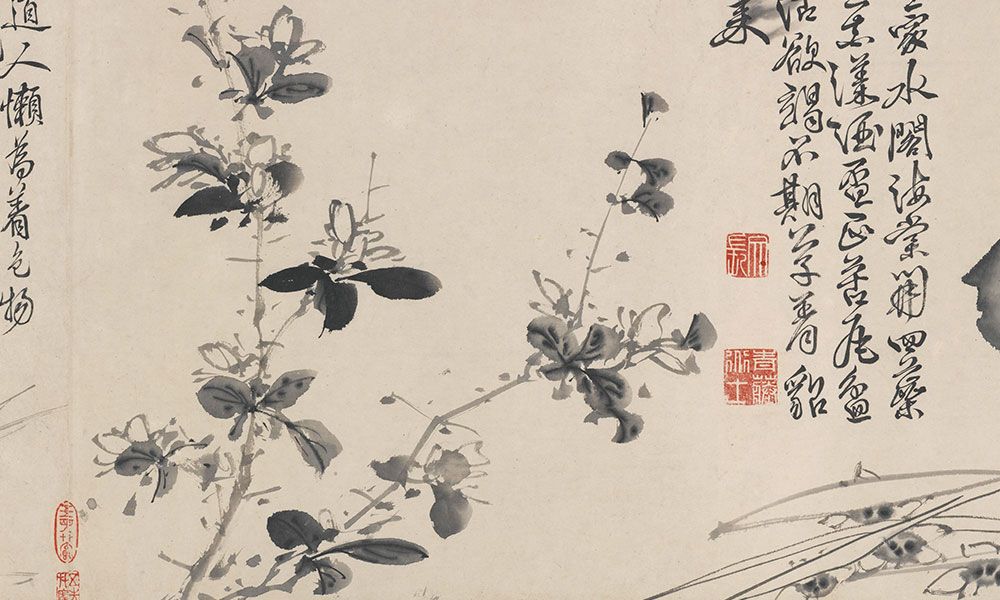
The "Water-Control" in this scroll is the secret to its beauty. Xu Wei knew exactly when to use a "dry brush" to suggest the rough bark of a Plum tree and when to use a "saturated brush" to let the ink bloom into the soft petals of a Peony. This contrast between "Dry" and "Wet" creates a visual rhythm that keeps the eye moving.
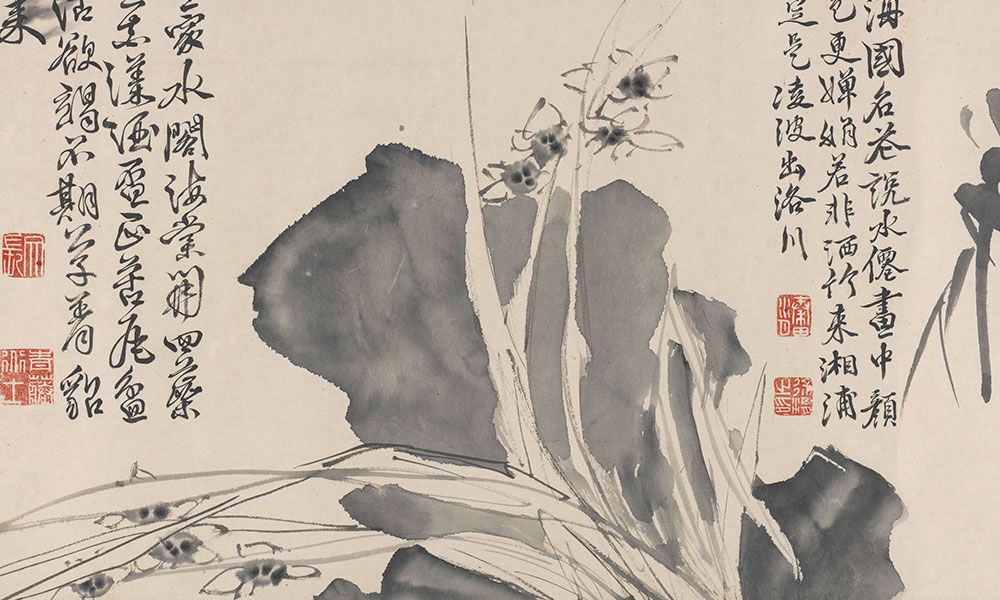
Then there is the "Strength of the Brush" (Bili). In the stems of the Lotus and the Daylily, Xu Wei’s brushwork is indistinguishable from his cursive calligraphy. These lines are not just boundaries; they are "conductors of Qi." They possess a skeletal strength that supports the heavy washes of ink, preventing the painting from feeling "mushy."
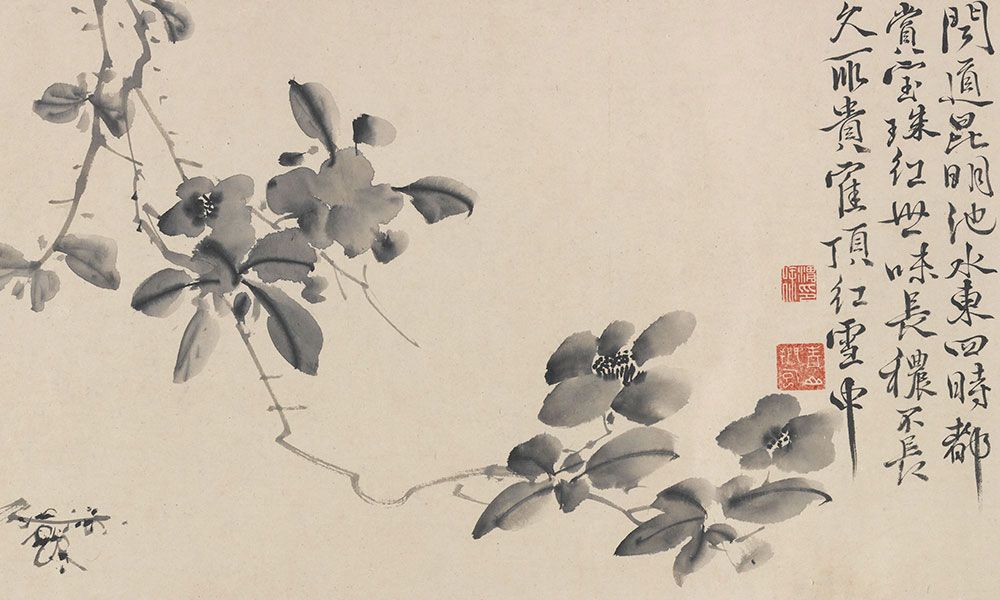
The "Splashed Ink" (Pomo) sections for the Banana Leaf are a technical marvel. Xu Wei allows large amounts of ink to pool and spread, but he controls the edges with the moisture of the paper. This results in a sense of volume and three-dimensionality that is remarkably realistic despite its abstract execution.
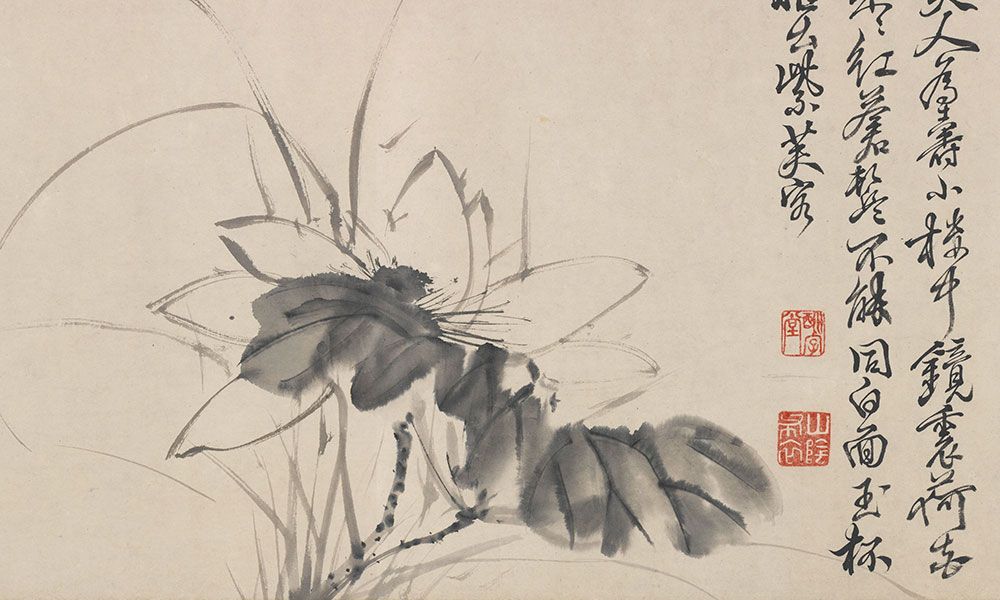
SinoInArt’s 1:1 replica uses high-resolution Giclée printing to capture these technical details. You can see the "Flying White" textures where the brush skipped over the paper and the delicate "ink-rings" where the water dried. Mounted on Suzhou Yun Brocade, it is a textbook of Ming Dynasty technical brilliance.