
To look at Autumn Mountains in Evening Verdure is to look at a multi-layered narrative of the earth. Guan Tong, a master of the Five Dynasties, organized his landscape into three distinct "grounds" or depths, a technique that would define the "High Distance" style for centuries. Each layer serves a specific purpose in creating the overall sense of awe and immersion.
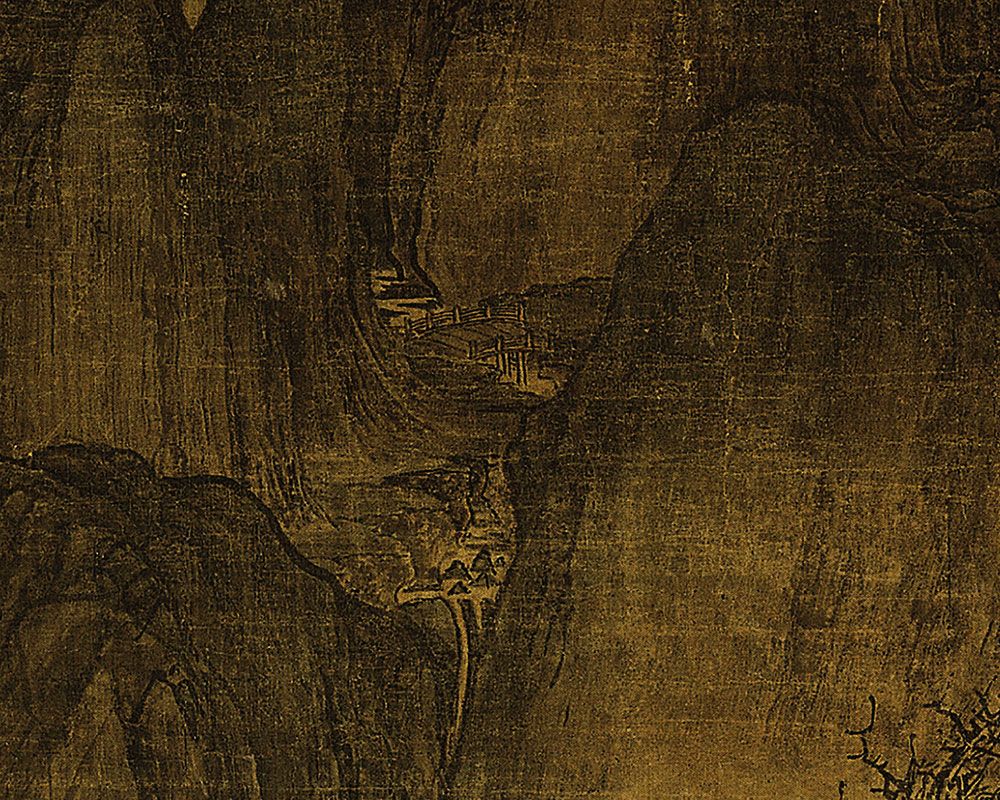
The "Foreground" consists of massive, water-worn boulders and a rushing stream. Here, the brushwork is heavy and dark, establishing the "base" of the world. It is the realm of the tangible—the cold water and the hard stone. This is where the traveler begins their journey, crossing a small bridge that symbolizes the transition from the human world to the wild.
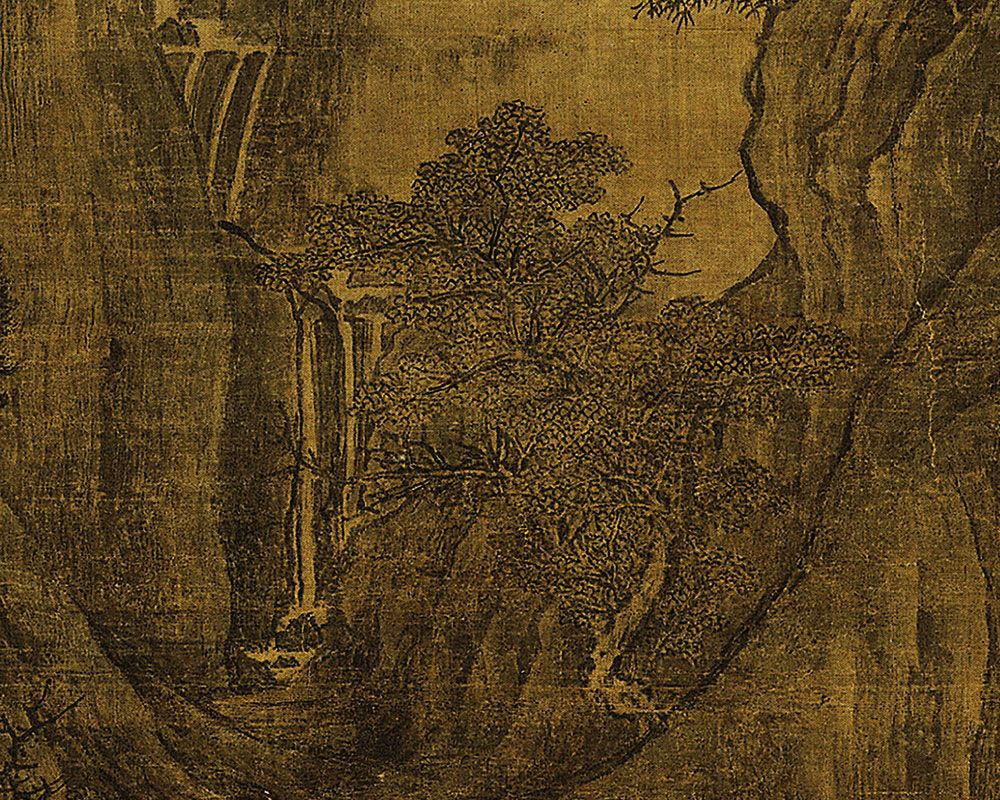
The "Middle Ground" is a valley of mist and mystery. Here, Guan Tong hides the human elements—small dwellings and a winding path. The brushwork becomes lighter, and the ink washes more diluted, suggesting distance and the humid air of an autumn evening. This layer provides the "breath" of the painting, allowing the viewer’s eye a place to rest before the final ascent.
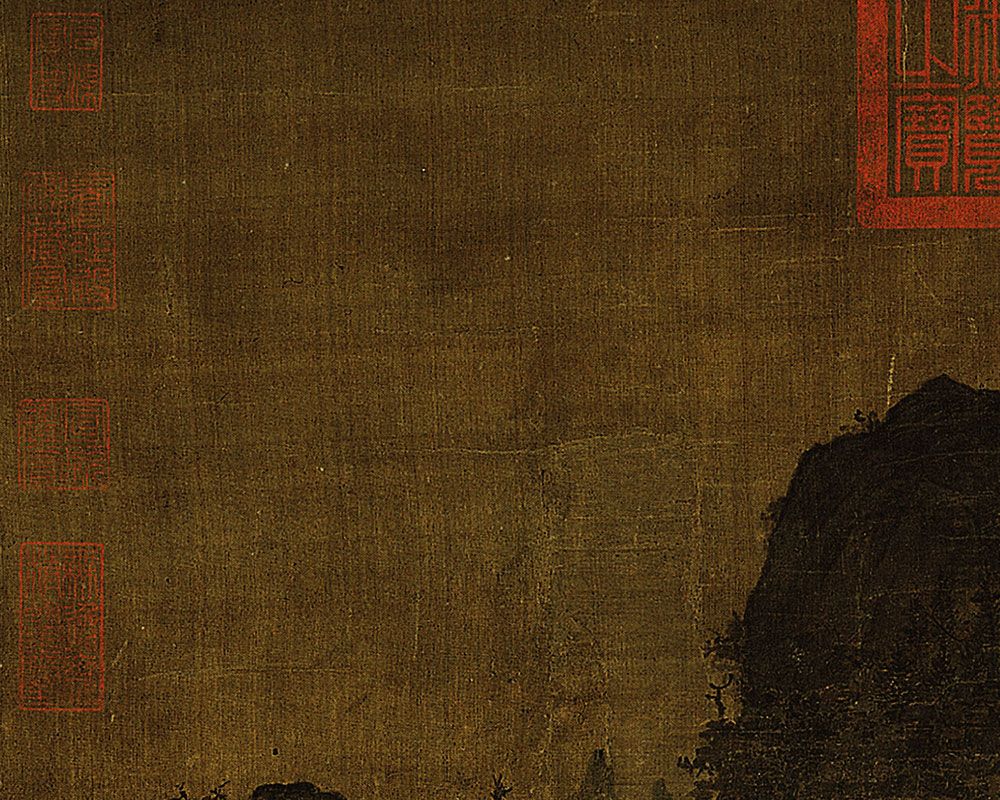
The "Background" is the magnificent central peak. It rises abruptly, filling the upper half of the scroll. This is the "Grand Father" of the mountains, a symbol of the cosmic order. The "Evening Verdure" wash is most prominent here, catching the last rays of the sun. The peak is not just a mountain; it is an icon of stability and eternal truth.
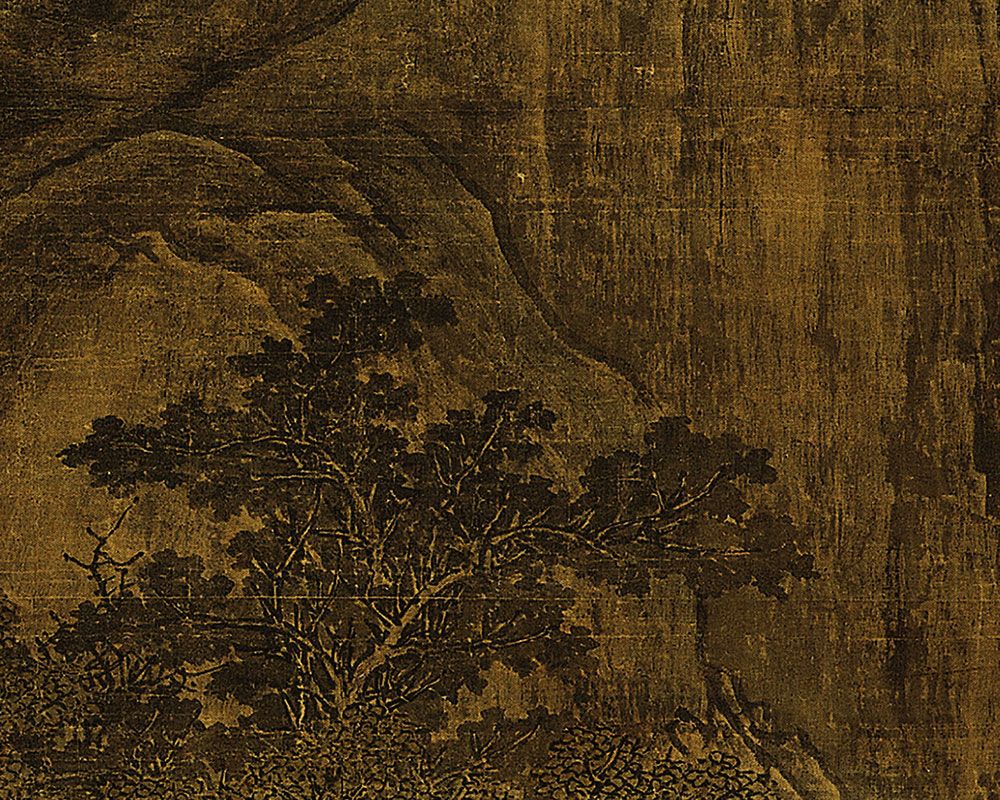
Understanding this anatomy allows one to appreciate why this work is considered "unmatched in spirit." SinoInArt’s 1:1 replica meticulously preserves these three depths. Through high-resolution scanning, the transition from the heavy ink of the foreground to the ethereal washes of the peak is rendered with absolute fidelity.