
In Chinese art theory, the most important quality of a painting is Qiyun Shendong—"Breath-Resonance and Life-Motion." Guan Tong’s Autumn Mountains in Evening Verdure is often held up as the supreme example of this principle. The "Qi" or life force of the mountain is so strong that it seems to vibrate within the silk. Understanding this energy is the key to appreciating Guan Tong’s genius.
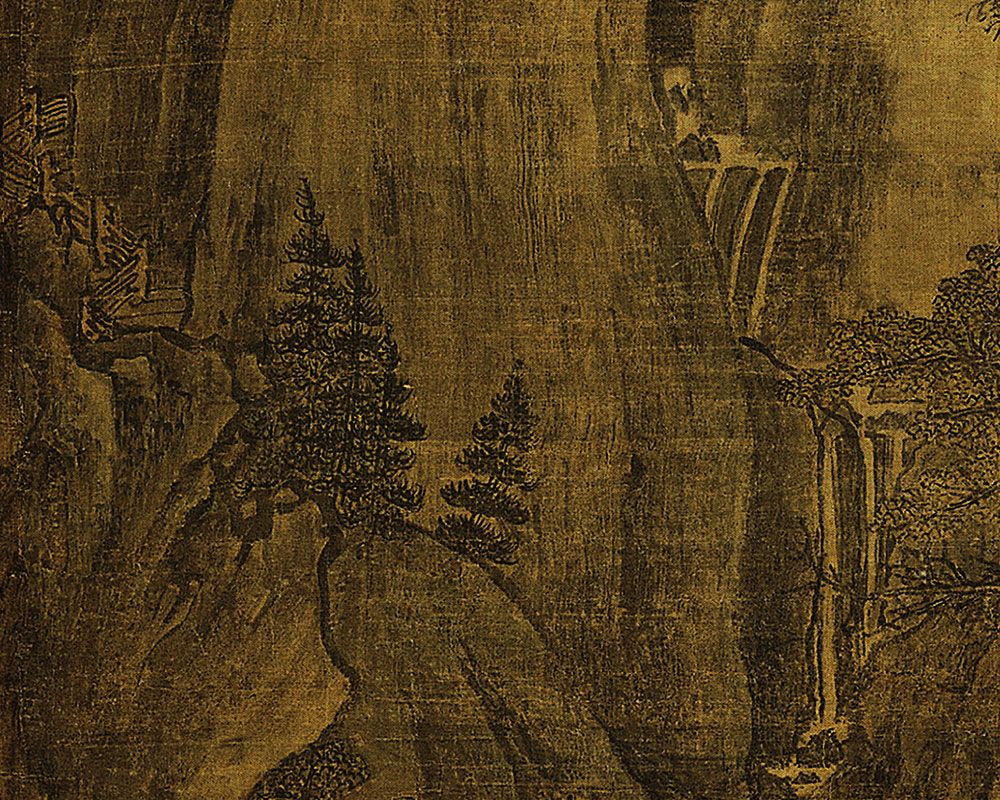
This "Qi" is generated through the tension between the "empty" and the "solid." The solid, jagged cliffs are balanced by the empty, misty valleys. This is the Yin and Yang of landscape painting. Guan Tong used the mist not just to show distance, but to show the "breath" of the mountain. The mist is where the Qi circulates, connecting the stream below to the peak above.
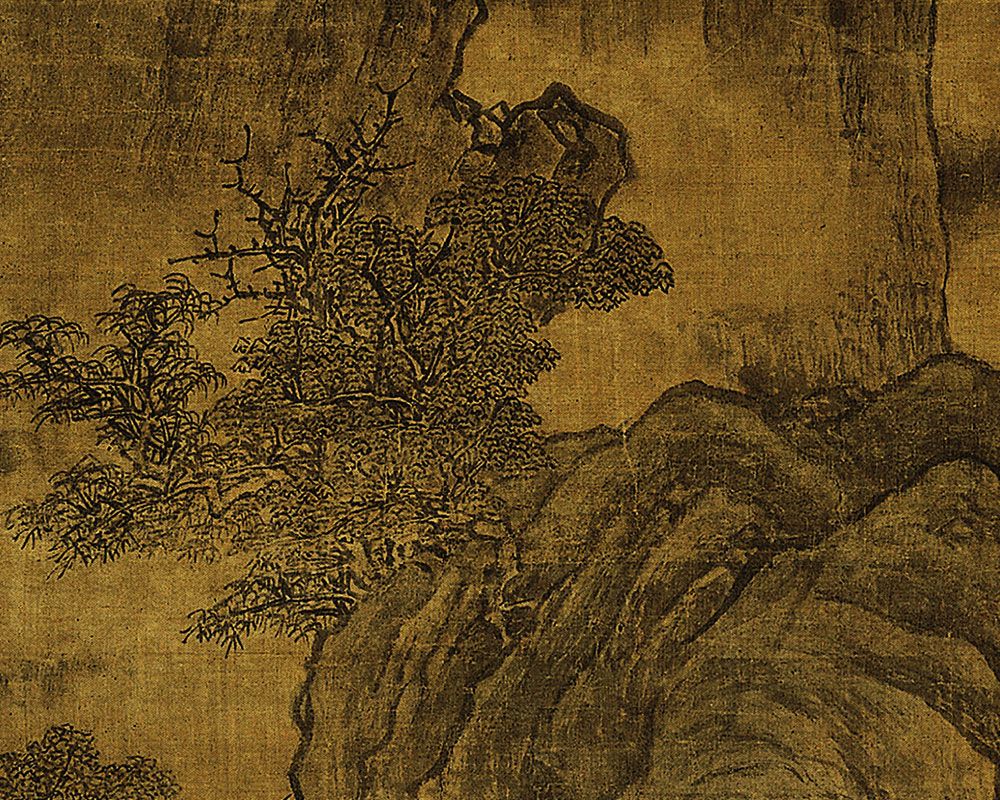
The "Evening Verdure" (Wan Cui) is the manifestation of this Qi. It is the "light of life" that persists even in the cold, desolate autumn. For Guan Tong, the mountain was a living being. The rocks were its bones, the water its blood, the trees its hair, and the mist its breath. When you look at this painting, you are looking at a giant, breathing organism.
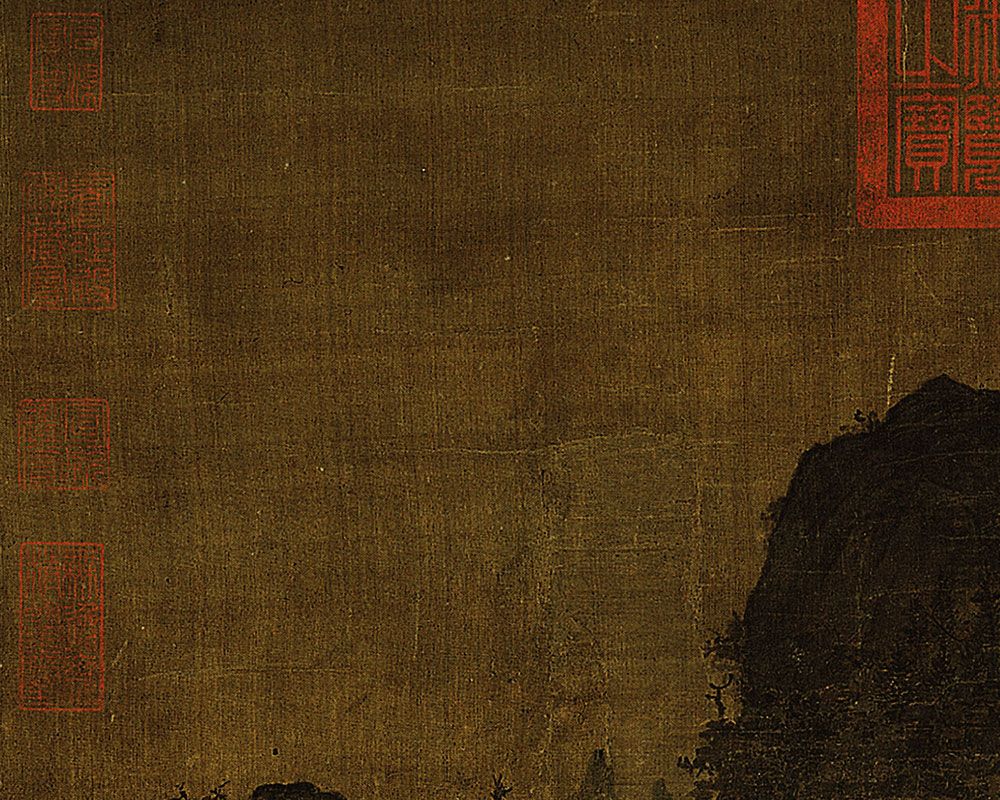
Guan Tong’s brushwork—the famous "Guan-style" strokes—is the vehicle for this energy. His brush didn't just move across the silk; it "drove" into it, leaving marks that feel like they were carved by the wind. This "strength of brush" (Bili) is what gives the Northern Landscape its characteristic power and authority.
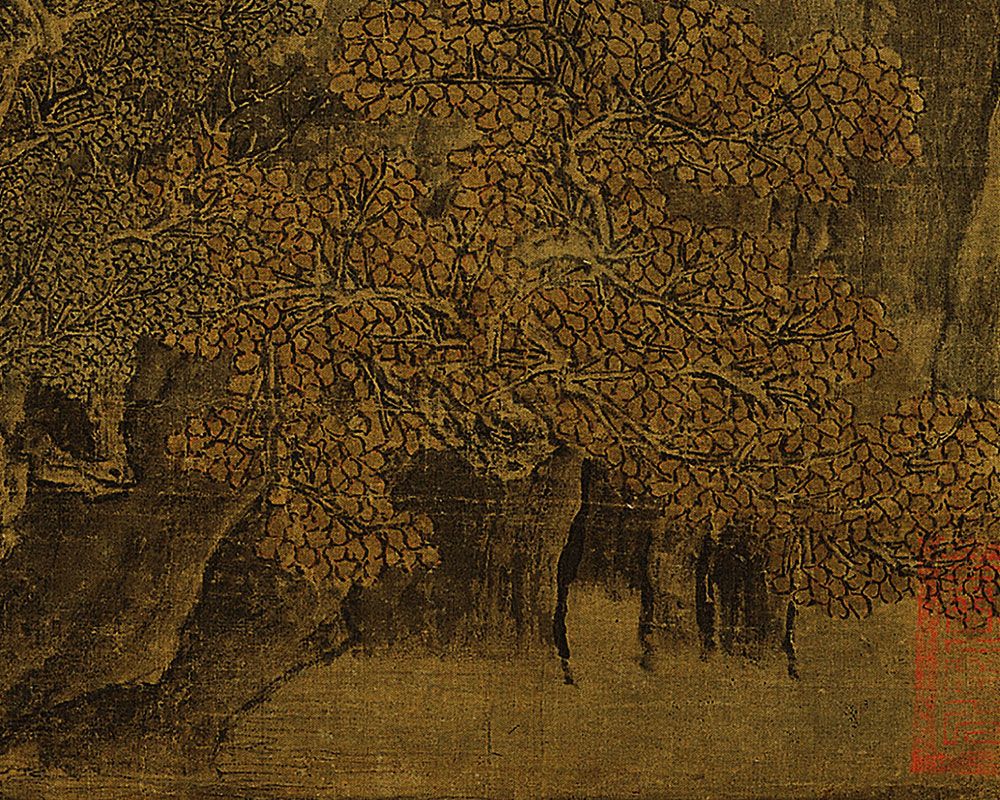
Owning a SinoInArt 1:1 replica is an opportunity to live with this "Qi." The high-definition reproduction ensures that the "Life-Motion" of Guan Tong’s brush is captured in every detail. Mounted on authentic Suzhou Yun Brocade, the work acts as a source of energy and inspiration, a true masterpiece of the Northern Chinese spirit.