
Keywords: .
Summary:
Article 4:
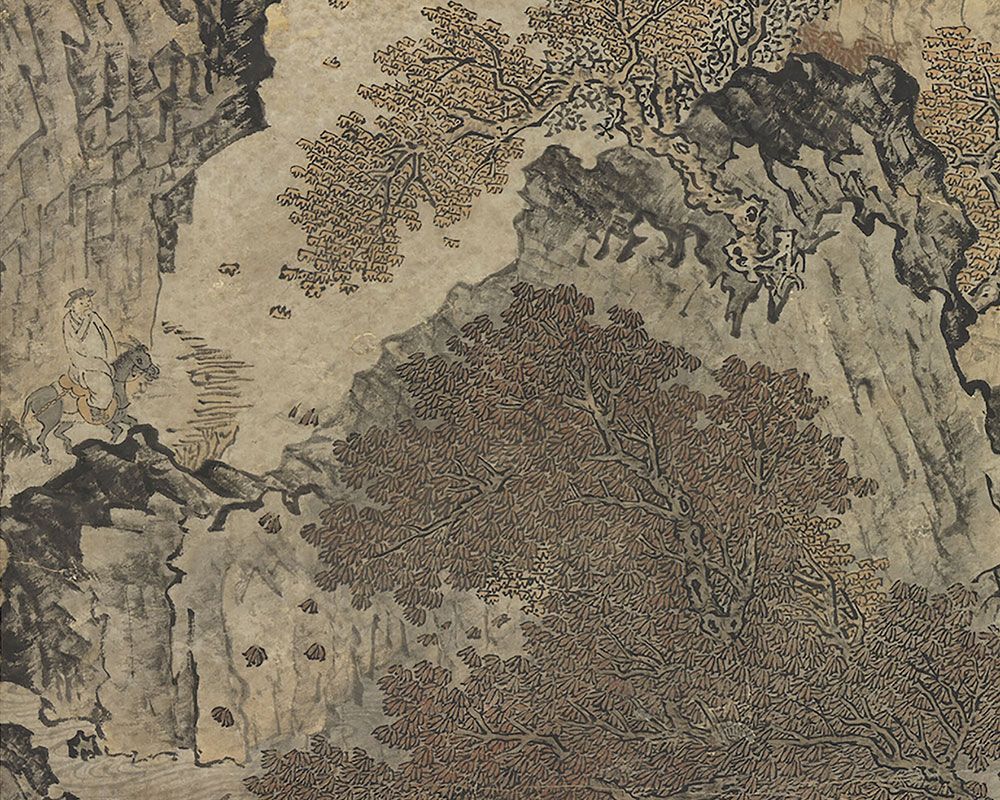
For the ancient Chinese scholar, a landscape painting was not just decoration; it was a tool for "Wo You" (Mental Wandering). In a time of war and political chaos, Guan Tong’s Plank Path in the Shu Mountains offered a sanctuary. By unrolling this scroll, a scholar could mentally leave the city and "travel" through the silent, majestic peaks of the North.
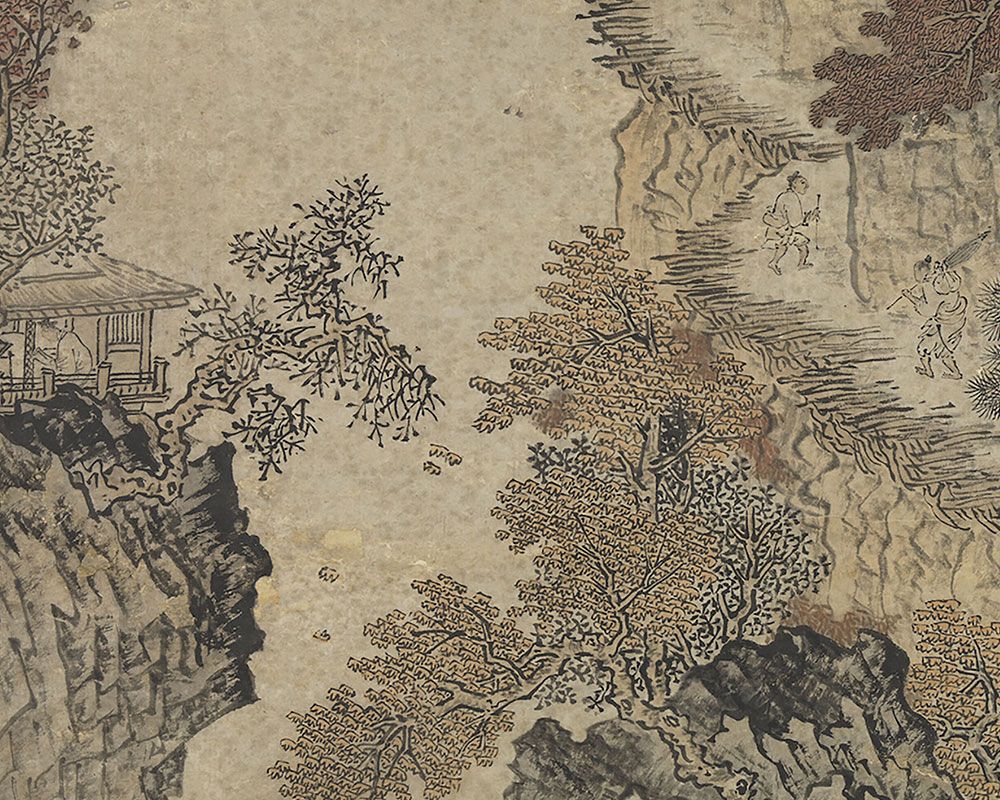
The painting is designed to be an immersive experience. As your eyes follow the winding plank path, you are essentially performing a meditative hike. You pass over turbulent streams, hide in misty valleys, and eventually stand before the towering central peak. This visual journey encourages a state of "detached focus," where the stresses of the world fall away.
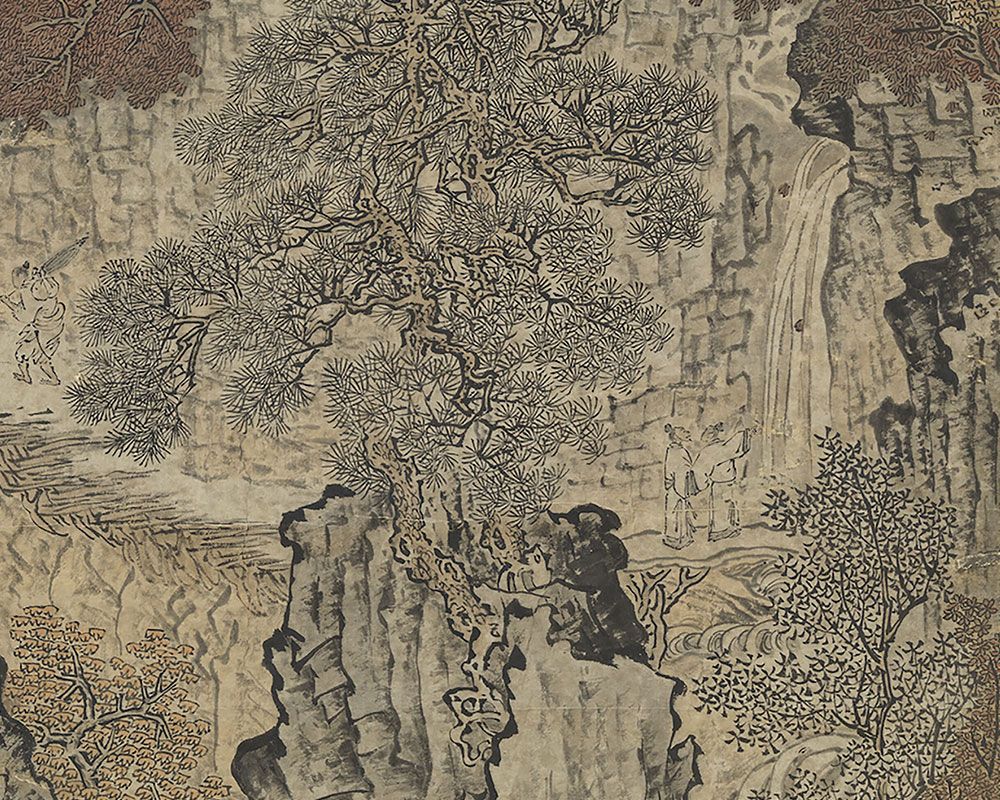
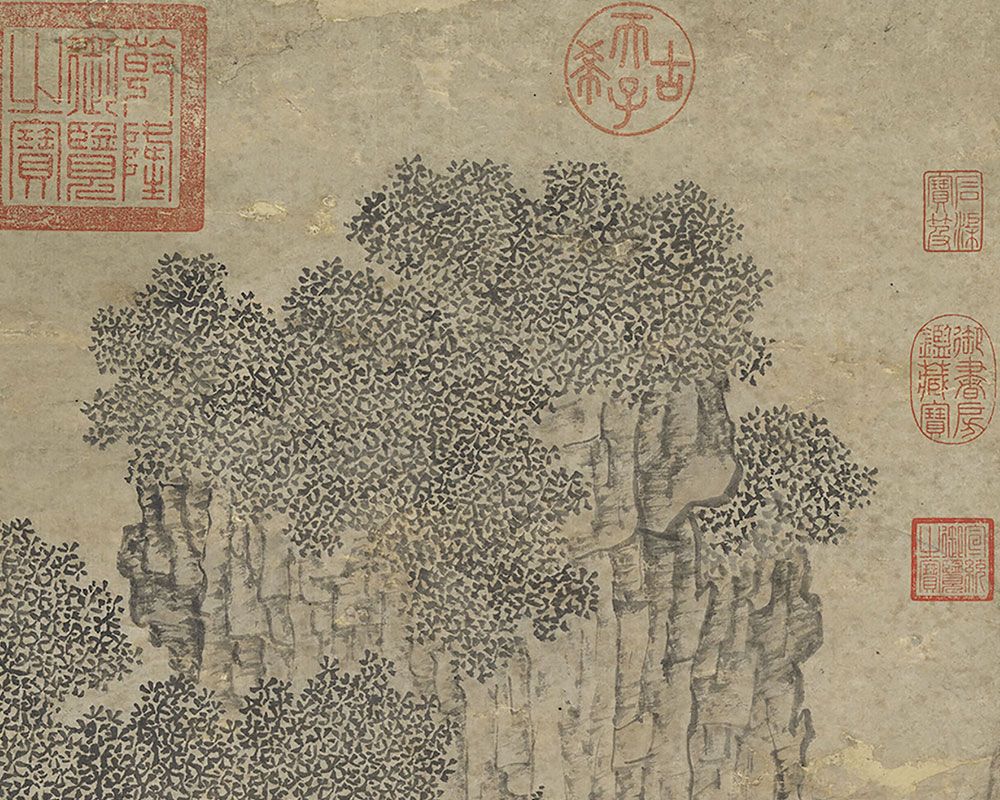
Guan Tong’s aesthetic is one of "Desolate Magnificence" (Gu Han). It is not a "pretty" landscape; it is stark, powerful, and stoic. This reflects the Zen (Chan) Buddhist influence on Five Dynasties art—the idea that truth is found in the raw, unadorned reality of nature. The mountain is an eternal teacher of stability and silence.
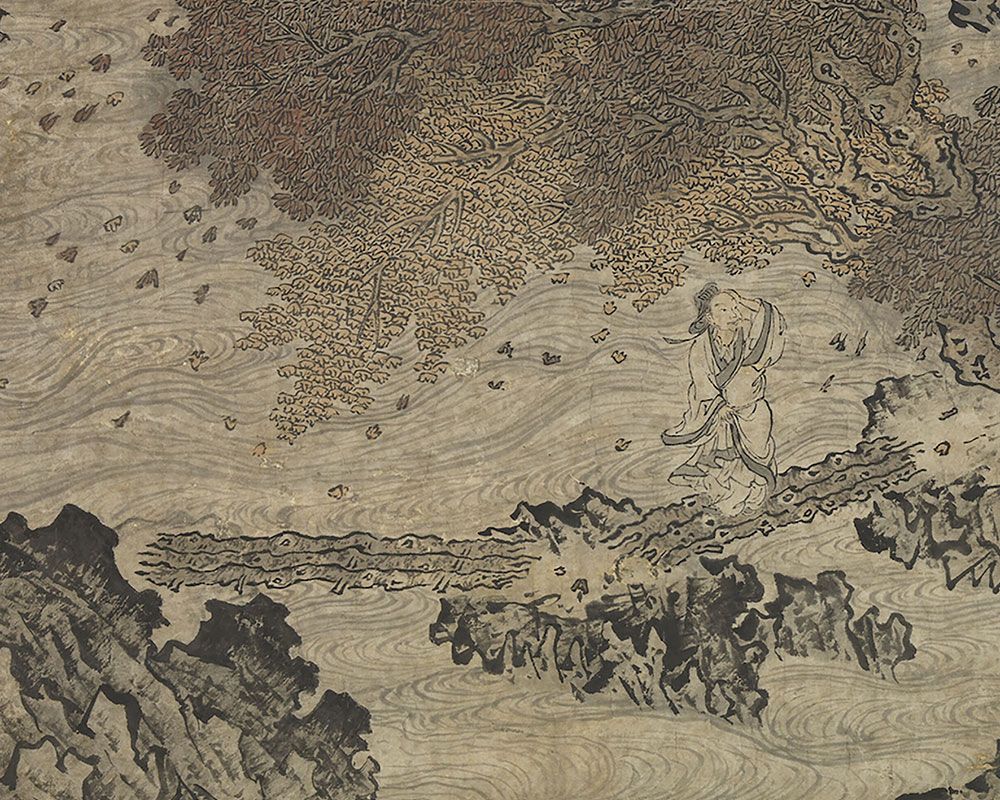
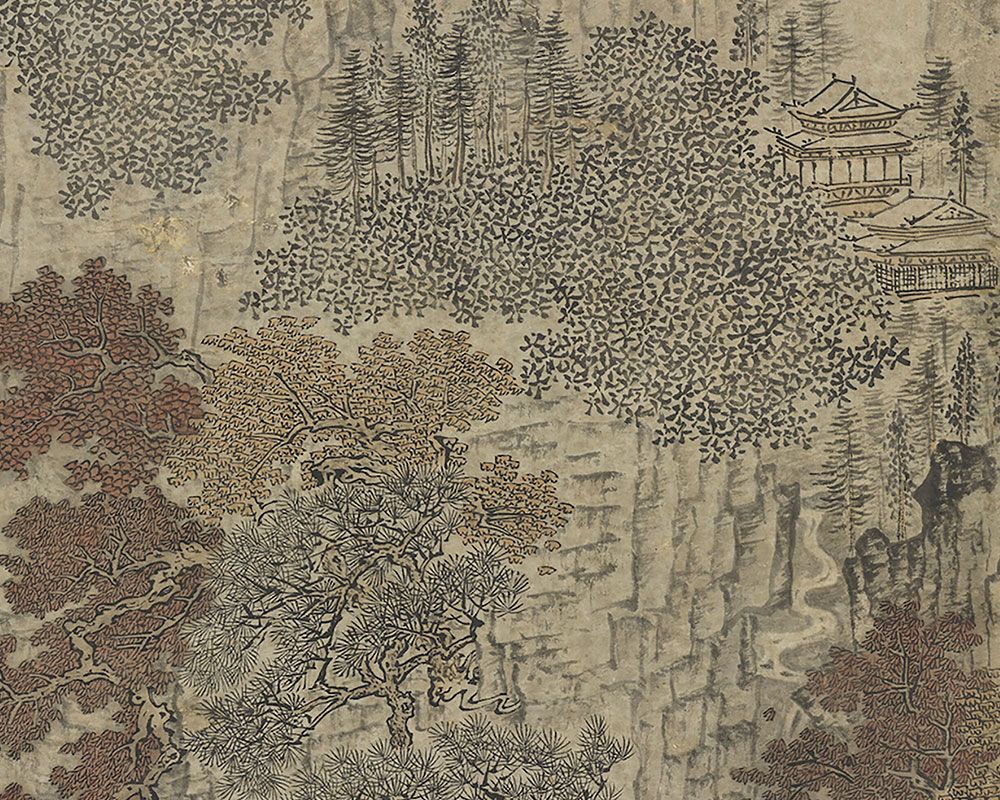
The inclusion of secluded dwellings among the cliffs reinforces this theme of reclusion. These are "places to live" (ke ju), representing the ideal of the scholar-recluse who lives in harmony with the Great Way. To look upon this painting is to reconnect with one's inner moral compass and find peace in the unchanging endurance of the peaks.
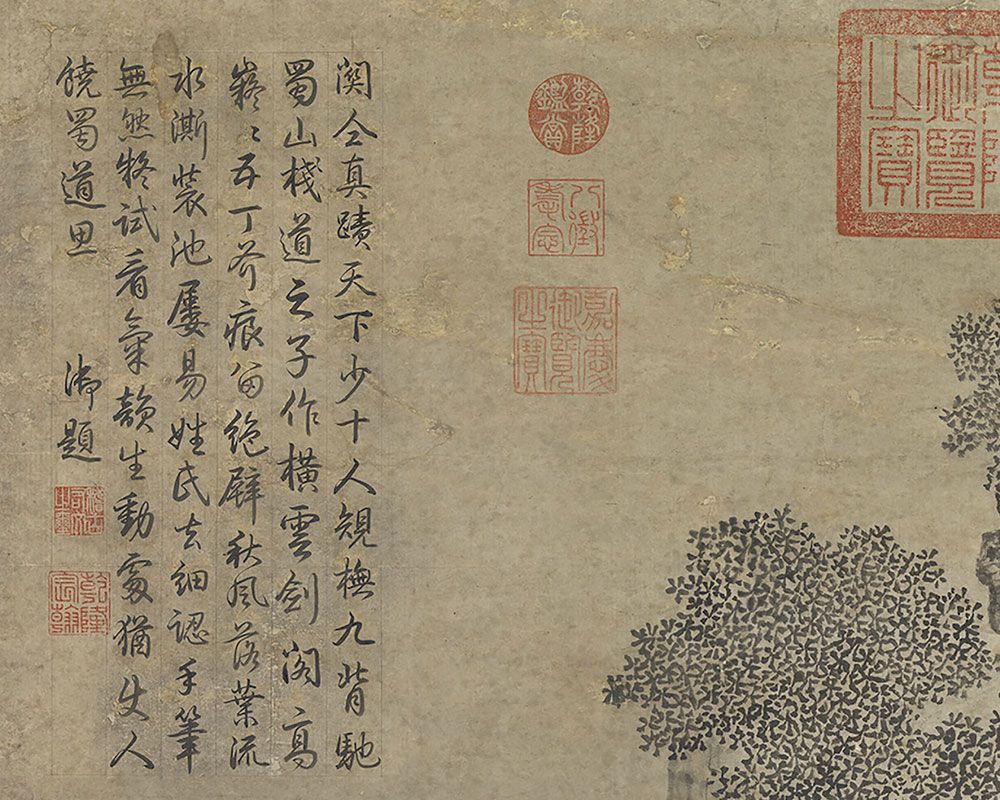
Acquiring a SinoInArt 1:1 replica is an invitation to create your own space for "Wo You." Mounted on traditional Suzhou Yun Brocade, this work serves as a window into a world of spiritual silence, providing a much-needed visual anchor for the modern spirit.