
To the connoisseur of Chinese ink wash, the "texture stroke" (Cun) is the signature of a master. Guan Tong’s Waiting for a Ferry by a Mountain Stream is often cited as the definitive textbook for the "Nail-head" stroke. These short, chiseled marks are used to define the craggy, weathered surfaces of the Northern peaks, creating a three-dimensional weight that was revolutionary for its time.
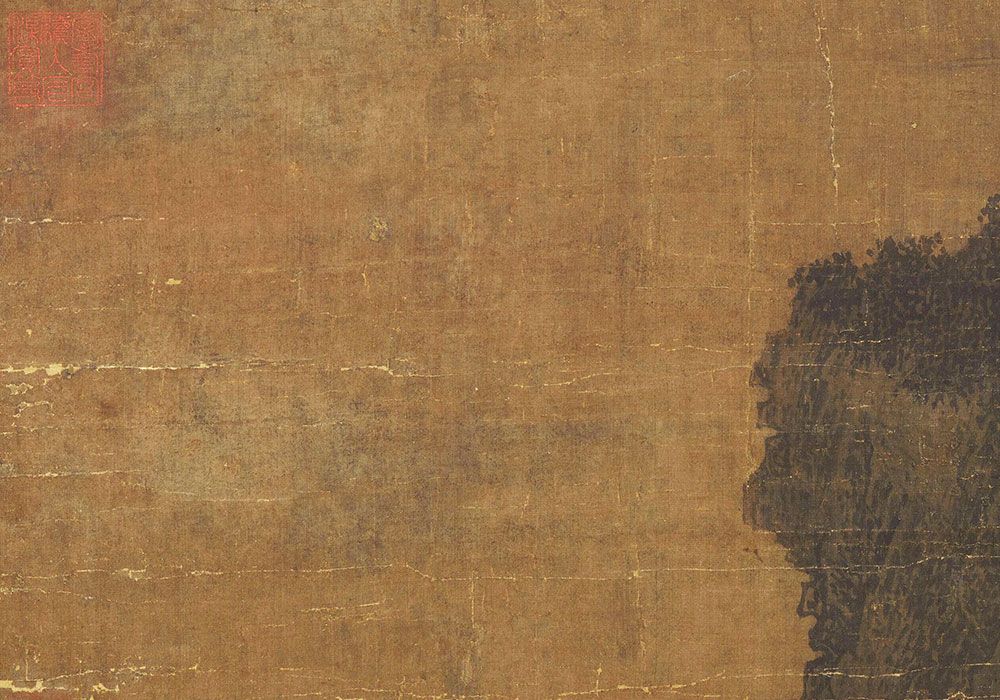
Guan Tong’s genius lay in his ability to use minimal brushwork to convey maximum spirit. His contemporaries noted that his mountains were "stony"—possessing a hardness and a skeletal structure that suggested the enduring power of the North China terrain. In this painting, the central peak rises with an architectural stability that would later influence the great Fan Kuan.
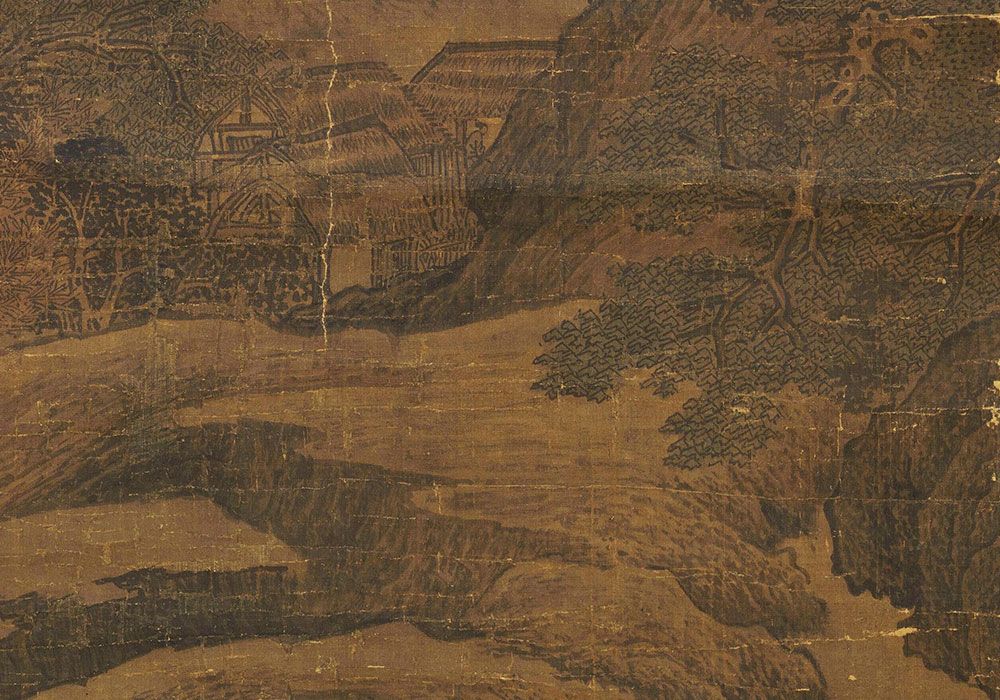
The contrast between "Dry" and "Wet" ink in this scroll is breathtaking. The "Dry" brush captures the rough bark of the ancient trees and the sun-bleached surfaces of the cliffs, while the "Wet" ink washes create the humid, misty air of late autumn. This interplay of light and texture gives the painting a numinous quality, as if the mountain itself is breathing.
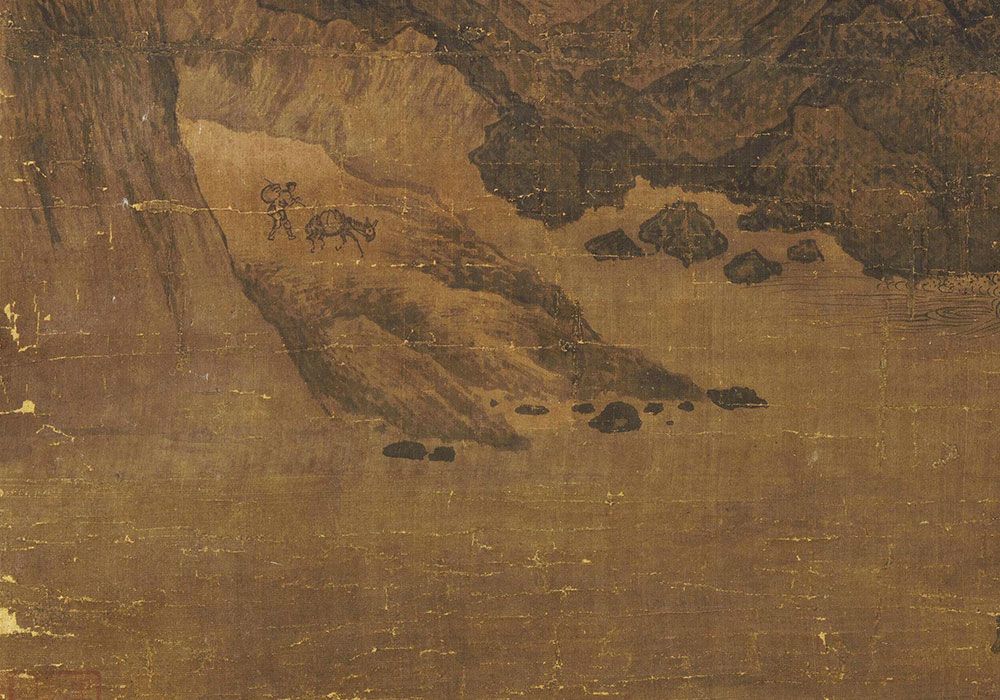
The human elements—the mules, the bridge, and the simple huts—are rendered with delicate precision. They are integrated into the folds of the stone, illustrating the concept of "living within the mountain." Guan Tong’s ability to move between the monumental scale of the peak and the minute detail of the travelers is a testament to his technical range.
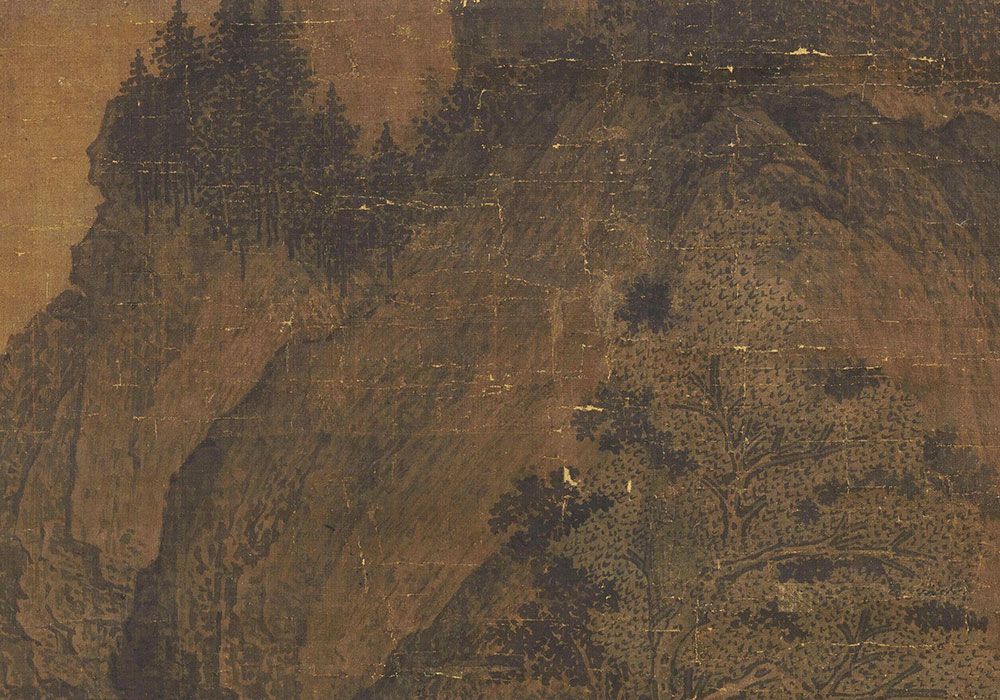
Owning a SinoInArt 1:1 museum-quality replica is an opportunity to study these historic strokes up close. Our high-definition Giclée process on specialized Xuan paper captures the "ink-bloom" effects and the sharp edges of the Nail-head strokes with absolute fidelity, making it a masterpiece of technical restoration for your personal collection.