
To understand the "Great Age of Song Landscape," one must first look at Guan Tong. His Plank Path in the Shu Mountains is the artistic "DNA" that paved the way for future legends like Fan Kuan and Li Cheng. This work represents the pivotal moment when Chinese landscape painting transitioned from a symbolic backdrop to a realistic, immersive world.
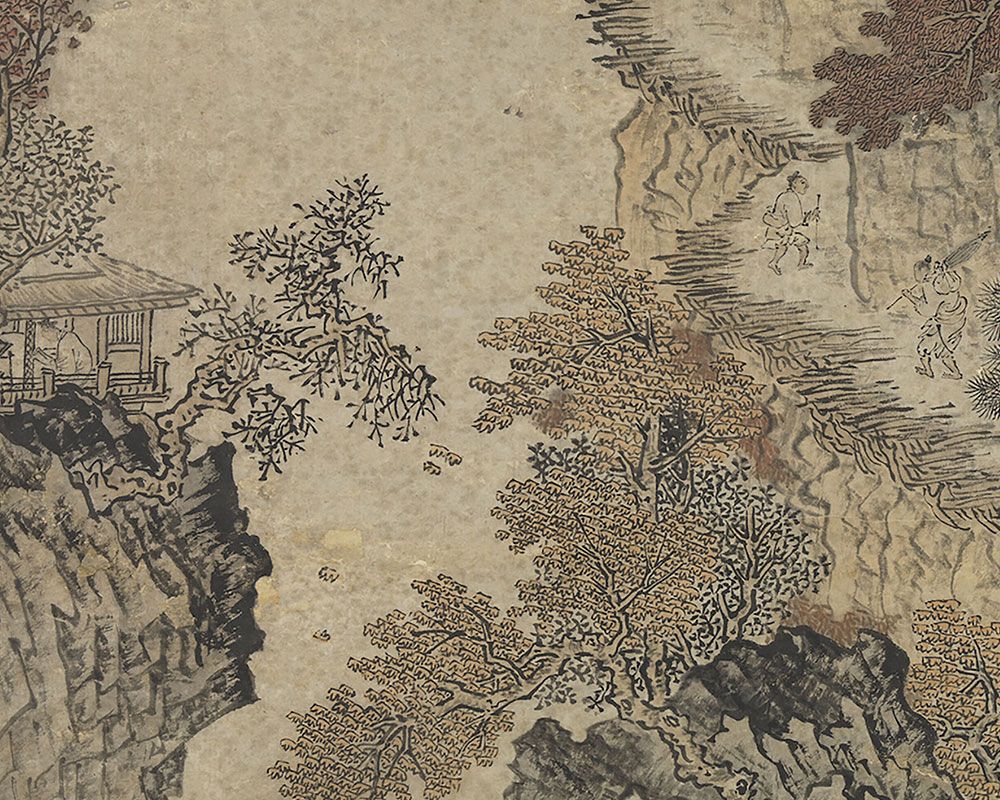
Guan Tong was the first to successfully master the "monumental" composition, where a single large peak dominates the scroll. This structural innovation created a sense of "awe" that would define Chinese art for centuries. When Fan Kuan painted his famous Travelers among Mountains and Streams, he was standing on the technical and spiritual shoulders of Guan Tong.
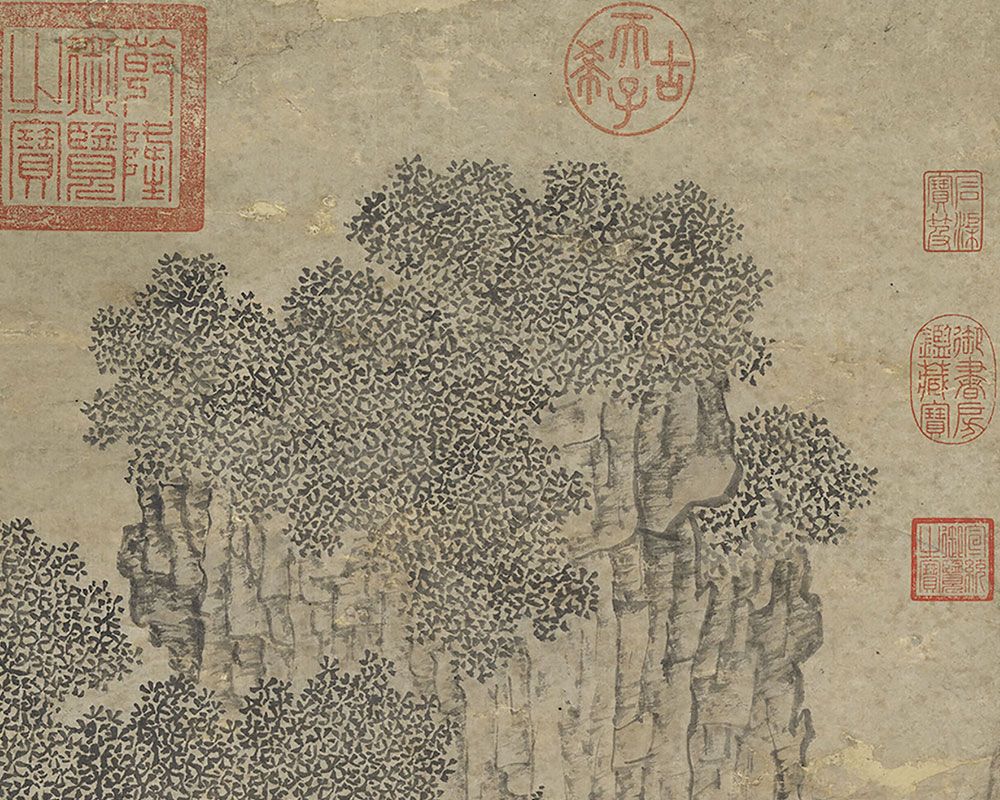
The evolution of the "texture stroke" also begins here. Guan Tong’s "Nail-head" strokes were the precursors to the "Rain-drop" and "Axe-cut" strokes of the Song Dynasty. By focusing on the rugged realism of the Northern terrain, Guan Tong provided the technical vocabulary that allowed later artists to capture the "spirit" of the natural world with even greater detail.
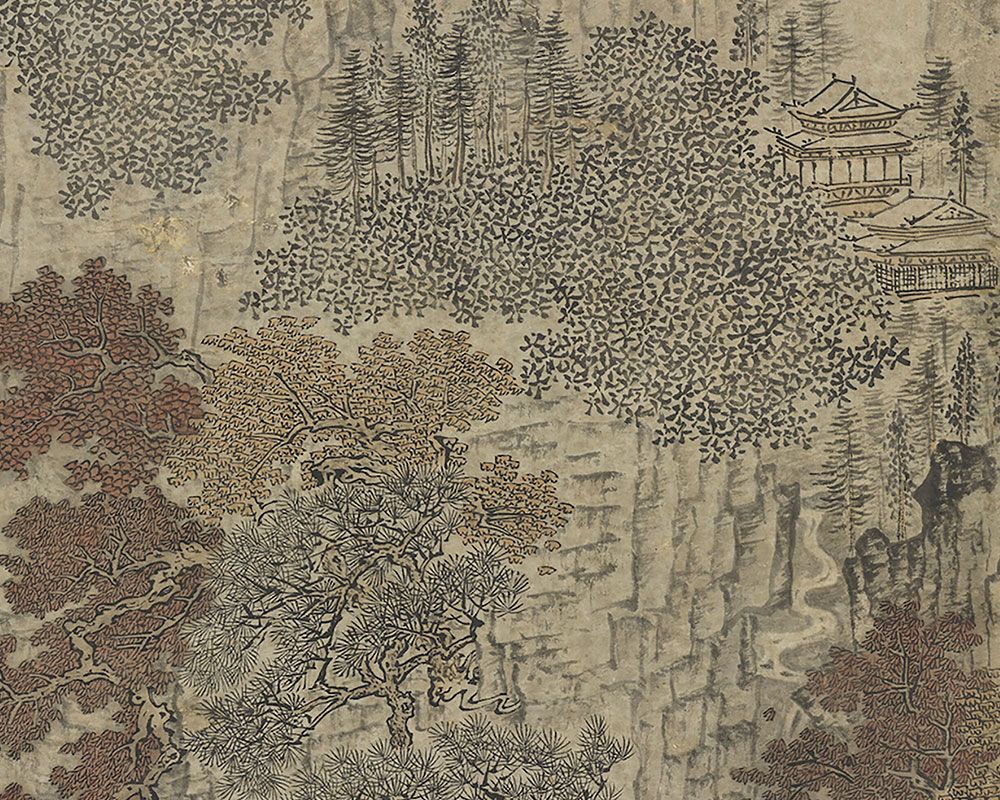
Furthermore, Guan Tong established the philosophical ideal of "Living through a Painting." His integration of mountain dwellings and travelers among the cliffs set the standard for the "Scholar-Recluse" aesthetic. He proved that a painting could be a window into a higher reality, a theme that would dominate literati culture for a millennium.
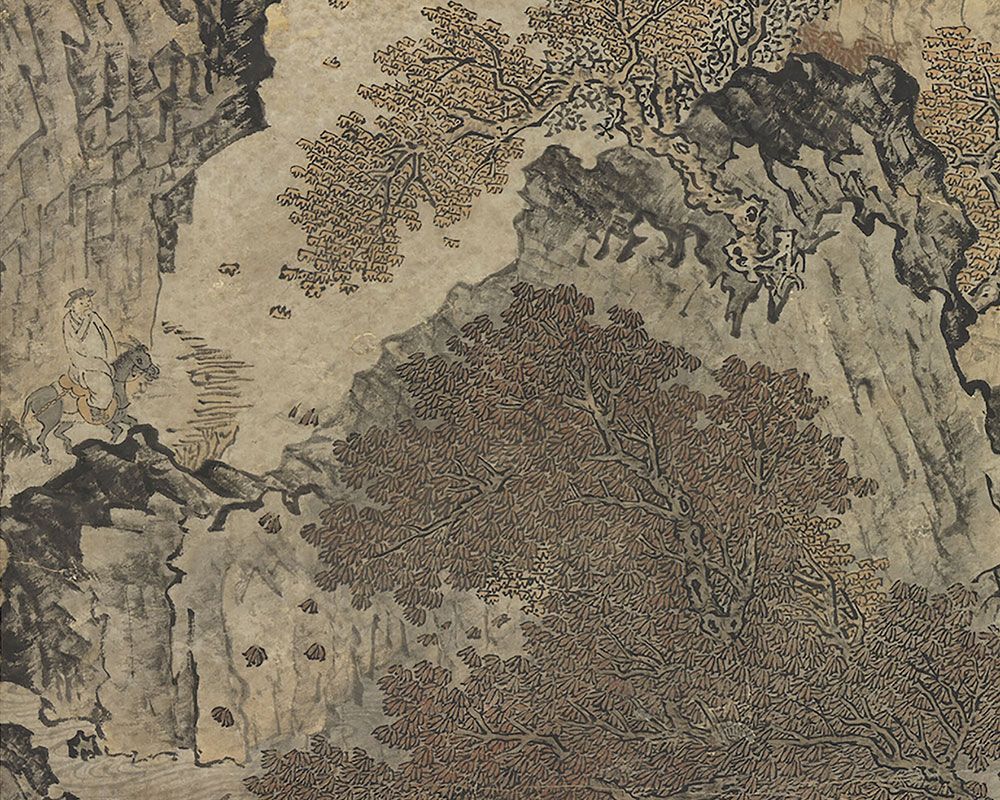
Owning a SinoInArt 1:1 replica of Plank Path in the Shu Mountains is like owning the foundation of Chinese landscape history. It is a piece of art that tells the story of an entire civilization’s aesthetic evolution, presented with the dignity of traditional Xuan paper and Suzhou Yun Brocade.