
What exactly is "Evening Verdure"? In Guan Tong’s masterpiece, it refers to the specific atmospheric phenomenon where the setting sun casts a cool, deep glow on the evergreen trees of a late autumn mountain. This is not the bright green of spring, but a "Wan Cui"—a mature, dark, and resilient green that symbolizes the strength of the scholar in the face of adversity.
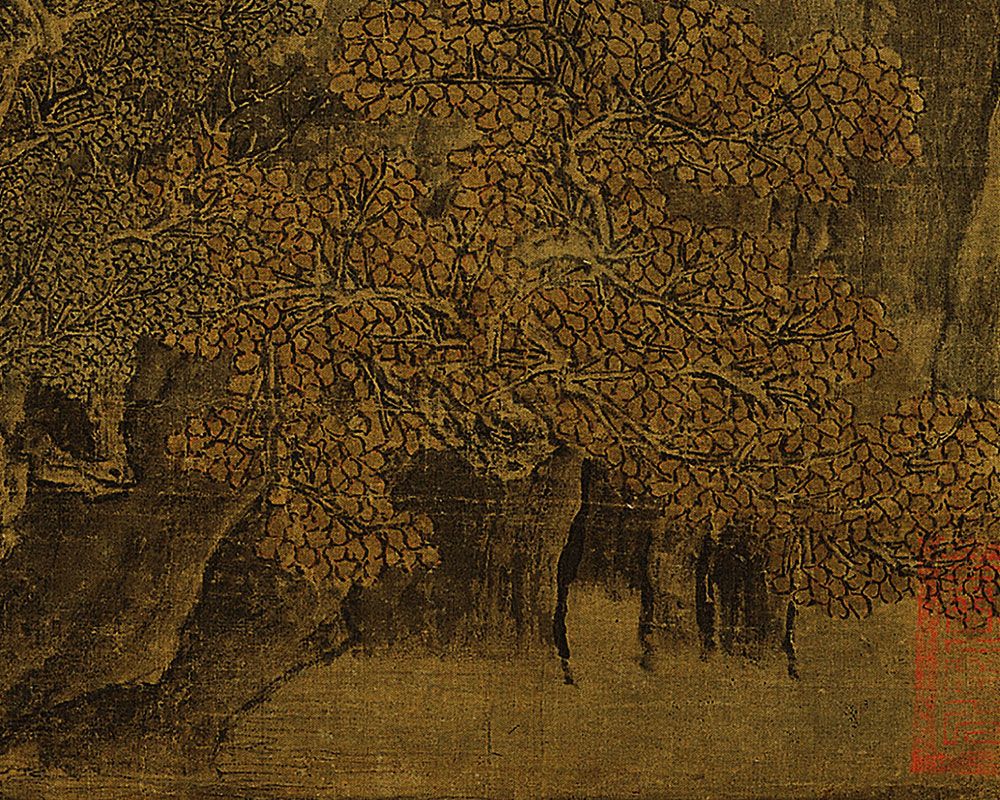
Guan Tong’s ability to capture light without using "light and shadow" in the Western sense is a feat of artistic genius. He used varying densities of ink and a very specific, light mineral wash to suggest the way light filters through the autumn haze. The peaks seem to be illuminated from within, a technique that gives the mountains a "numinous" or divine quality.
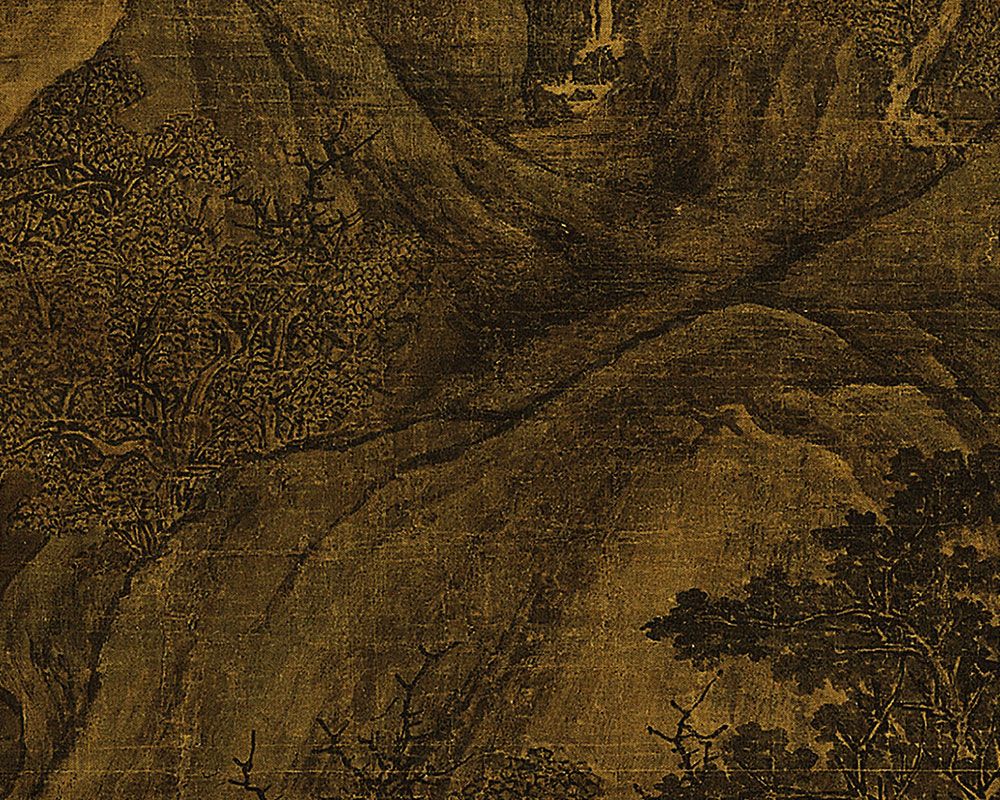
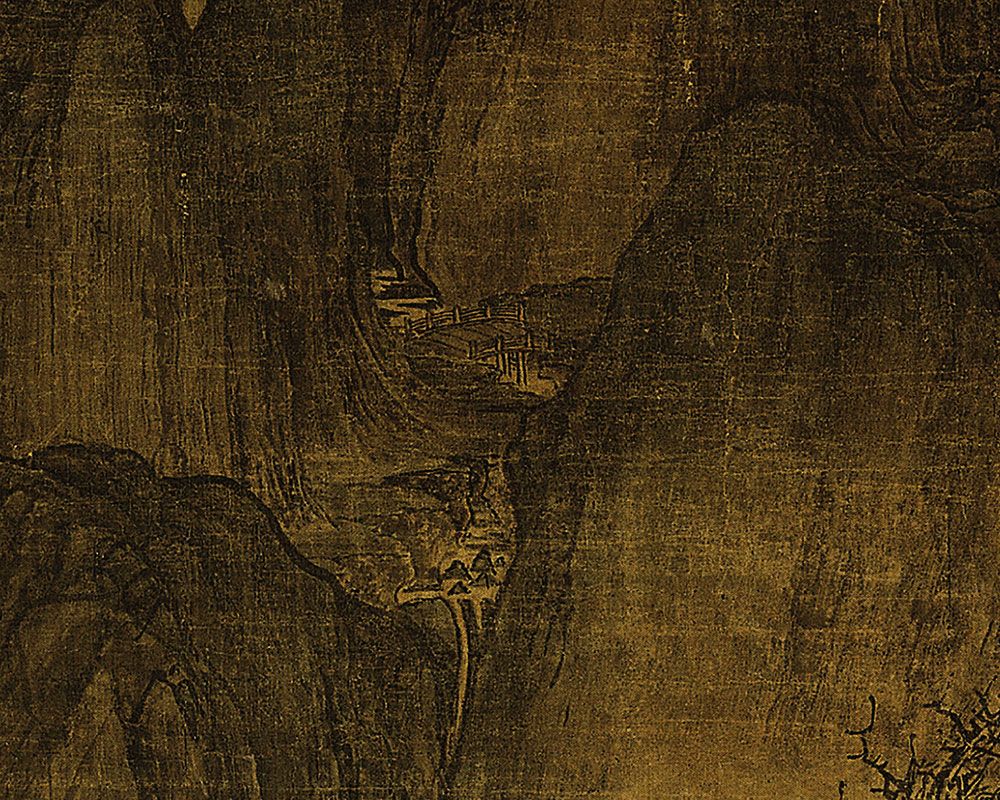
The structure of the mountain itself is what Guan Tong called "stony." In the Northern Chinese tradition, mountains were seen as the skeletal structure of the earth. By focusing on the "bone" rather than the "flesh," Guan Tong created a landscape that feels permanent and unshakeable. The "Evening Verdure" is the life force that clings to these ancient bones.
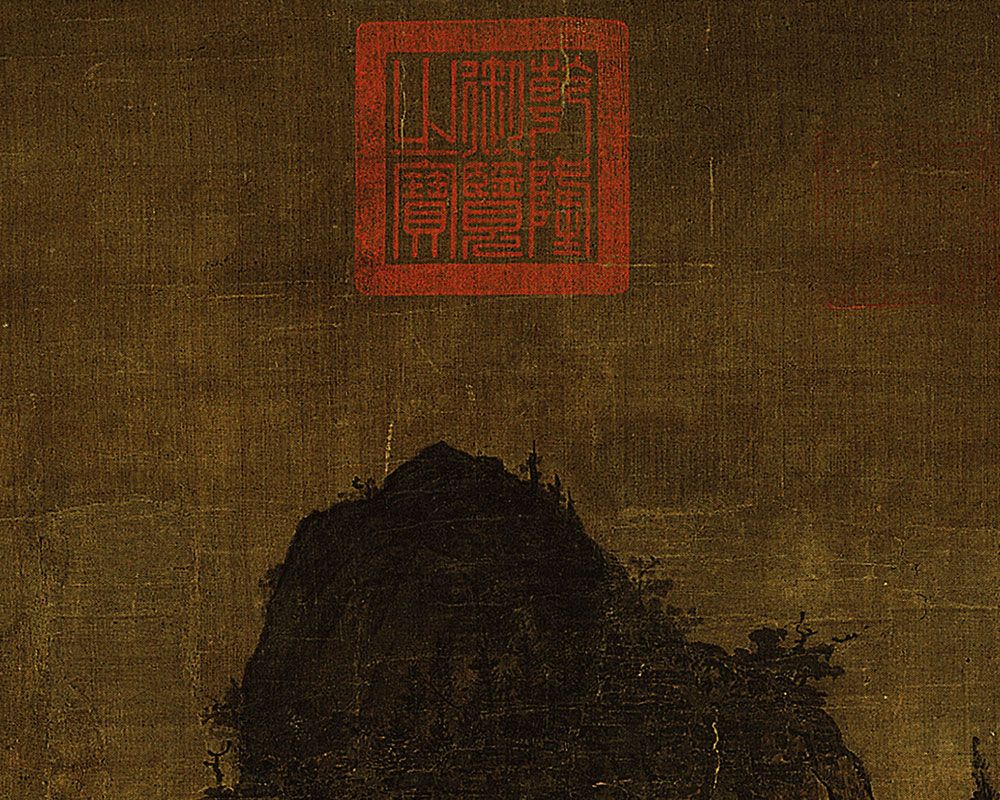
This painting was a favorite of the Emperor Huizong of the Song Dynasty, who included it in the Xuanhe Catalogue of Paintings. The imperial seals visible on the work today are a testament to its status as a "national treasure" for over a millennium. It represents the highest standard of the "Divine Class" (Shenpin) in Chinese art evaluation.
SinoInArt’s 1:1 replica pays homage to this "Light of the Ancients." By using authentic silk and traditional mounting techniques, the replica allows the "Evening Verdure" to glow just as it did when Guan Tong first put brush to silk over a thousand years ago. It is a masterpiece of light, shadow, and spiritual resilience.