Bronze Ware and the Development of Ancient Chinese Metallurgy: Innovations and Techniques
|
The production of Chinese bronze ware was a complex undertaking that required a deep understanding of metallurgy, with ancient artisans constantly innovating and refining techniques for the extraction, alloying, casting, and decoration of bronze. The ongoing experimentation and innovation in this field helped to make China a center of both technological and artistic excellence. The careful application of science and artistry helped to create an enduring legacy of craftsmanship.  The discovery and use of various metals, including copper, tin, and lead, as well as the creation of the specific alloys needed for different purposes, represents a significant achievement of ancient metallurgy. The proper use of different metals and the creation of new alloys was key to the development of bronze working. The precise management of metal ratios was essential to the production of specific types of bronze. 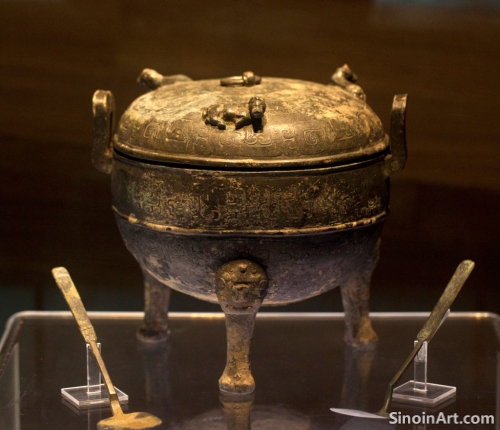 The development of casting techniques, such as the piece-mold and lost-wax methods, allowed for the creation of increasingly complex and detailed bronze objects. These advancements in casting were essential to the evolution of bronze working. The experimentation and innovation in casting techniques is a key element in the development of Chinese metalworking traditions.  The technical and artistic skill required for the creation of bronze ware highlights the ingenuity and mastery of ancient Chinese metalworkers, who were both skilled technicians and highly creative artists. The blending of science, technology, and artistry was a key element in the ancient Chinese approach to metalworking. These techniques are a testament to the skill and ingenuity of the people who developed them. |
Tag : bronze metallurgy, ancient Chinese technology, casting techniques, metal alloys, metalworking skills
Related information
- The Influence of Ancient Chinese Bronze Ware on Later Korean Art and Design
- Bronze Ware and Ancient Chinese Philosophy: Exploring the Connection Between Material Culture and Intellectual Thought
- Bronze and the Development of Early Chinese Astronomy: Tools of Observation and Understanding
- The Depiction of Daily Life on Bronze Artifacts: A Window into Ancient Society
- Beyond Bronze: Other Materials Used in Conjunction with Bronze Ware
This article explores the influence of ancient Chinese bronze ware on later Korean art and design, highlighting the adaptation of Chinese forms and techniques, the development of unique Korean styles, and the role of cultural exchange in shaping artistic traditions.
This article explores the connection between bronze ware and ancient Chinese philosophy, highlighting how Confucian, Daoist, and Legalist ideas influenced the forms, designs, and symbolic meanings of these objects, demonstrating the interplay between material culture and intellectual thought.
This article explores the use of bronze in ancient Chinese astronomy, highlighting the creation of astronomical instruments such as armillary spheres and sundials, and demonstrating how these objects facilitated the observation and understanding of the universe.
This article explores the depiction of daily life on Chinese bronze artifacts, highlighting scenes of hunting, farming, cooking, and social gatherings, and revealing insights into the social structures, economic activities, and everyday routines of ancient Chinese society.
This article explores the materials used in conjunction with bronze ware in ancient China, highlighting the use of jade, bone, shell, and wood to create more complex and multifaceted objects, showcasing the versatility of ancient craftsmanship.