
If you look at A Thousand Li of Rivers and Mountains, the first thing that strikes you is the color. This is the definitive example of the Qinglu (Blue-and-Green) landscape style. Unlike the later "literati" paintings that used subtle ink washes, this style utilizes precious minerals to create a jewel-like finish that glows with an otherworldly light.
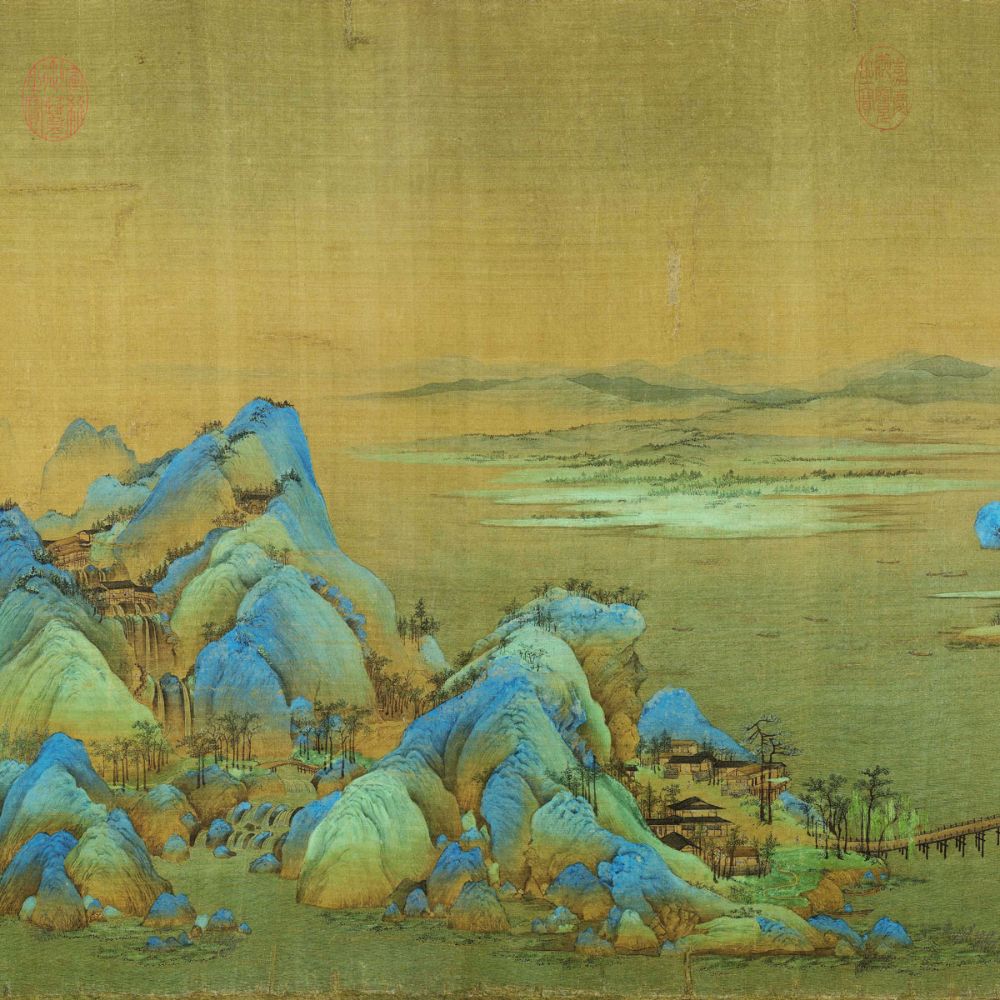
The process of creating such a work was incredibly labor-intensive. Wang Ximeng had to apply multiple layers of color. First, he laid down a foundation of ink and ochre, followed by layers of malachite for the greens and azurite for the blues. This layering creates a 3D effect, making the mountains appear as though they are vibrating with life.
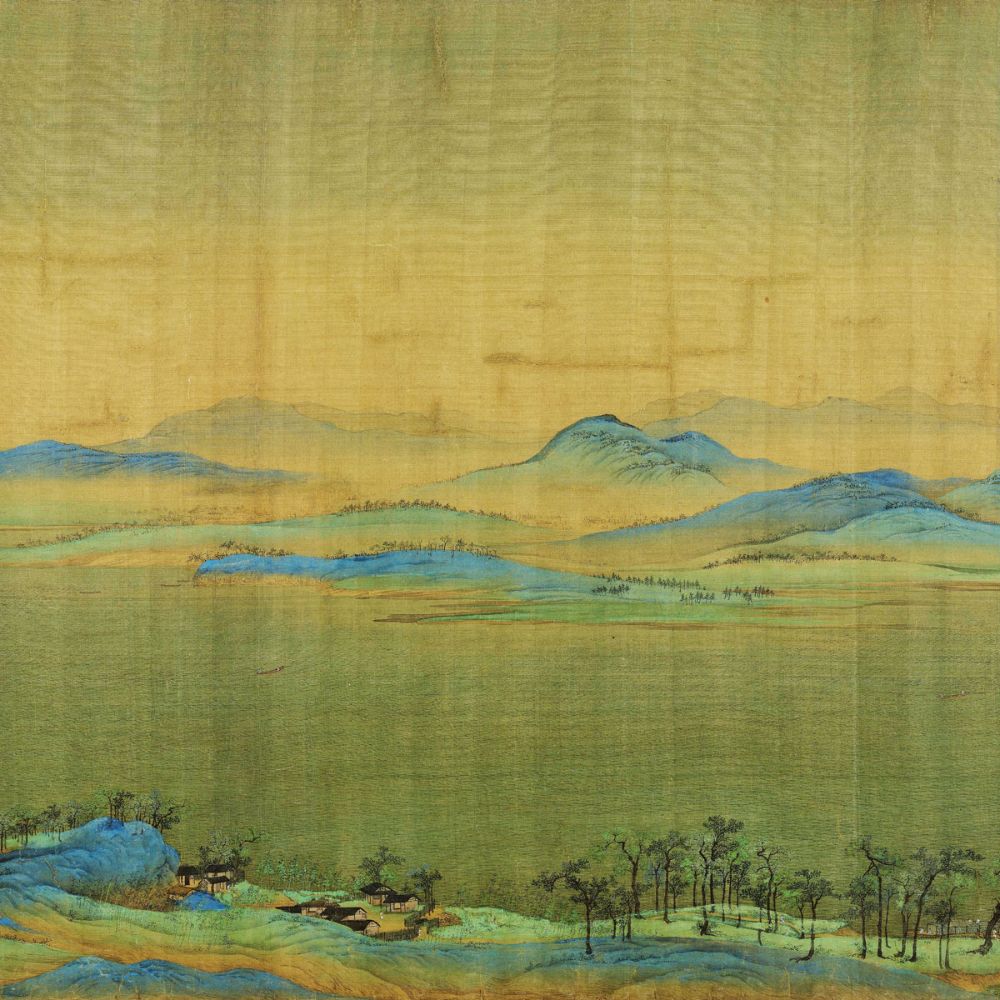
The materials themselves were a sign of royal luxury. These minerals were expensive and often imported. By using them so lavishly, Wang was not just painting a landscape; he was showcasing the wealth and stability of the Song Dynasty. The colors are so stable that they have resisted the ravages of light and air for over nine centuries.
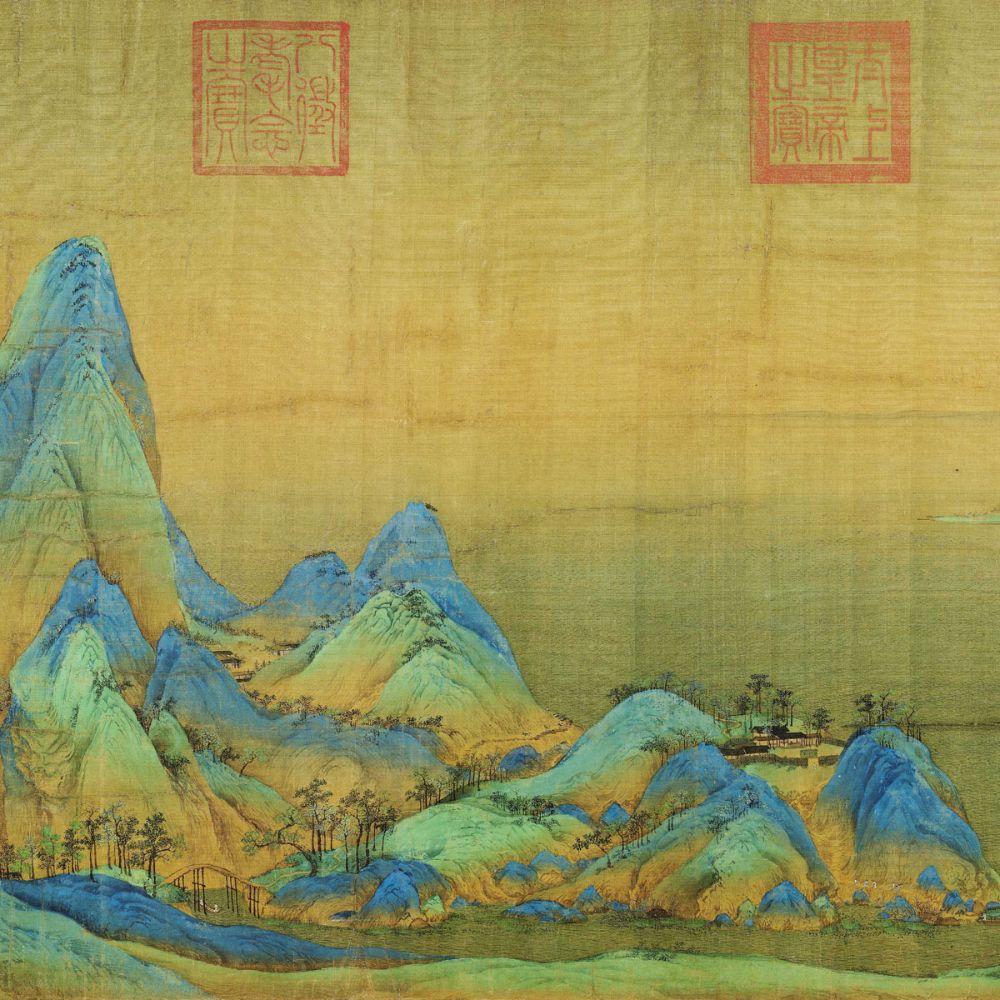
Beyond the color, the brushwork is incredibly fine. If you look closely at a high-resolution reproduction, you can see tiny figures of fishermen, intricate thatched huts, and delicate water ripples. This "microscopic" detail within a "macroscopic" scale is what defines the genius of the Song court style.
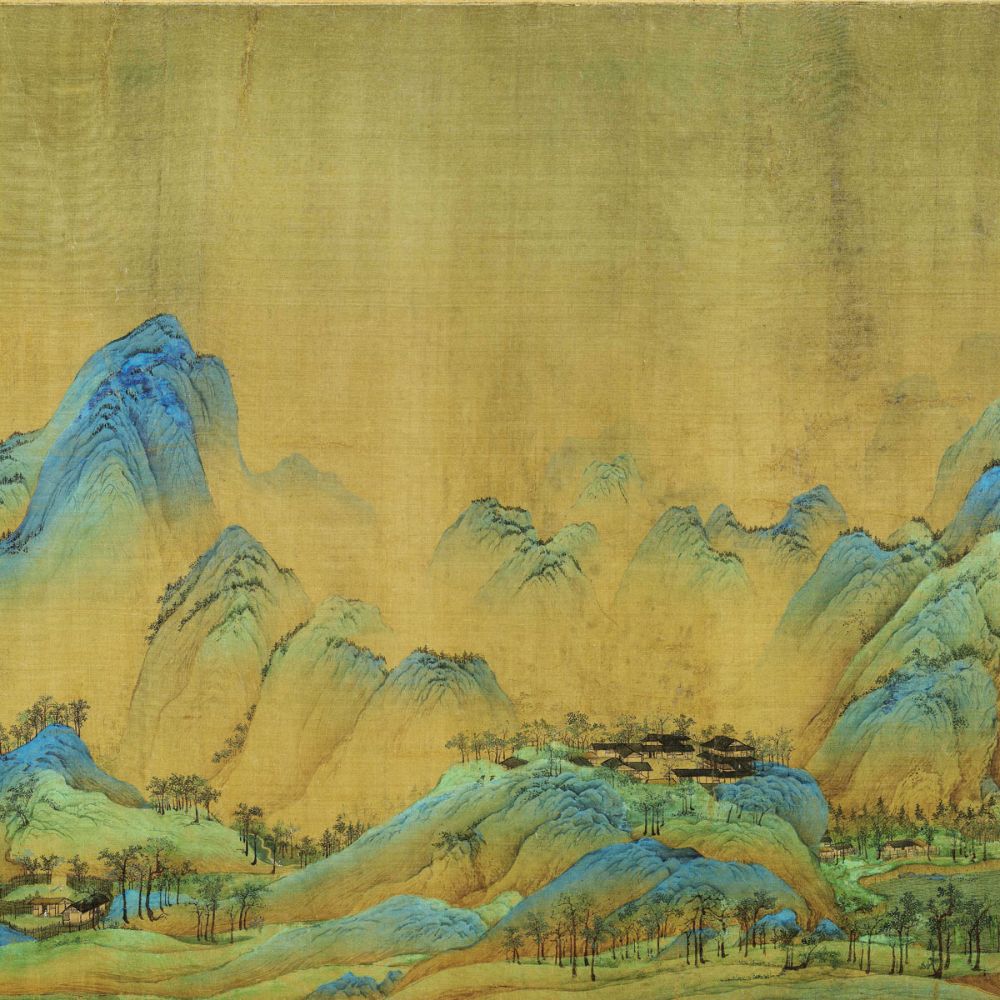
For modern collectors, the Blue-and-Green style offers a vibrant alternative to minimalist decor. A wall scroll or canvas print of this masterpiece adds a touch of royal elegance and historical weight to any room. It is a celebration of color that serves as a constant reminder of the enduring power of nature.