
To understand Twelve Flowers in Ink, one must understand the man who held the brush. Xu Wei was a tragic genius—a brilliant scholar who failed his exams eight times, a soldier, a prisoner, and a man who struggled with bouts of madness. This handscroll is the visual record of a mind that was too large for its era, a chaotic yet controlled explosion of ink and poetry.
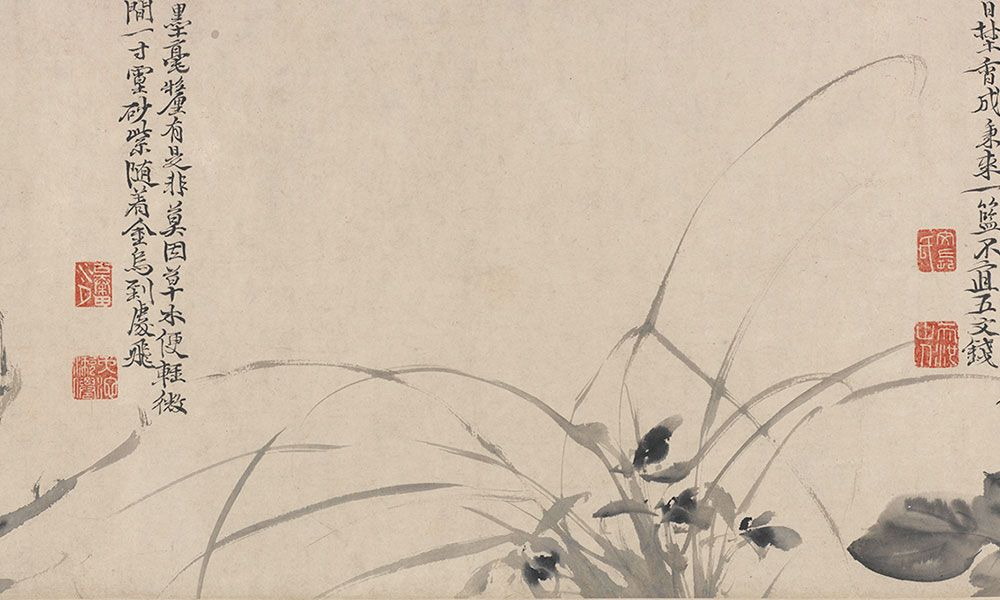
Every flower in the twelve-part series reflects a different facet of Xu Wei’s complex personality. The wild, tangled lines of the Orchid suggest a soul that refuses to be tamed, while the heavy, dark washes of the Banana Leaf represent the weight of his personal tragedies. The scroll is essentially an emotional autobiography disguised as a botanical study.
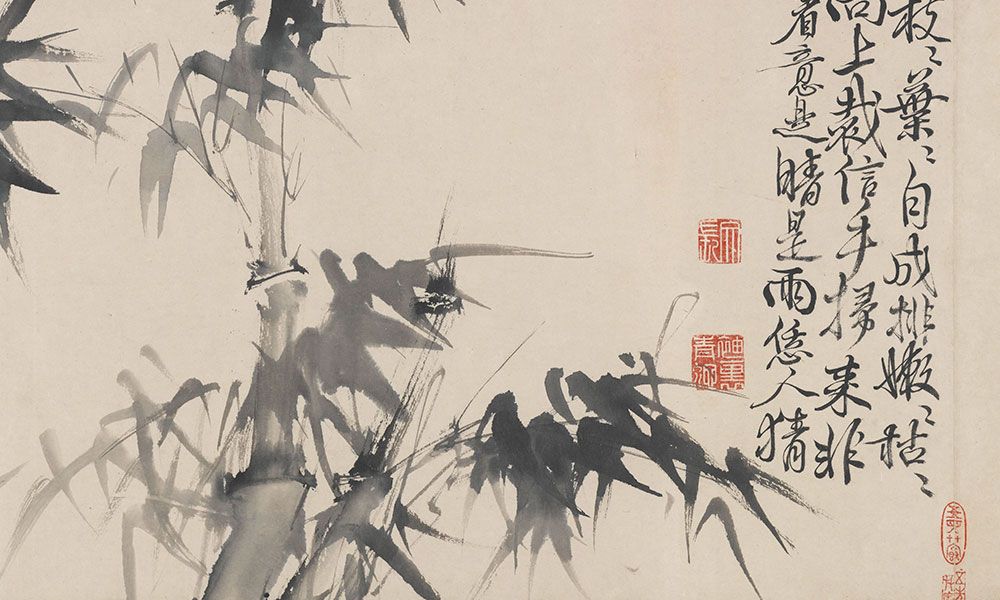
Xu Wei’s madness was his artistic liberation. It allowed him to ignore the conventions of "pretty" art and instead seek a rugged, "clumsy" beauty (Zhuo) that was more honest. In Twelve Ink Flowers, the ink often bleeds and splatters, creating accidental effects that Xu Wei embraced as part of the natural "Qi" or life force of the universe.
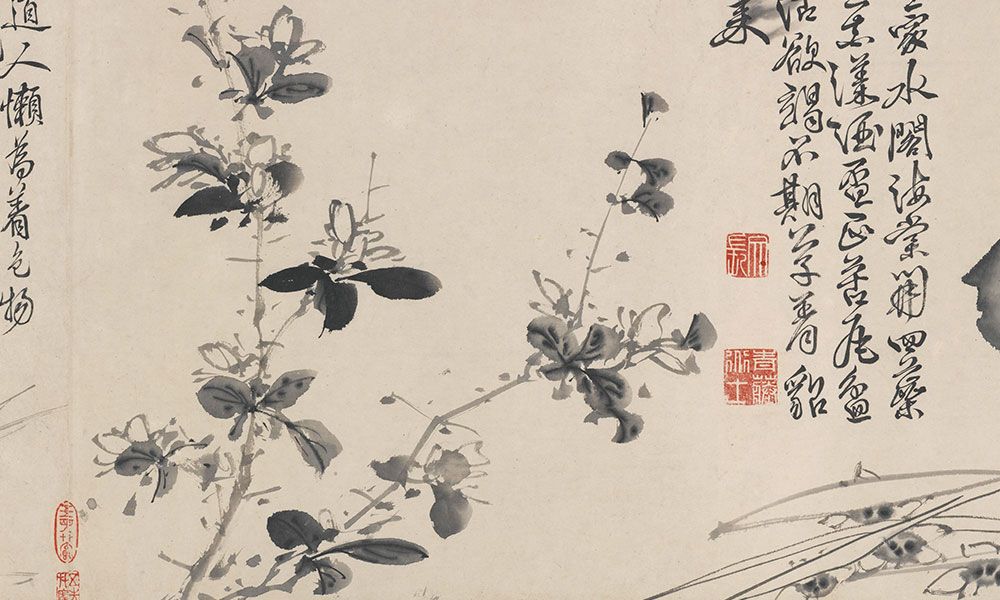
The cursive calligraphy that accompanies each painting is equally frantic and beautiful. The characters seem to dance and collide with the flowers, blurring the line between text and image. It is a work of "total art," where the poem, the brush, and the ink function as a single, breathing organism.
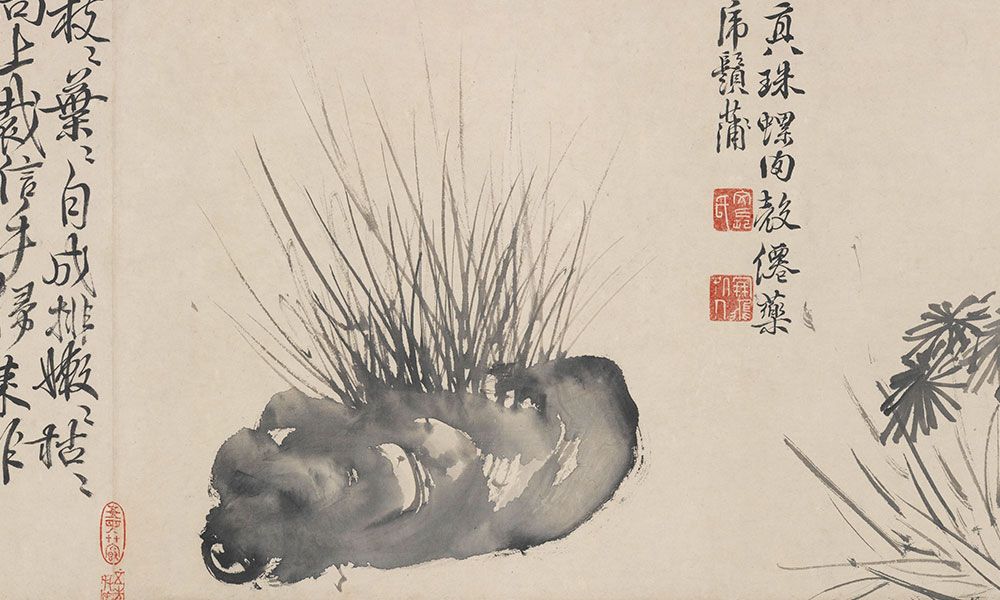
SinoInArt’s 1:1 replica captures the raw intensity of Xu Wei’s soul. Mounted with traditional Suzhou Yun Brocade, this reproduction provides the tactile and visual depth of the original, allowing the modern viewer to connect with the "Madness" and "Genius" that defined the Ming Dynasty’s most famous individualist.