
Guan Tong’s Autumn Mountains in Evening Verdure serves as a critical bridge in the evolution of Chinese art. Situated in the Five Dynasties period, it marks the transition from the decorative, color-heavy styles of the Tang Dynasty to the austere, deep realism of the Northern Song. This painting is where the "Monumental Landscape" was born, paving the way for future legends like Fan Kuan and Guo Xi.
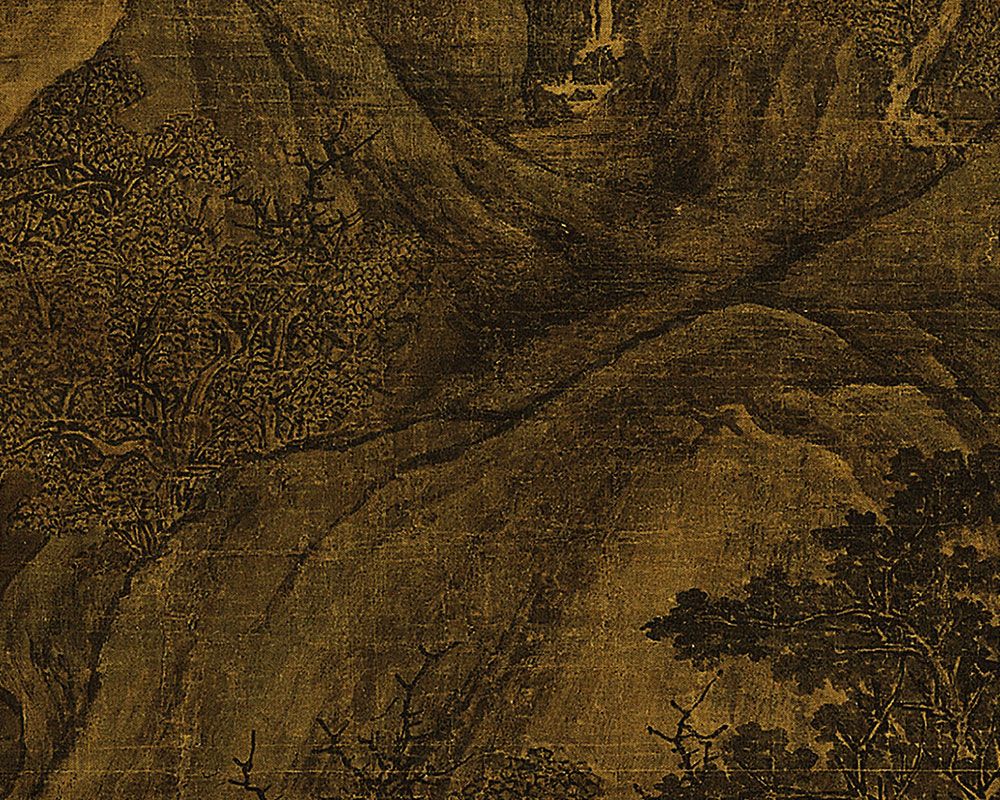
During the Tang period, landscapes were often idealistically bright and used as settings for courtly activities. Guan Tong stripped away the courtly vanity, focusing instead on the "desolate magnificence" of the wilderness. He was one of the first to capture the "shriveled" and "weathered" look of autumn, choosing to portray nature in its most honest and unadorned state.
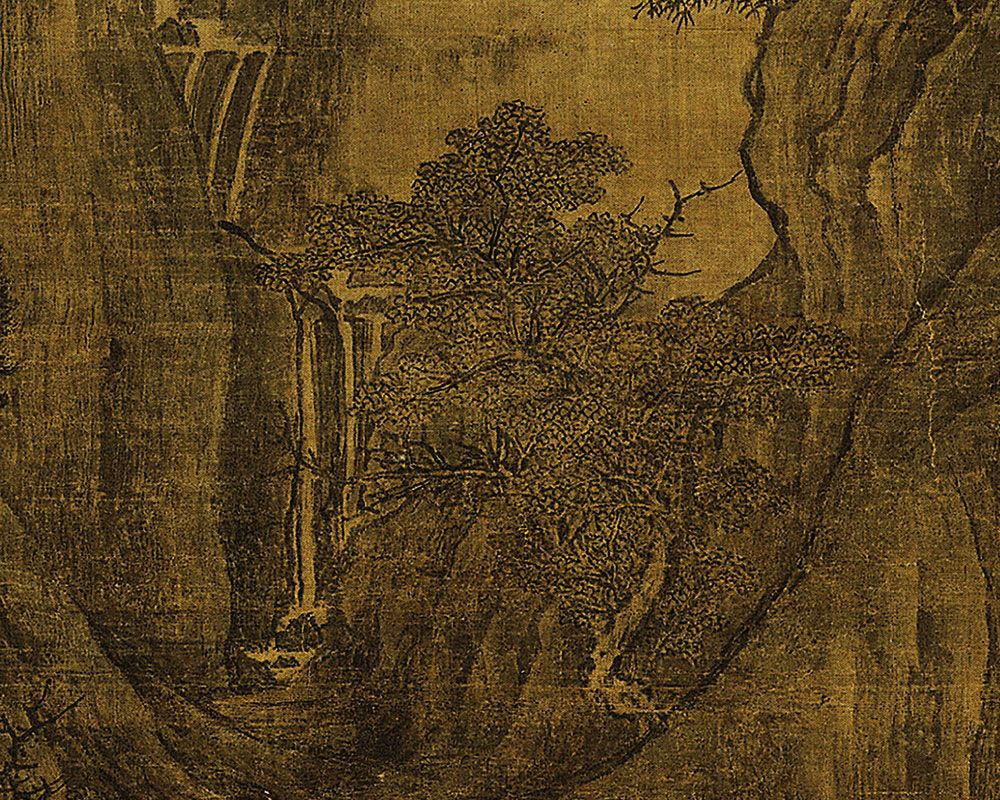
The work is celebrated for its "High Distance" (Gaoyuan) perspective. Unlike the horizontal scrolls that tell a story over time, this hanging scroll forces a sudden, vertical confrontation with the mountain. This shift in perspective mirrored a shift in the Chinese psyche—from the outward-looking expansion of the Tang to the inward-looking, philosophical depth of the Five Dynasties and Song.
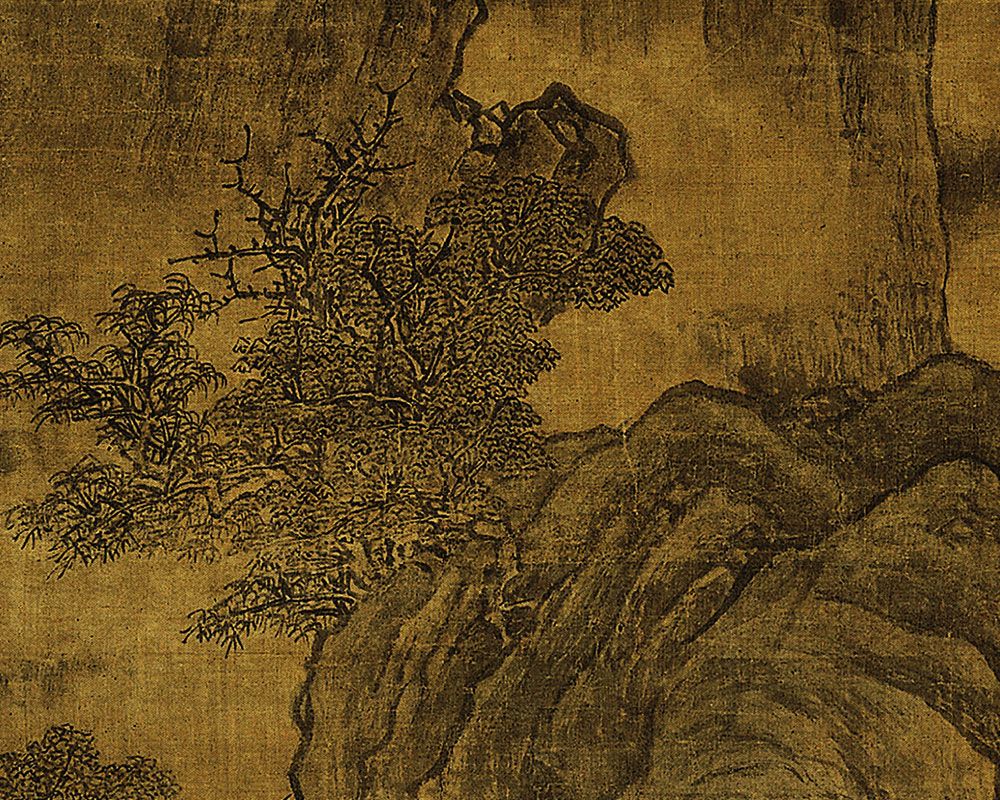
The detail in the lower third of the painting provides a narrative of reclusion. The mountain paths and simple huts represent the "Scholar-Recluse" ideal—the intellectual who flees the chaos of a collapsing dynasty to find truth in the silence of the peaks. This theme of "finding one’s self in the mountains" became the core of Chinese literati culture for the next thousand years.
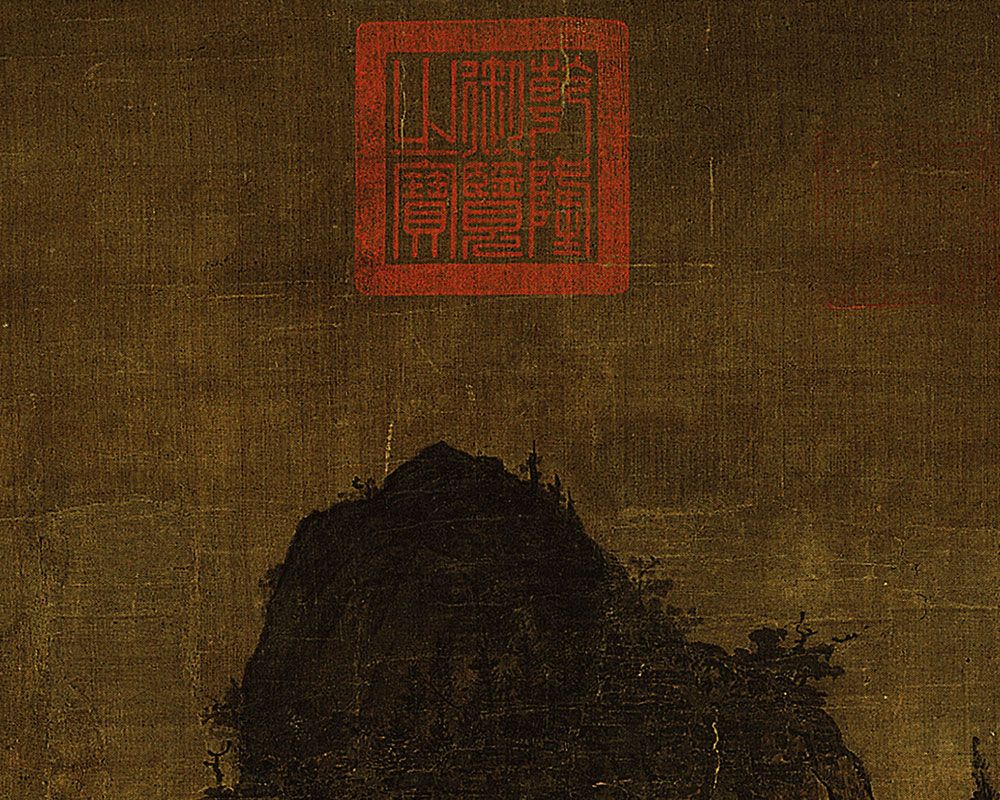
SinoInArt honors this historical transition by offering a 1:1 replica that retains the "Antique Spirit" (Gu Yi) of the original. Mounted on traditional Suzhou Yun Brocade, the reproduction reflects the same dignity that the work would have commanded in an 11th-century scholar’s studio, making it a timeless addition to any collection.