
As the vibrant colors of summer fade, the Qing Dynasty court painter Chen Mei turned his masterful brush to the quiet, resilient beauty of autumn. His work, "Autumn Chrysanthemums and Quails" (Qiuju Anchun Tu), is a quintessential example of the 18th-century Gongbi (meticulous) style. It captures a moment of serene stillness, where the frost-resistant chrysanthemum and the humble quail together create a visual poem of peace and steadfastness amidst the changing seasons.
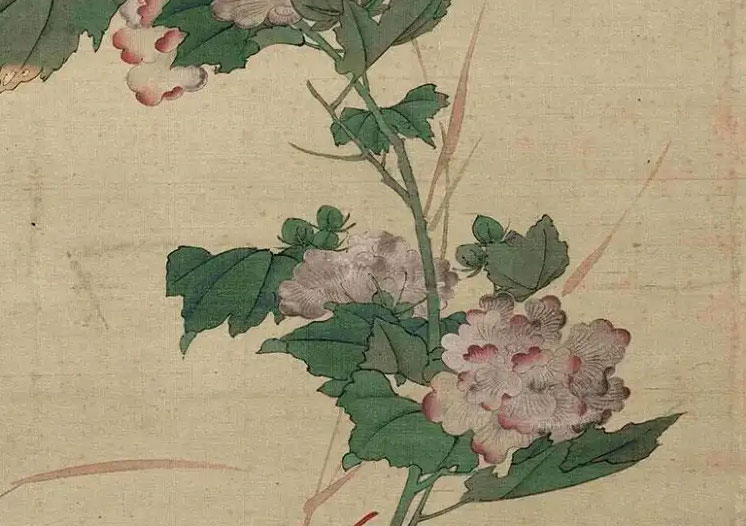
In this painting, the Chrysanthemum (Ju) is rendered with breathtaking precision. Known as one of the "Four Gentlemen" of Chinese art, it represents longevity and the noble spirit of the hermit. Chen Mei utilizes fine-line brushwork to delineate each individual petal, layering them to suggest a dense, bursting bloom. Influenced by Western chiaroscuro, he employs subtle tonal transitions from the bright yellow tips to the deeper, shaded centers of the flowers. This gives the blossoms a tangible, three-dimensional presence that seems to defy the flat surface of the silk.
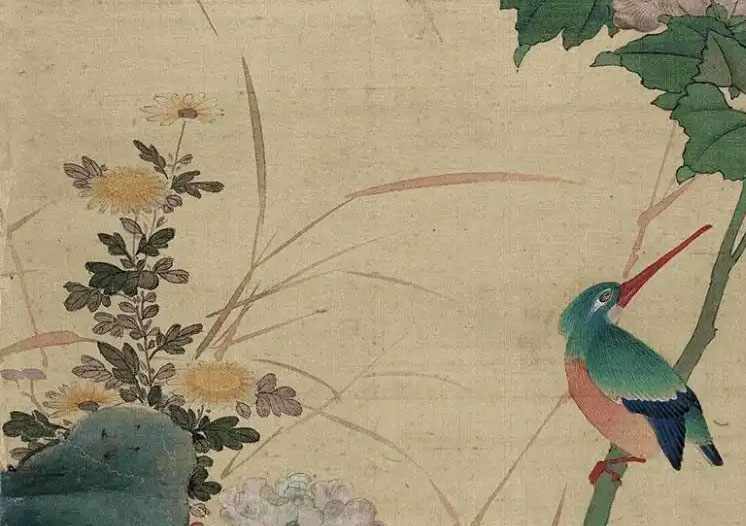
On the ground beneath the overhanging blooms, a quail (Anchun) is depicted with remarkable realism. Chen Mei’s technique for rendering feathers is particularly noteworthy; he uses thousands of microscopic strokes to simulate the bird’s speckled, downy plumage. The quail’s rounded, plump form provides a grounded, stable focal point for the composition. The bird’s alert yet calm expression reflects the artist's keen observation of nature, elevated by a European-style focus on anatomy and light reflection in the bird's eye.
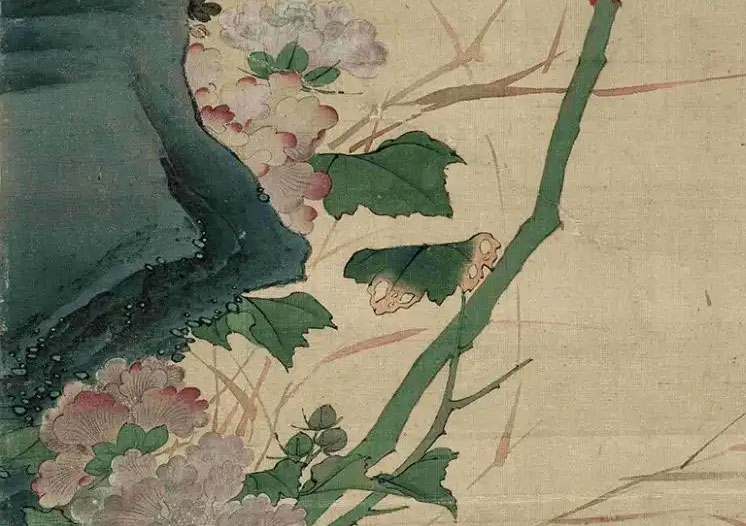
The color palette of this piece is a sophisticated arrangement of earthy tones. Chen Mei balances the vibrant, golden yellows of the chrysanthemums with the muted browns and ochres of the quail and the drying autumn leaves. This chromatic harmony evokes the cooling atmosphere of late autumn. The use of mineral pigments ensures that the colors remain luminous, capturing the "Golden Age" aesthetic of the Qianlong reign, where art was expected to be both visually rich and intellectually profound.
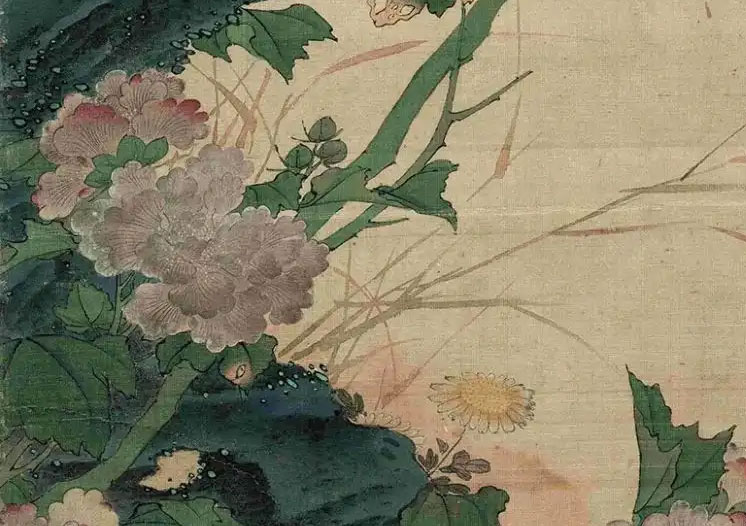
Like many imperial works, this painting is a visual pun (rebus). The word for quail (An) is a homophone for "Peace" (An), while the chrysanthemum (Ju) is often associated with the word for "Long-term" or "Residence" (Jiu). Together, the image of "Quails among Chrysanthemums" conveys the auspicious message of "Anju Leye" (Living in peace and working in contentment) or "Sui Sui Ping An" (Peace year after year). For the Emperor, this was a visual affirmation of a stable and well-governed empire.
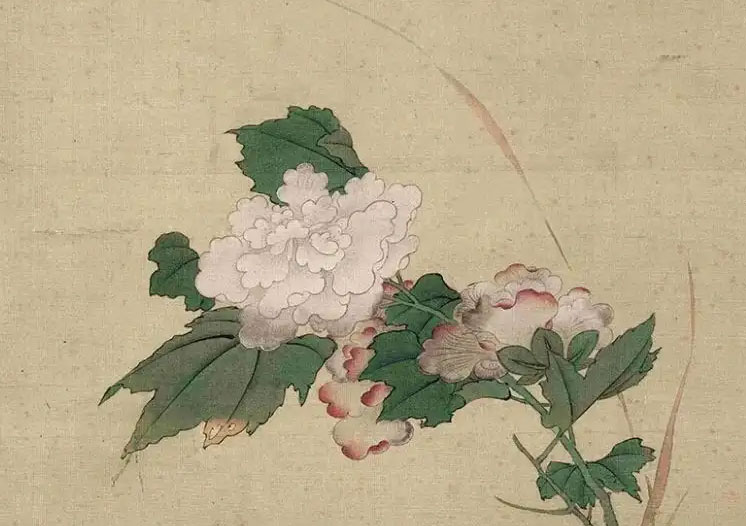
Chen Mei’s "Autumn Chrysanthemums and Quails" is more than a decorative nature study; it is a bridge between spiritual endurance and technical innovation. By combining the traditional symbolism of the "Four Gentlemen" with the rigorous realism of the Qing Imperial Academy, Chen Mei created a work that celebrates the quiet strength found in nature's late-season survivors. It remains a crowning achievement of 18th-century art, embodying the elegance, wisdom, and technical perfection of the Qing court.