
In the illustrious collection of the Qing Imperial Academy, Chen Mei is celebrated for his ability to fuse meticulous Chinese brushwork with the vibrant realism of the West. His masterpiece, "Hibiscus and Golden Pheasant" (Furong Jinji Tu), is a brilliant explosion of color and symbolism. It captures a moment of autumnal brilliance, where the "Frost-Resistant" Hibiscus serves as a majestic stage for the Golden Pheasant—a bird that has long been revered in Chinese culture as a symbol of both imperial authority and moral integrity.
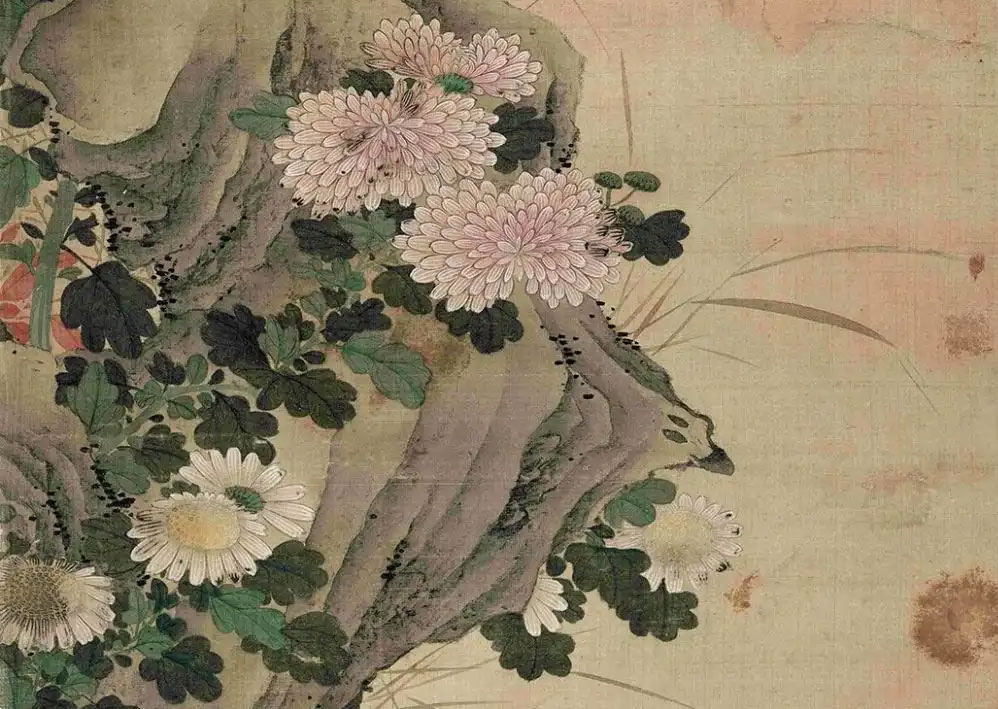
The most striking element of this work is its vibrant color palette. Chen Mei utilizes expensive mineral pigments to render the Golden Pheasant (Jinji) in all its glory. The bird’s crest is a fiery scarlet, its neck covered in golden "scales," and its long tail feathers a sophisticated mix of ochre and brown. By using the "silk-hair" technique, Chen Mei gives the feathers a shimmering, iridescent quality that seems to change under different lighting. This chromatic intensity is balanced by the soft, fleshy pinks of the Hibiscus blossoms, creating a visual harmony that is both opulent and naturalistic.
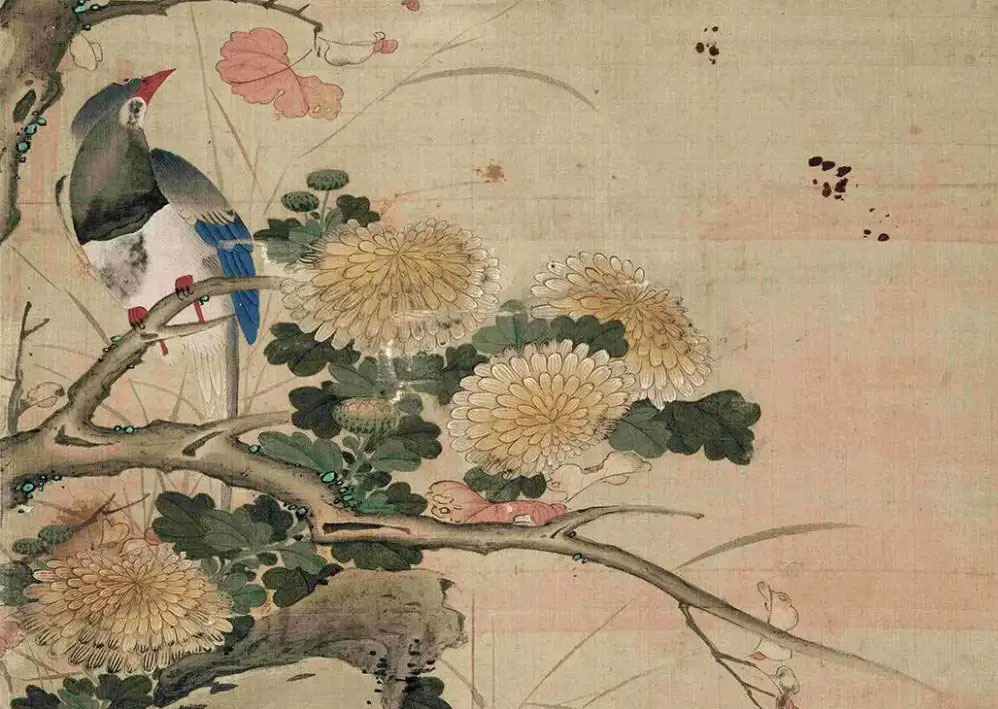
Reflecting the influence of the European Jesuit painters at the Qing court, Chen Mei’s "Hibiscus and Golden Pheasant" exhibits a high degree of anatomical realism. Unlike the stylized birds of earlier dynasties, this pheasant possesses a clear skeletal structure and muscular form. The bird is depicted in a dynamic pose, twisting its head to look back at a butterfly or a swaying branch, a movement that showcases Chen’s mastery of foreshortening and perspective. The Hibiscus petals, too, are modeled with subtle light and shadow (chiaroscuro), giving them a velvety texture and three-dimensional volume.
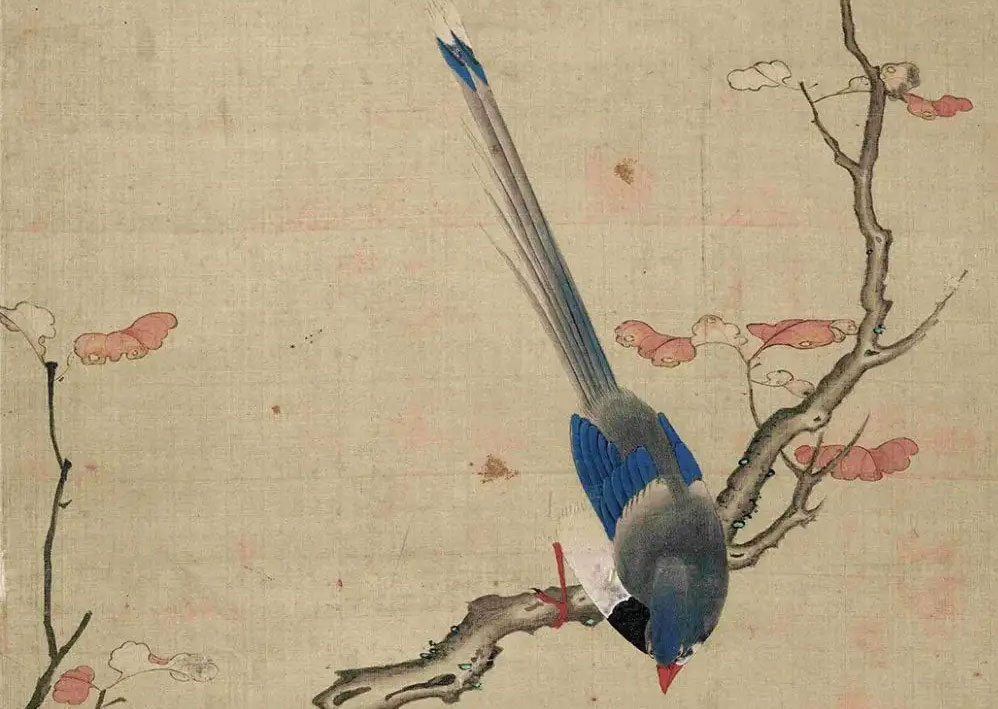
Beyond its decorative appeal, the Golden Pheasant is a profound cultural symbol. In Chinese tradition, the pheasant is said to possess the "Five Virtues": the crest represents Civilian Virtue (Wen); the spurs represent Military Virtue (Wu); its willingness to fight represents Courage (Yong); its call to others when finding food represents Benevolence (Ren); and its punctuality in crowing represents Trustworthiness (Xin). By pairing this "virtuous bird" with the Hibiscus (Furong)—a flower associated with wealth and high status—Chen Mei creates a visual metaphor for a perfect official or a flourishing empire: one that is both prosperous and morally upright.
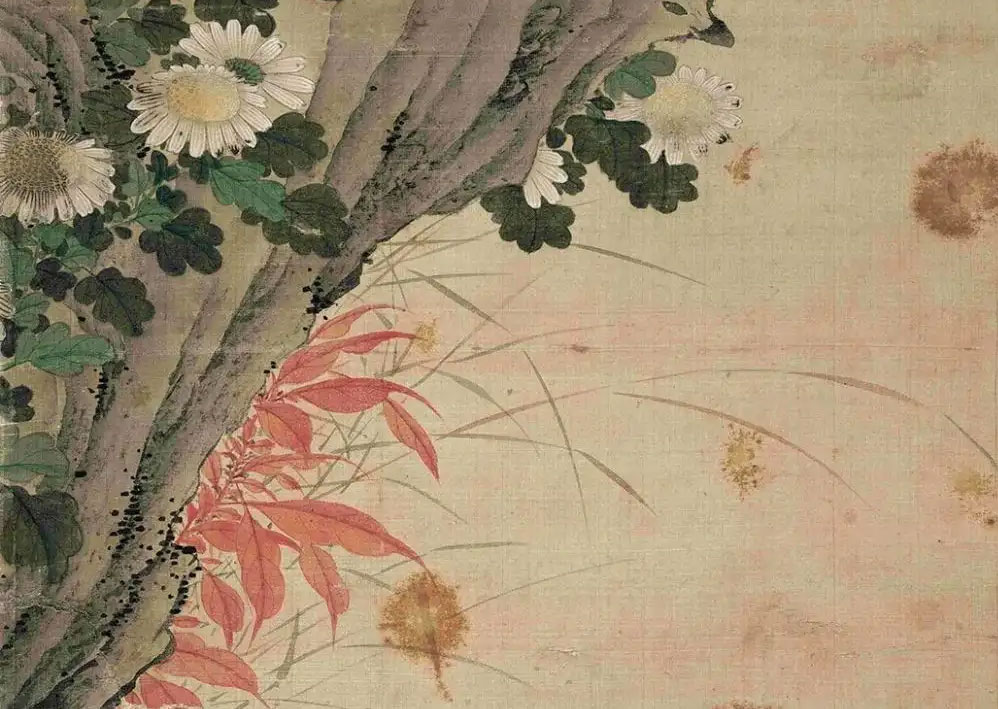
The title and imagery of the painting form a classic auspicious rebus. The word for Hibiscus (Furong) is a homophone for "Glory" (Rong), and the word for Golden Pheasant (Jinji) relates to the term "Splendid" (Jinxiu). Together, they convey the message "Jinxiu Ronghua" (Splendid Wealth and Honor). This made the painting an ideal piece for the imperial halls, serving as a constant reminder of the splendor of the Qing Dynasty and the high expectations placed upon those who served within its court.
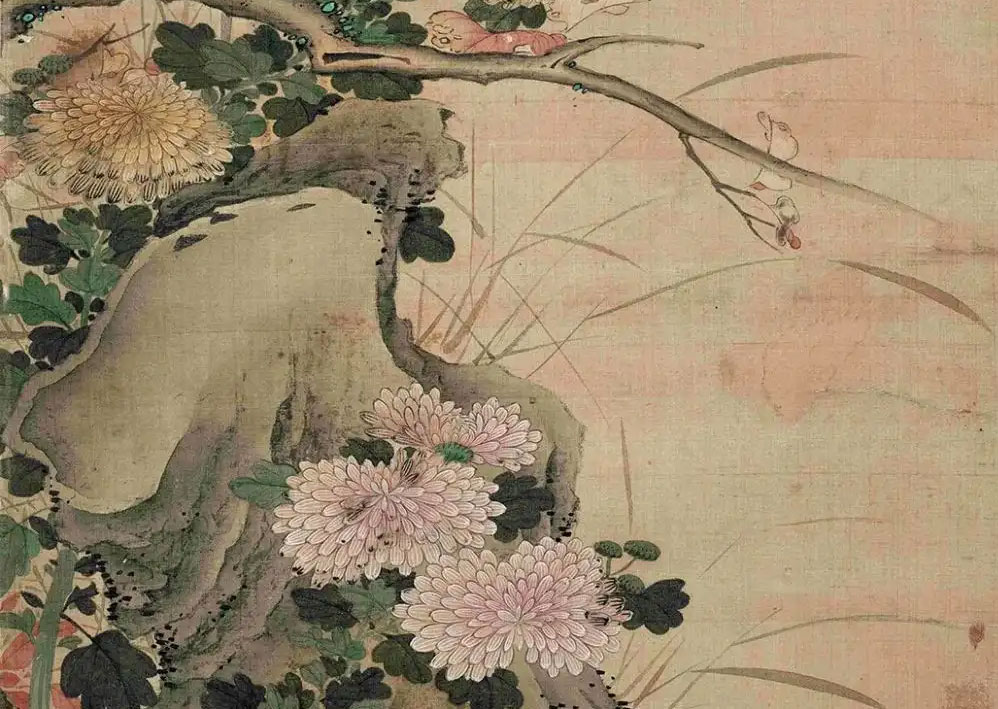
Chen Mei’s "Hibiscus and Golden Pheasant" remains a towering achievement of 18th-century Gongbi painting. It represents a rare moment in art history where technical perfection, international influence, and deep-seated cultural symbolism met in perfect equilibrium. Through his meticulous brush, Chen Mei did not just paint a bird and a flower; he painted the aspirations of an era, leaving behind a legacy of "splendid beauty" that continues to captivate the world of Chinese art.