
In the quietude of a winter's day within the Qing Dynasty imperial court, Chen Mei created a masterpiece that speaks to the soul’s endurance. His work, "Cold Plum and Perching Sparrows" (Hanmei Qique Tu), is a profound example of the Gongbi (meticulous) style, where the sparse elegance of the winter plum meets the humble vitality of the sparrow. This painting represents a high point of 18th-century art, where traditional Chinese literati themes were elevated by the technical precision and realistic lighting of the Imperial Painting Academy.
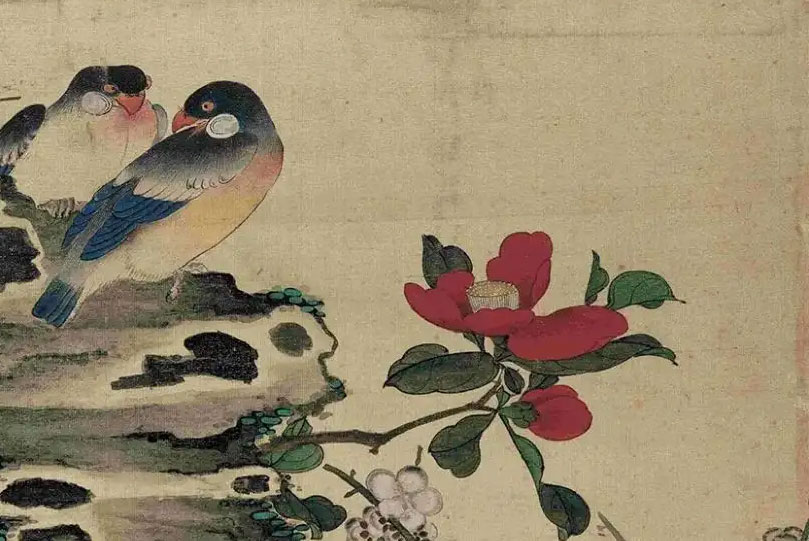
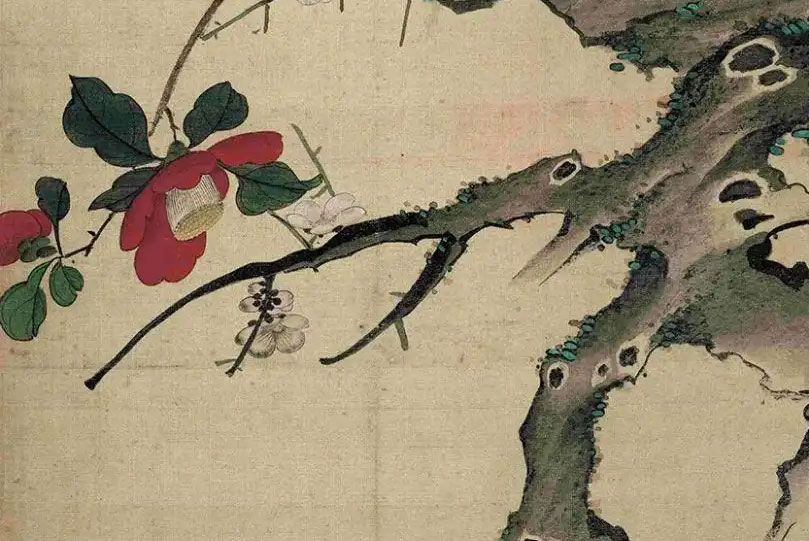
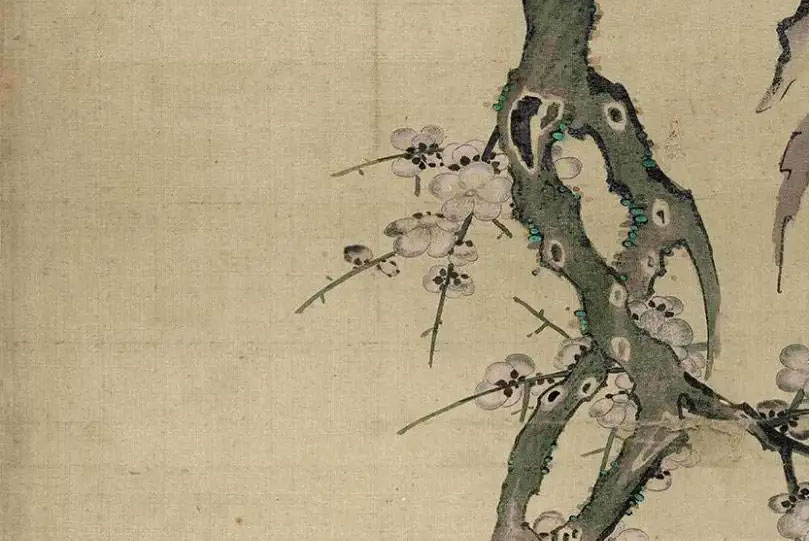
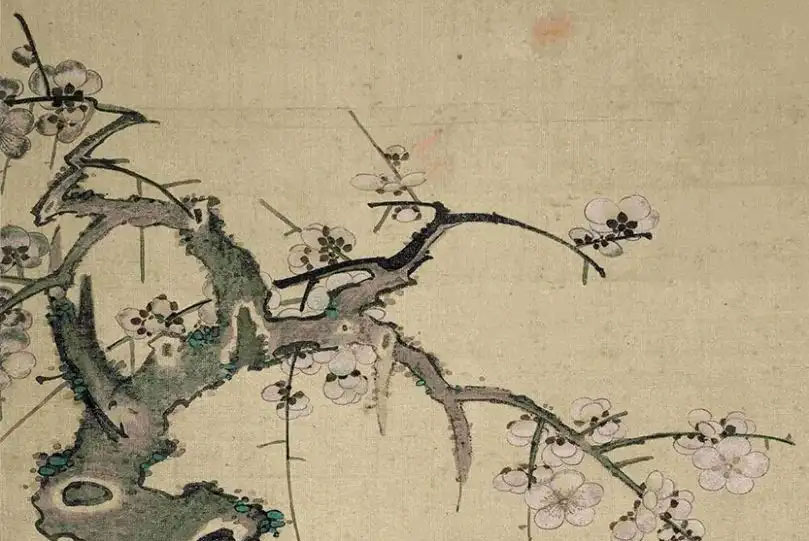
The central subject, the Winter Plum (Meihua), is heralded in Chinese culture as one of the "Three Friends of Winter" for its ability to bloom amidst the snow. Chen Mei renders the gnarled, ancient branches using deep ink washes and sharp, rhythmic strokes to suggest the texture of aged bark. Contrastingly, the blossoms are painted with white lead pigment, applied in delicate layers to create a velvety, luminous effect. Influenced by Western techniques, Chen uses subtle shading on the petals to give them a rounded, three-dimensional quality, making the flowers appear as if they are emerging from the silk background.
Perched upon the frosty branches is a group of sparrows (Maque), huddled together to conserve warmth. Chen Mei’s mastery of the "silk-hair" technique is on full display here; the feathers are so finely detailed that they appear soft and downy, almost inviting the viewer to touch them. The birds’ postures—some tucked into their wings, others alertly watching the surroundings—add a layer of narrative life to the static branch. Their presence transforms the "cold" scene into one of "living" resilience, embodying the Qi (life force) that persists even in the harshest conditions.
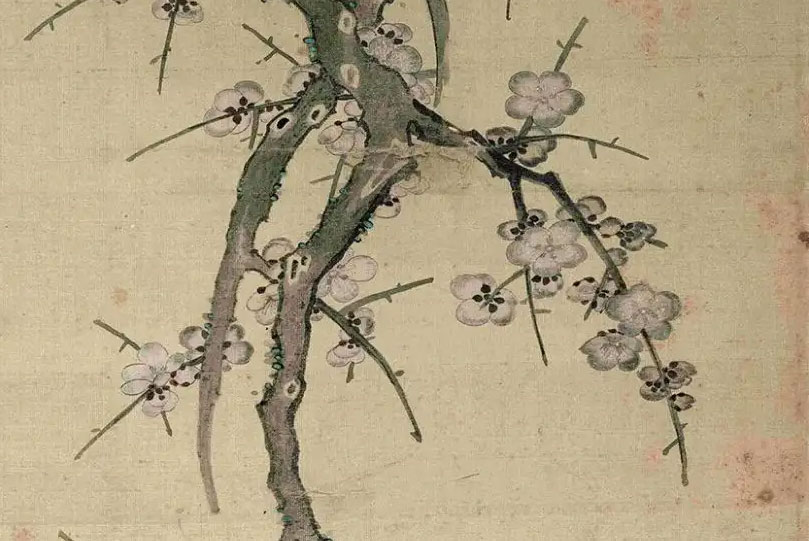
The composition follows the "broken branch" (zhezhi) tradition, focusing on a singular, dramatic sweep of the plum tree. Chen Mei utilizes negative space (white space) to represent the cold, crisp air of winter, allowing the viewer’s imagination to fill in the frost and silence. The "hard" texture of the dark wood and the "soft" fragility of the white blossoms and feathered birds create a visual tension that is central to the painting’s aesthetic power. This balance reflects the philosophical harmony between Yin (the cold, dark winter) and Yang (the budding life of spring).
Beyond its technical brilliance, the painting is rich in cultural symbolism. The plum blossom is the herald of spring, signaling that renewal is close at hand. The sparrows, common and hardy birds, represent the common people and the joy found in everyday life. Together, the "Plum and Sparrows" (Meique) is often a visual pun for "Meikai Wufu" (Plums blooming with five blessings) or "Xi Shang Mei Xiao" (Happiness up to the eyebrows). For the Qing court, this work served as a sophisticated wish for peace, stability, and the eventual triumph of life over hardship.
Chen Mei’s "Cold Plum and Perching Sparrows" remains a timeless masterpiece because it captures a universal truth: that beauty and warmth exist even in the depths of winter. By blending Western-influenced realism with the deep spiritual roots of Chinese floral and bird painting, Chen Mei created a work that is both a scientific observation of nature and a poetic reflection on the human spirit. It stands as a pinnacle of Qing Dynasty court art, offering a moment of serene contemplation to all who behold it.