
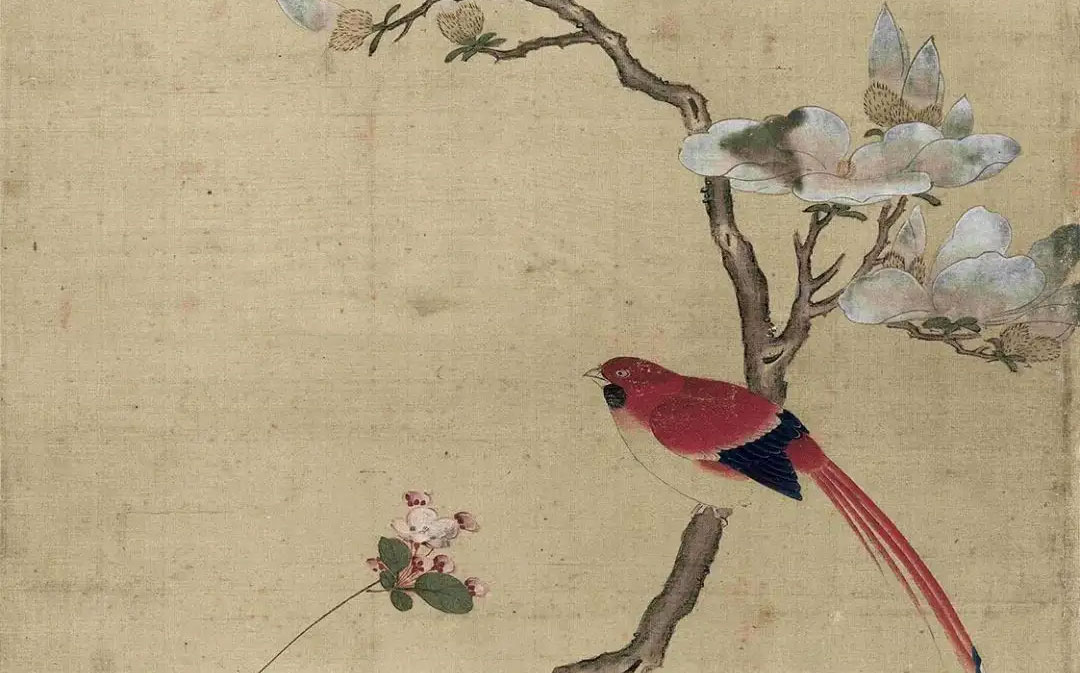
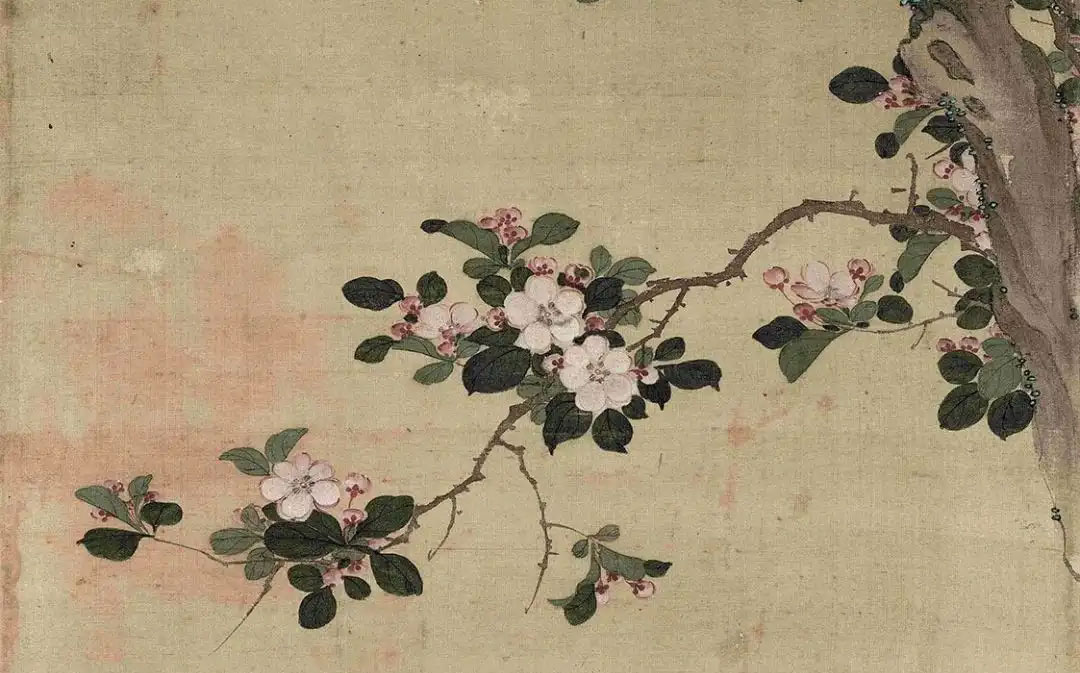
In the refined world of Qing Dynasty court painting, Chen Mei is celebrated for his ability to infuse traditional subjects with a renewed sense of life and light. His work "Magnolia and Paradise Flycatcher" (Yulan Shoudai Tu) is a masterclass in the Gongbi (meticulous) style, capturing the fleeting purity of early spring. The painting is a harmonious dialogue between the ethereal, wax-like blossoms of the magnolia and the vibrant, trailing elegance of the Paradise Flycatcher, creating a scene of profound serenity and imperial grace.
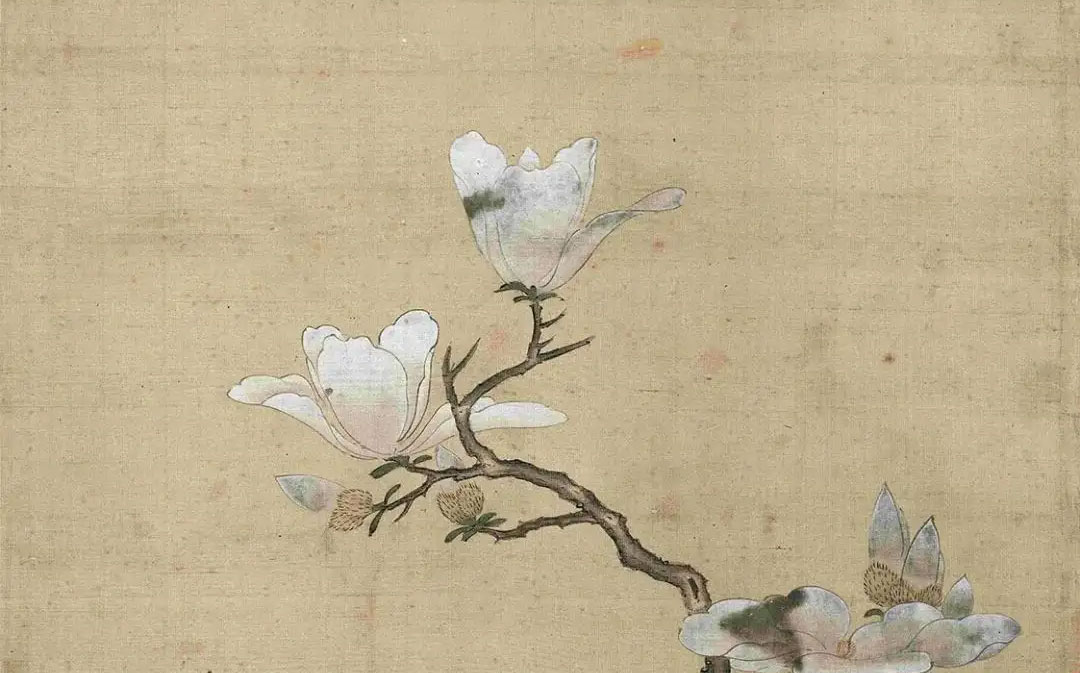
One of the most challenging feats in classical Chinese painting is the depiction of white flowers on silk or paper. In this masterpiece, Chen Mei demonstrates his technical brilliance by using white lead pigment (Zhenzhu Fen) to build layers of opacity and translucency. The magnolia petals are not merely flat shapes; through subtle washes and delicate ink outlines, they possess a succulent, three-dimensional quality. This "white-on-white" approach creates a luminous effect, making the blossoms appear as if they are glowing against the subdued background—a testament to Chen’s mastery of Western-influenced shading.
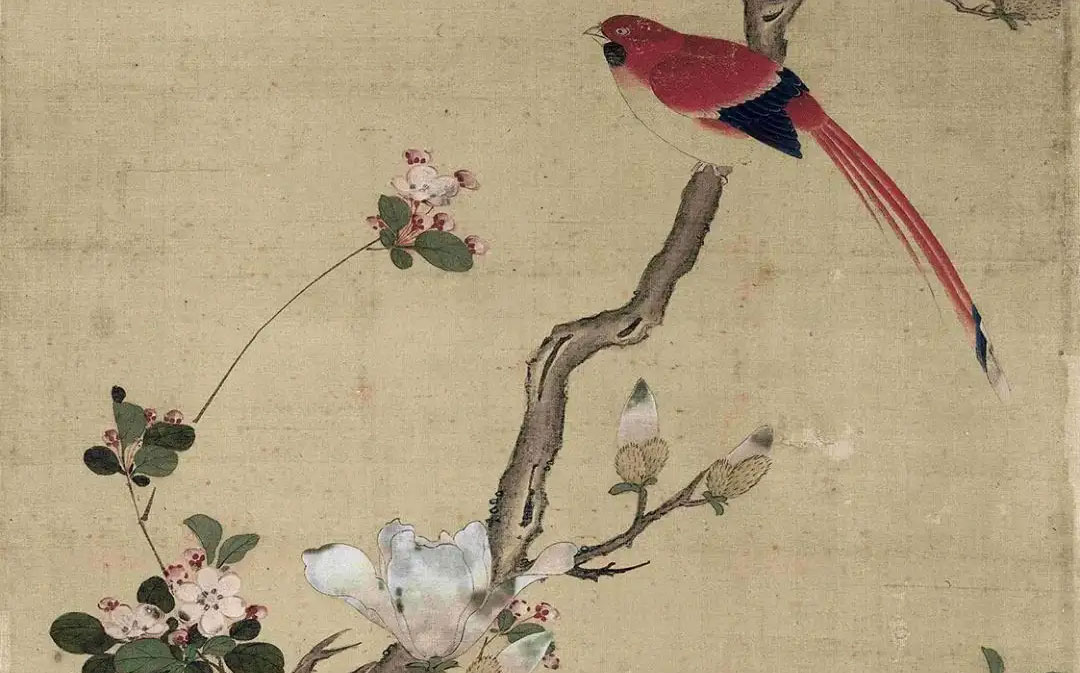
The centerpiece of the composition is the Paradise Flycatcher (Shoudai Niao), a bird prized for its exceptionally long, ribbon-like tail feathers. Chen Mei renders every barb of the feathers with microscopic precision, using the "silk-hair" technique to create a soft, tactile realism. The bird’s posture, perched alertly on a gnarled branch, provides a rhythmic contrast to the heavy, rounded forms of the magnolia buds. Its vivid colors—typically a mix of deep blues, chestnut, or white—serve as a focal point that draws the eye through the spiraling motion of its tail.
Like much of the art produced for the Qing emperors, "Magnolia and Paradise Flycatcher" is rich in rebus and wordplay. The Magnolia (Yulan) represents purity and noble character. However, the bird provides the deeper meaning: the word for "ribbon" (Shoudai) is a homophone for "longevity" (Shou) in Chinese. Therefore, the depiction of the "Shoudai" bird is a visual wish for eternal life and high status. Together, the painting conveys the message of "Nobility and Longevity" (Yutang Fugui), making it a perfect decorative piece for the imperial living quarters.
In conclusion, Chen Mei’s "Magnolia and Paradise Flycatcher" represents the zenith of the Qing Imperial Academy style. It is a work that respects the restraint of Song Dynasty flower-and-bird painting while embracing the descriptive realism of the 18th century. By balancing the "stillness" of the blossoms with the "vitality" of the bird, Chen Mei created an enduring symbol of the cultural sophistication of the Qianlong era—a time when art was expected to be both technically perfect and spiritually uplifting.