
Hong Ren (1610–1664), the preeminent leader of the Xin’an School (Anhui School) and one of the "Four Monk Masters" of the early Qing Dynasty, is the creator of the hauntingly beautiful "Winter Snow" (Dong Xue Tu). As a Ming loyalist who sought spiritual asylum in the Buddhist monkhood after the Manchu conquest, Hong Ren’s landscapes are far from mere seasonal depictions. Instead, they are psychological landscapes that translate his existential solitude and unyielding moral integrity into a world of frost and silence.
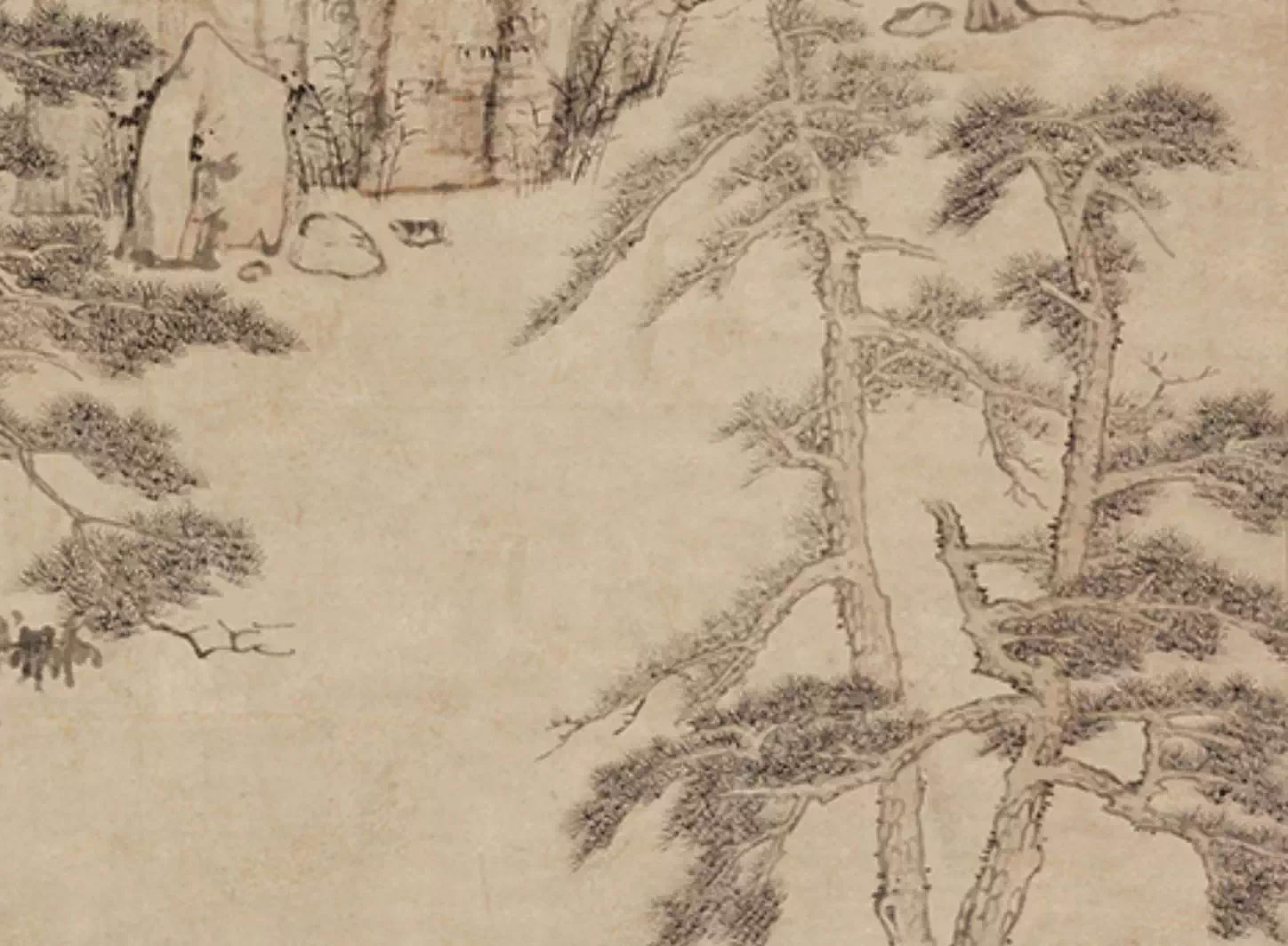
The aesthetic essence of "Winter Snow" is the ultimate expression of Hong Ren’s "cold and sparse" (han-shao) style. While heavily influenced by the Yuan Dynasty master Ni Zan, Hong Ren stripped the landscape further, removing almost all decorative elements to achieve a crystalline purity. In this work, the winter landscape is not a place of desolation, but a sacred realm of absolute cleanliness (jie), reflecting the artist's desire for a world untainted by the political upheaval of his era.
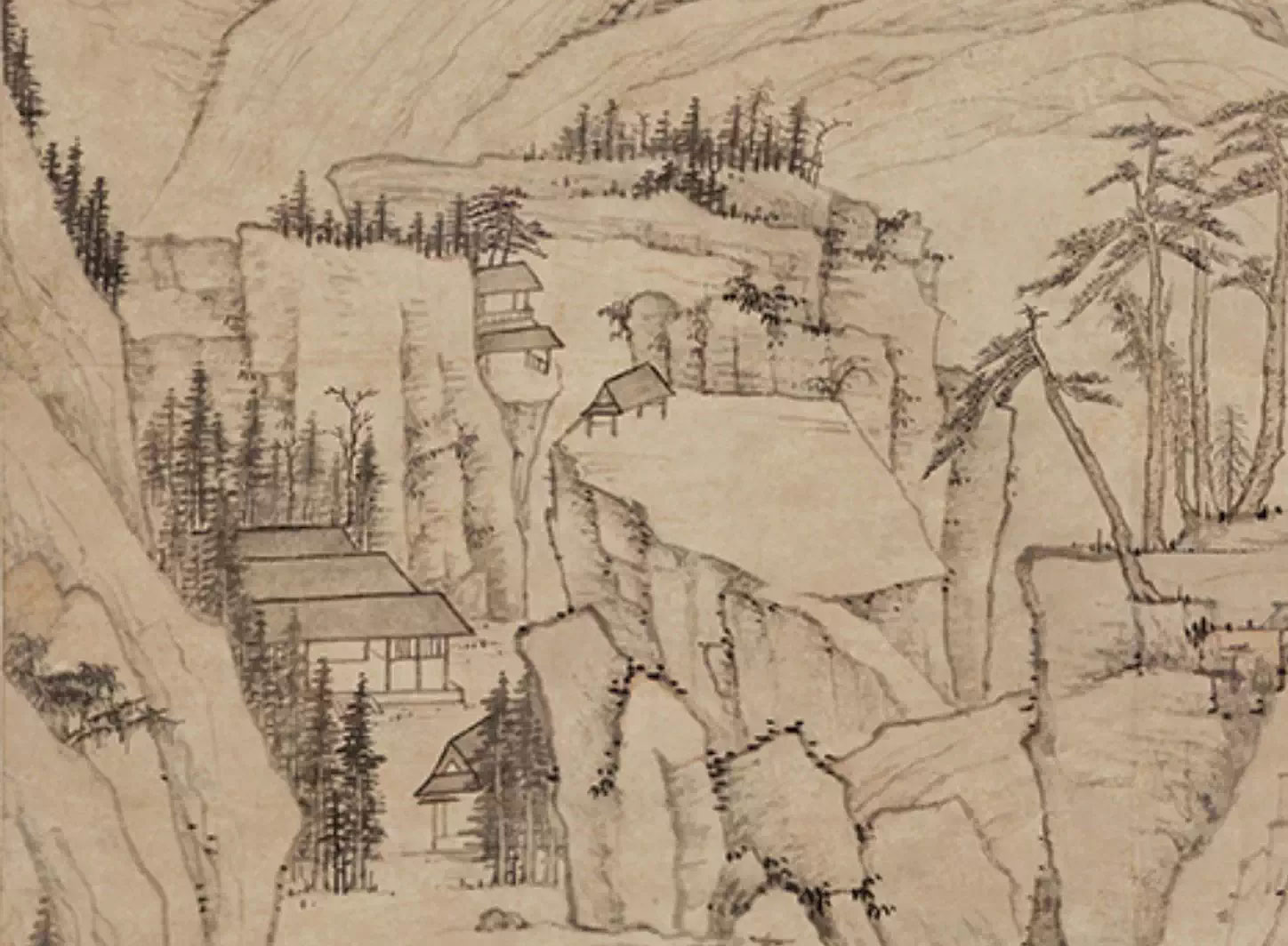
In terms of artistic technique, Hong Ren is the supreme master of the dry brush (ganbi) method. To depict the snow-covered peaks, he did not rely on white pigments; instead, he utilized Liubai (negative space or "leaving white"). By surrounding the "snowy" areas with fine, iron-wire lines and delicate, silvery-gray ink washes, he allowed the white paper to radiate a sense of frozen brilliance. This minimalist approach creates a linear precision that makes the mountains look like carved jade or transparent glass.
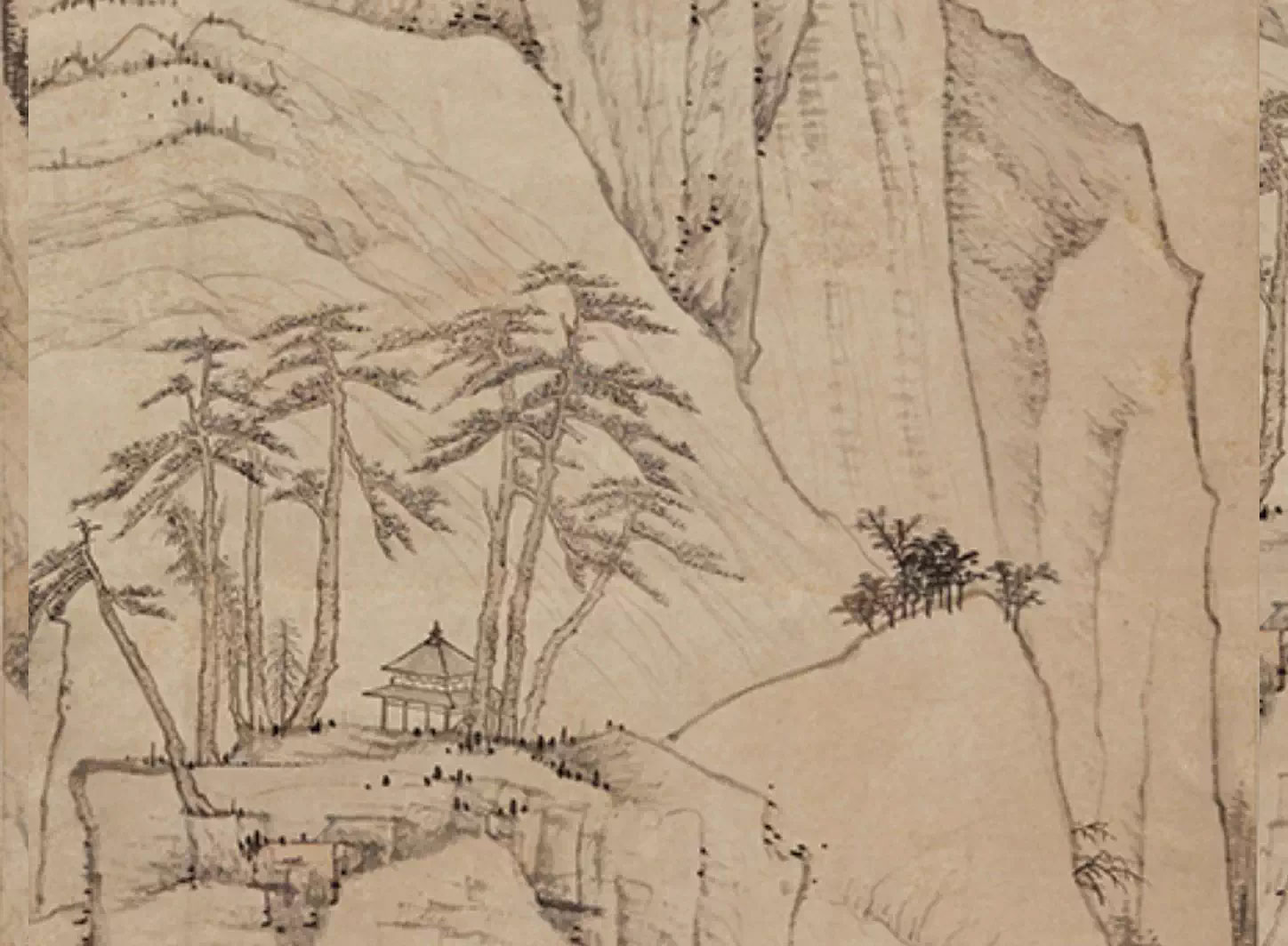
The compositional structure of "Winter Snow" is strikingly geometric and architectural. Hong Ren reimagined the craggy cliffs of Mount Huang (Huangshan) as a series of staggered rectangular blocks and sharp, angular forms. This structural clarity provides a sense of skeletal strength beneath the soft snow, suggesting that even under the weight of winter, the mountain’s (and by extension, the artist's) internal order remains intact. The vertical perspective draws the eye upward into a quiet, contemplative void.
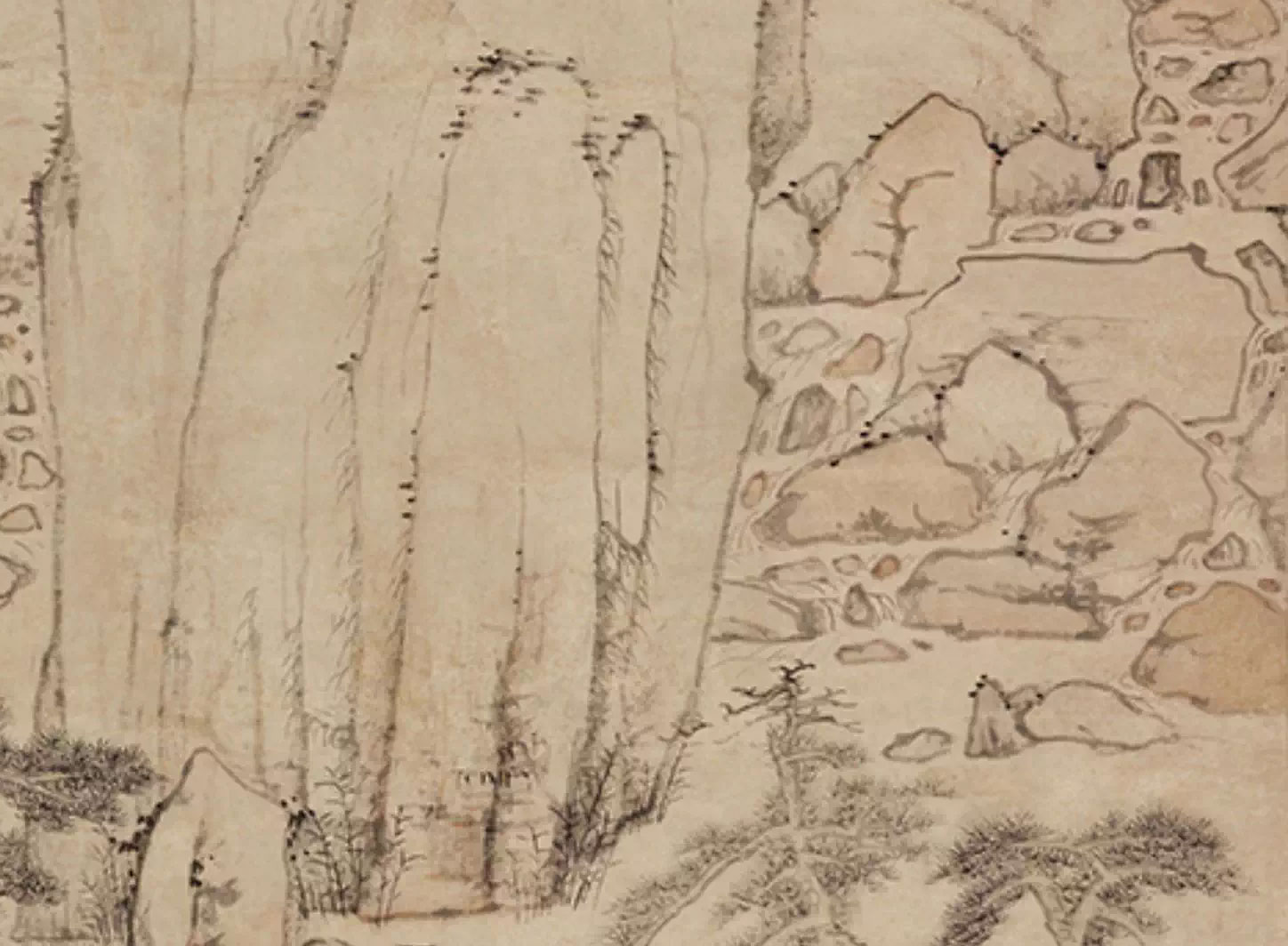
Historically and philosophically, "Winter Snow" serves as a visual bridge between literati landscape and Zen Buddhist emptiness (Sunyata). The lonely trees and empty pavilions nestled in the snow represent the hermit’s life and the pursuit of enlightenment through detachment. Today, the painting is celebrated as a masterpiece of individualist art, having influenced modern giants like Huang Binhong. It remains an enduring testament to the triumph of the spirit, using monochromatic ink to capture the sublime stillness of the human soul.