
In the pantheon of Qing Dynasty imperial artists, Chen Mei is celebrated for his "New Court Style," which seamlessly integrated Western observational techniques with traditional Chinese aesthetics. His masterpiece, "Mandarin Ducks in a Lotus Pond" (Hetang Yuanyang Tu), is a quintessential representation of summer in the forbidden city. It captures the cool, lush atmosphere of a palace pond, where the towering presence of lotus blossoms provides a majestic backdrop for the intimate play of a pair of Mandarin ducks.
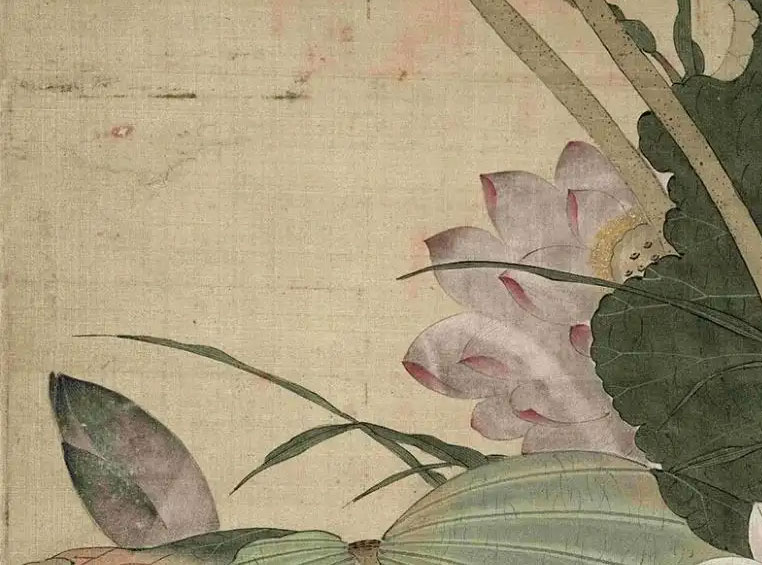
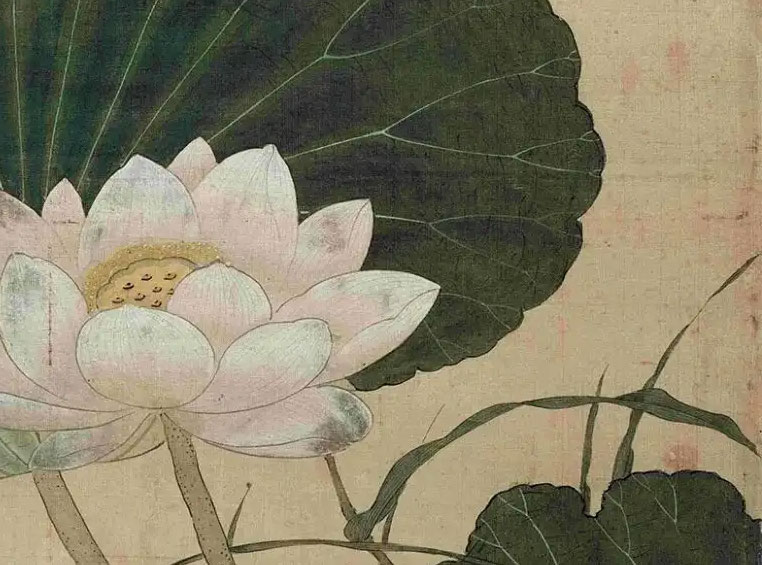
The composition is dominated by large, sprawling lotus leaves and delicate, upright blossoms. Chen Mei’s treatment of the Lotus (Hehua) is a masterclass in the Gongbi technique. Using high-quality mineral green and white pigments, he renders the leaves with a sense of "wetness" and weight, showing the subtle veins and the curled edges where shadows pool. The lotus petals are painted with a soft, gradient wash, creating a translucent quality that suggests the morning light filtering through the flowers—a clear nod to the chiaroscuro principles introduced by Western missionary painters.
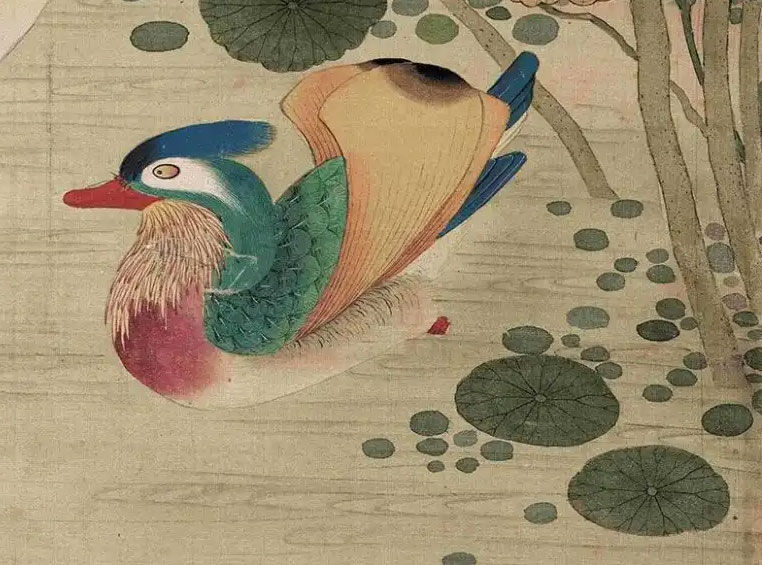
Gliding through the rippling water are a pair of Mandarin ducks, the focal point of the painting’s emotional narrative. Chen Mei’s attention to detail is staggering; every feather on the male duck is individualistically silked (Simao technique), showcasing a kaleidoscope of iridescent blues, oranges, and purples. The interaction between the two birds—one leading and the other following—creates a sense of rhythmic movement and "living" energy (Qi). This lifelike portrayal serves as a bridge between the static flora and the dynamic water, grounding the painting in a realistic, biological accuracy.
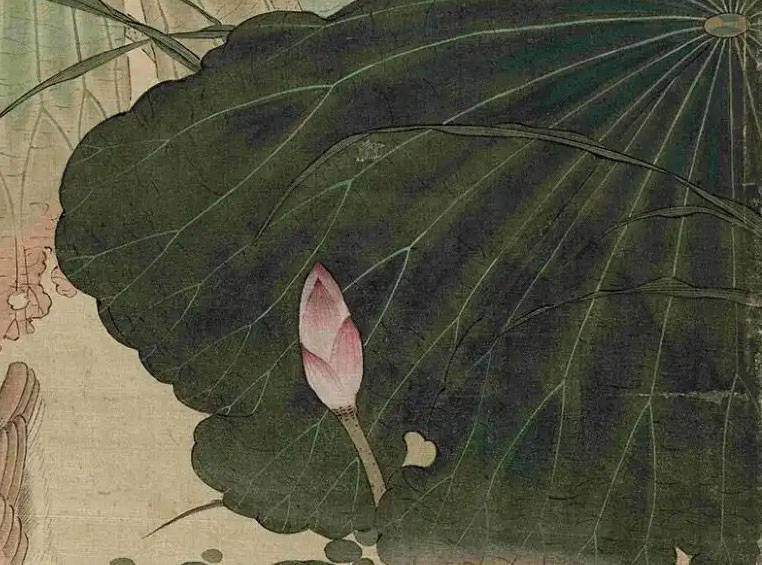
What sets this work apart from earlier dynasties is its sophisticated spatial perspective. Unlike the flat backgrounds of the Song or Ming eras, Chen Mei uses subtle ink washes to suggest the depth of the pond and the clarity of the water. The ripples emanating from the ducks are not mere lines but are shaded to show the displacement of light on the water's surface. This creates a three-dimensional "stage" for the subjects, allowing the viewer to feel as though they are peering directly into the imperial gardens from a pavilion.
Beyond its visual splendor, the painting is deeply rooted in auspicious wordplay. The lotus (He) is a homophone for "Harmony" (He), while Mandarin ducks are the ultimate symbols of marital fidelity and eternal love in Chinese culture. Together, they form the rebus "Hehe Meiman," signifying a wish for a harmonious, perfect, and enduring union. In the context of the Qing court, such imagery also symbolized the harmony between the Emperor and his people, and the peaceful state of the empire under heaven.
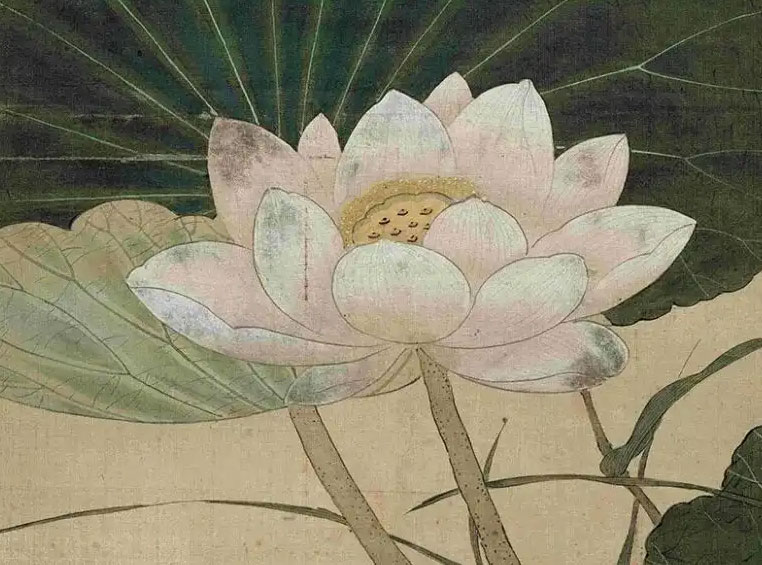
Chen Mei’s "Mandarin Ducks in a Lotus Pond" remains a crowning achievement of the 18th-century Imperial Academy style. It is a work that manages to be both grand and intimate, technical and poetic. By capturing the fleeting essence of summer and the enduring promise of love, Chen Mei created a timeless piece that continues to resonate with modern audiences, offering a glimpse into the refined, symbolic, and technologically innovative world of the Qing dynasty’s highest artistic circles.